

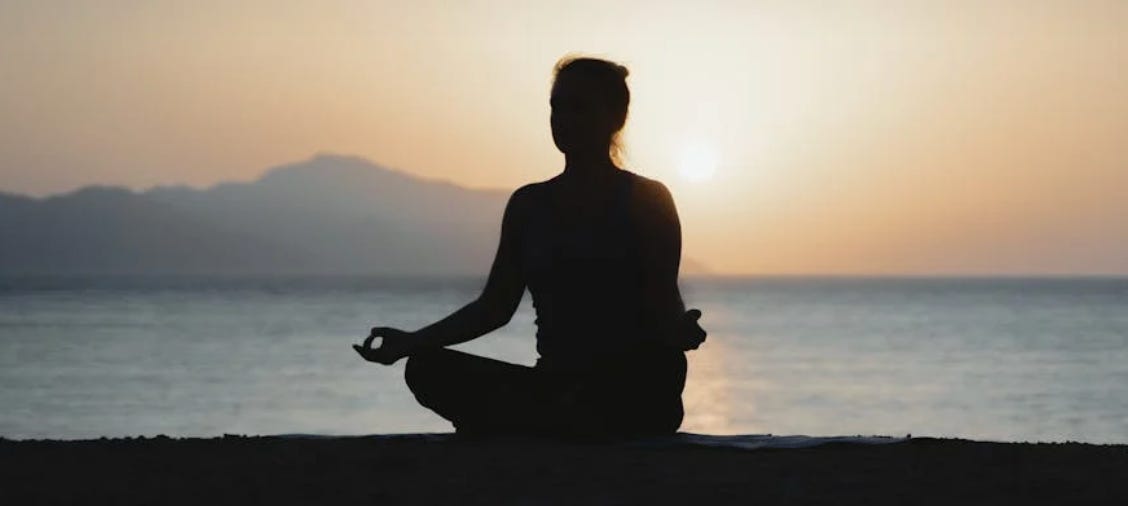
Photo by Tima Miroshnichenko, Pixels.com.
The moment one’s umbilical cord is cut, that human being becomes a human breather. Through a certain method of active breathing you can become charged up with pranic energy.The bridge of the breath reconciles one’s body and mind, making possible the illuminating, peaceful, and calming feeling of oneness of body and mind.
The moment one’s umbilical cord is cut, that human being becomes a human breather. One inhales and exhales day and night, usually unconsciously. In doing so, one converts cosmic Chi energy—the life force also known as “Prana” in yoga—into the physical form of one’s body. When a person breathes consciously and actively a process of opening up occurs. It is this process that vitalizes the body and connects one to the universe. Through a certain method of active breathing you can become charged up with prana. More than just the physical air that goes in and out of one’s lungs, prana keeps up the activities of the mind and body, maintains equilibrium, and guards against imbalance and disorder throughout the universe. It is a real current, measurable on today’s sophisticated devices.
When one breathes, air moves in and out of the physical body. Along with this current of air, prana enters the body and runs through ethereal but well-marked channels called “nadis.” These channels are a vital part of the nonphysical, subtle body that is the counterpart to the physical body and is composed of, among other things, both chakras and nadis.
Active conscious breathing also forms a bridge from one’s body to one’s mind. To control the mind, control the breath. The bridge of the breath reconciles one’s body and mind, making the feeling of oneness of body and mind possible. This feeling of oneness is at once illuminating, peaceful, and calming. These benefits can be enhanced through conscious, active breathing.
To breathe consciously is to “inspire” which means “to breathe in” and to “cause, guide, communicate, or motivate as by divine or supernatural influence.” This dual meaning is telling, and the power of breathing is most obvious when one consciously inhales and exhales more deeply than usual, without any pause between inhaling and exhaling, and does so consciously over an extended period of time.
Such purposeful breathing will usually bring forth a tingling sensation that can lead to ecstatic joy. Under certain circumstances purposeful breathing can send waves of sexual pleasure throughout the whole body. Moreover, the deep relaxation that also occurs through conscious breathing may be accompanied by powerful insights, visions, or a feeling of oneness with the universe (Unio Mystica).
Conscious deep breathing can be a reminder that one is inseparable from the wholeness of the universe. When one inhales one accepts energy from the universe. When one exhales one releases energy to the universe. Inhaling strongly demonstrates and fortifies one’s will. Exhaling completely demonstrates and fortifies one’s ability to surrender. Experience wholeness by becoming a “human breathing!”
For the purposes of the Heartwood Path, a “human breathing” is a human being who has mastered the following five types of breathing: 1) the cleansing breath to prepare the muscles for exertion, reduce minor nervous tension, and focus mental attention; 2) the sighing breath to release pent up emotions and enhance pleasurable feelings; 3) the charging breath to build excitement and relax while in a state of increased pleasurable stimulation; 4) the active breath to improve physiological function, reduce blood pressure and pulse rate, and postpone fatigue; and 5) the Fullness of Success breath to aid with mindfulness and meditation.
These breathing rhythms occur with each of the Three Intensities of Pleasure. First Intensity Pleasures are those that help you relax. The spontaneous corresponding breathing rhythm is the long exhale. Second Intensity Pleasures are those that make you relaxed but also alert and energetic. The spontaneous corresponding breathing rhythm is slow and deep, with some deep sighs. Third Intensity Pleasures are those that cause enthusiasm and excitement. The corresponding breathing rhythm is quickened and sometimes heavy.
You will learn how to do various breathing techniques in a moment. But first, it will be motivating to learn what each breathing style can do for you.
The cleansing breath facilitates First Intensity Pleasures. It also exercises the respiratory muscles; increases the elasticity of the lungs; awakens and relaxes the torso; massages the muscles of the throat, shoulders, chest, back abdomen, rib cage, pelvis, and internal organs; and removes carbon dioxide from the lungs and makes more room for oxygen, which causes a feeling of lightness on many levels.
The sighing breath facilitates Second Intensity Pleasures. It also helps you let go; get in touch with your emotions; increase sexual arousal; and surrender sexually.
The charging breath facilitates Third Intensity Pleasures. It also helps you build energy, charge your bio-electrical system, intensify the feeling of vitality, and learn to enjoy the feeling of floating and/or the sensation of energy streaming through your body.
The active breath facilitates Second Intensity Pleasures. It also helps you feel more connected to the universe.
Fullness of Success breathing facilitates First and Second Intensity Pleasures in heights prana. Fullness of Success breathing is critical to the success of eartHearts because prana is the master of the mind. As prana is the master of one’s thinking, the master of prana is sound.
The sound made during Fullness of Success breathing is critical to the success of the practice. The sound gives the mind something upon which to focus. The act of listening to the breath refines the breath and quiets the mind. Since one needs to focus one’s attention even to make the Fullness of Success sound, one’s mind will already be there with each breath.
Have you ever noticed how your breathing becomes shallow when you are under stress? This behavior is the result of the intimate relationship between the mind and the breath. When the mind is excited, the breath is irregular; and when the mind is lethargic, the breath is often labored.
The combination of conscious breathing (discussed here) and mindfulness (discussed in the next waypoint) can be both inspiring and healing. But, before moving on to mindfulness, we need to first demonstrate how to allow some prana into all the tight, closed-down, or injured areas of the body through various forms of conscious breathing. This demonstration occurs in the following activity:
To Purposeful Respiration…
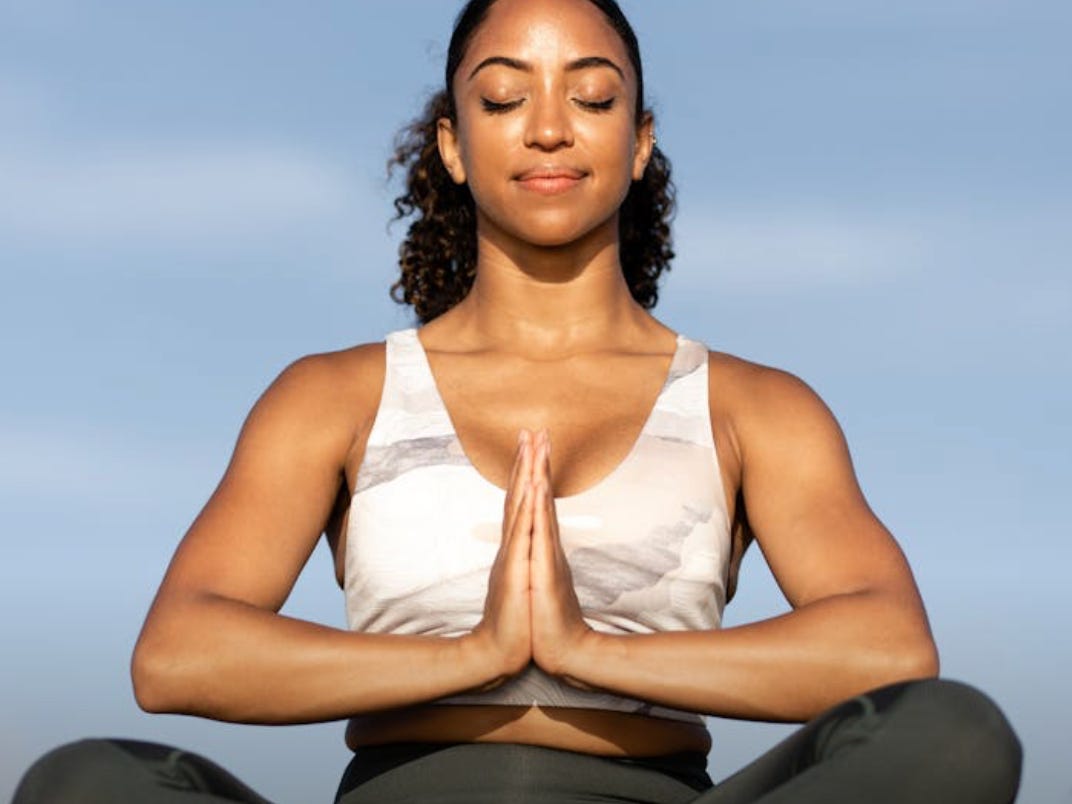
Photo by Ketut Subiyanto, Pexels.com.
HumaNatureConnect Activity
Breathing Consciously
For this activity, engage in various forms of conscious breathing:
The Cleansing Breath. To do the cleansing breath, make yourself comfortable while sitting in an upright position and do the following: Place both feet on the ground. Keep your head straight and your chin parallel to the floor. Inhale slowly and fully through the nose. Feel how your chest lifts as you inhale completely. When you cannot inhale anymore, pucker your lips softly and blow out all of your air in a steady stream. Suck your abdomen in slightly as you push out the last bit of your air. Keep exhaling as much as much as you can until the inhale happens spontaneously. Make your exhalations twice as long as your inhalations. As you continue breathing in the manner described above, feel the muscle in your torso moving like a bellows. Become aware to all sensations of tension or tightness. Imagine that this tension is a smoggy haze that can be removed with each exhale. Puff your cheeks as you blow out tensions. After four or five cleansing breaths, notice how tensions are removed and how much more aware you are of your body.
The Sighing Breath. To engage in the Sighing Breath, do the following: take a deep sigh in and out with your mouth open. Relax your throat as you sigh. Feel your upper back become more expansive as you inhale. As you exhale say “hah” as if you were cleaning a pair of glasses. After your first “hah,” take three deep breaths in a row. Do not worry if you are yawning a lot as this is just your body’s way to achieve the proper oxygen/carbon dioxide balance. If you become lightheaded, close your mouth and breath through your nose and enjoy the floating sensation until it subsides.
The Charging Breath. To practice this breathing rhythm, do the following: through your open mouth suck in as much air as possible all the way into your chest. Let out the air all at once in a big rapid “hah.” If you desire, repeat five times. Notice any feelings of lightheadedness, extra energy, and hyper-alertness.
Active Breathing. This breathing technique is done solely through the nose. Sit upright. As you breathe, put the bulk of your attention on the exhale and forget about the inhale. Close your mouth. Put your palms on your lower belly. Exhale and press on the lower rib cage down and back while simultaneously contracting the belly back toward the spine and lifting it up onto the thoracic cavity. Push as much of the air out of your lungs as you possibly can. Hold for a second, then let go. Repeat several times. When you “let go” and relax the belly and ribs, the in-breath will get sucked in all by itself. Through practice, the act of paying attention to the breath will become more natural. This breathing technique has been proven to improve physiological function, reduce blood pressure and pulse rate, and postpone fatigue.
The Fullness of Success Breath. The basic premise of this technique is to control the flow of air. Consciously narrowing the passageway of the throat through which the air is moving by making a kind of hiss similar to the sound made when we whisper. But, unlike a whisper, in Fullness of Success breathing the mouth is closed. To learn Fullness of Success breathing, it is permissible to begin by whispering an “ahhh” or “urrr” sound with the mouth open on exhalation. Completely empty the lungs with the sound. Then inhale by whispering the “ahhh” or “urrr” sound. Completely fill the lungs with the inhale. Then do it with the mouth closed. The sound will be similar to whispering with your mouth closed. By listening to the sound of the breath, especially when the breath is following a regular pattern or rhythm, the mind is less likely to wander, the Fullness of Success breathing can be maintained, and you will be better prepared for practicing mindfulness and meditation.

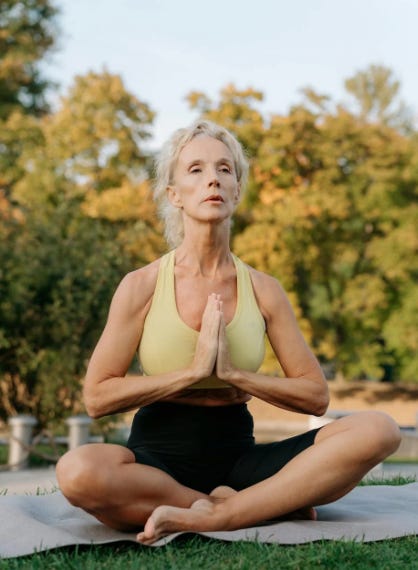
Photo by Cottonbro Studio, Pexels.com.
Nocturnal Pilgrimage
Prepare for sleep. Dream and tend to your dreams the next morning. Do not skip ahead down the Heartwood Path without spending some time in nature.
