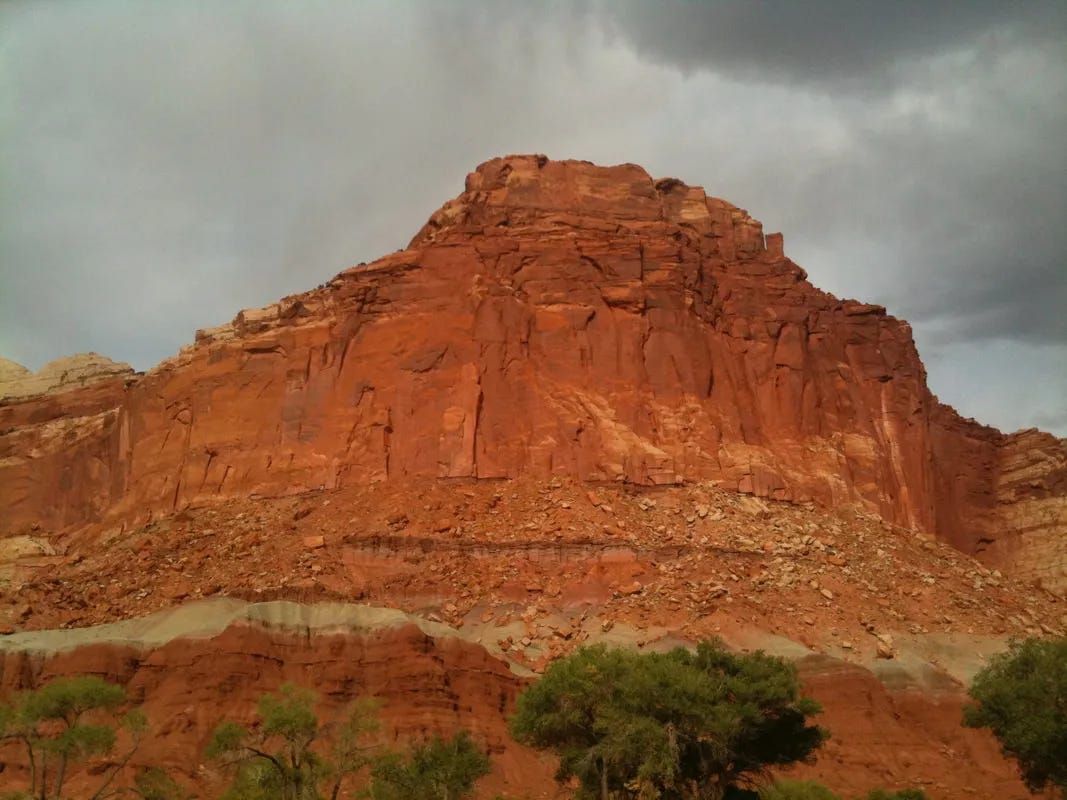
Photo by Don Pierce
There is a kind of leadership that does not come from books, institutions, or strategy sessions. It comes from place. From the ground beneath the feet. From the slow intelligence of landforms, watersheds, winds, and seasons. Leaders who cultivate this form of listening develop a steadiness that cannot be manufactured. They govern with a sense of scale, proportion, and consequence that emerges only from direct contact with the living world.
This is not metaphor. It is not poetic framing. It is a mode of perception.
To listen to the land is to widen the field of attention beyond the human sphere. It is to sense the patterns that hold a place together: the way fog moves through a valley, the way heat gathers in a canyon, the way birds announce shifts in weather, the way water reveals the shape of the terrain. These patterns teach leaders how systems behave, how change unfolds, and how consequences accumulate.
A leader who listens to the land begins to understand time differently. Natural time is layered. Some processes move quickly: wind, fire, migration. Others move slowly: soil formation, forest succession, the carving of stone. Governance has these layers too. Some decisions require immediate action. Others require patience, continuity, and long‑arc commitment. The land teaches which is which.
Listening to the land also cultivates humility. Every landscape carries a history older than any institution. Every watershed holds memory. Every coastline records the long conversation between land and sea. When leaders attune to these histories, they gain perspective on their own role. They see themselves not as central actors but as temporary stewards within a much larger story.
This humility does not weaken leadership. It strengthens it. It grounds decision‑making in reality rather than urgency. It tempers ambition with responsibility. It replaces the illusion of control with the practice of alignment.
Attunement to place also deepens discernment. The land reveals thresholds: the point where a hillside becomes unstable, where a river overtops its banks, where a forest shifts from resilience to vulnerability. Leaders who sense thresholds in nature become more adept at sensing them in governance. They recognize when a system is nearing a breaking point. They act before collapse.
Listening to the land is also a form of relational intelligence. A place is not a backdrop. It is a partner. It shapes the people who live within it. It shapes their culture, their rhythms, their vulnerabilities, their strengths. Leaders who understand this relationship govern with greater sensitivity to the lived reality of those they serve. They make decisions that fit the place rather than imposing abstractions upon it.
This attunement is not mystical. It is sensory. It is observational. It is practiced through presence. It is strengthened through repetition. It is refined through quiet.
A leader who listens to the land becomes less reactive because the land is not reactive. A leader who listens to the land becomes more patient because the land moves at the pace of seasons. A leader who listens to the land becomes more responsible because the land reveals the cost of neglect.
In a time of acceleration, distraction, and fragmentation, this form of leadership is rare. But it is increasingly necessary. The challenges of our era—ecological, social, economic—are not isolated. They are interwoven. They require leaders who can sense the whole, who can read the subtle signals, who can act with both urgency and restraint.
The land teaches this balance. It teaches proportion. It teaches consequence. It teaches continuity.
Leaders who listen to the land carry this wisdom into their governance. They become steadier. They become clearer. They become more capable of holding the long arc of responsibility.
This is the leadership our moment calls for.