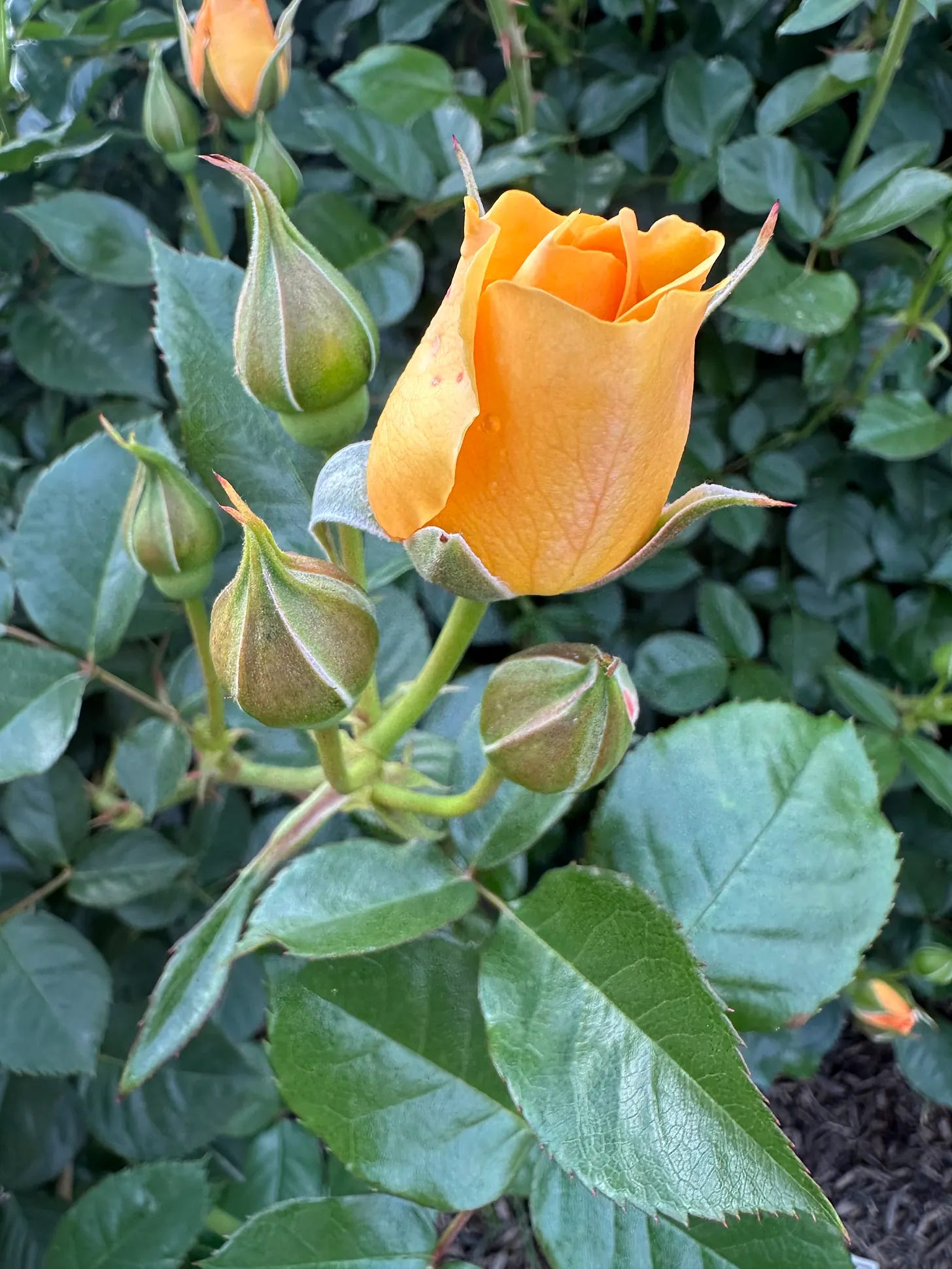
Photo by Don Pierce
Gratifications require personal virtue and lead to the good life. Pleasures require nothing more than time and space and lead to a fun life. Unfortunately, modern day humans in industrialized countries all too often choose easy fun over daunting goodness. A good way to overcome this tendency is to identify and use your own individual strengths.
Everyone has a certain ranking of strengths (positive personal attributes) that serve him or her the best on their course to becoming a good person. We shall look at these two dozen possible strengths in terms of the virtues that these personal attributes lead towards: wisdom, courage, humaneness, justness, temperance, and transcendence:
Strengths that lead to wisdom include:
curiosity – the strong desire to know or learn something;
love of learning – the enjoyment of the acquisition of knowledge or skills;
judgment – critical thinking, the ability to make sensible conclusions;
ingenuity – the quality of being clever, original, and inventive;
intelligence – the ability to acquire and apply knowledge personally, socially, and emotionally; and
perspective – a way of looking at the world that makes sense to yourself and others.
Strengths that lead to courage (including, doing things in the face of adversity when the end is uncertain) include:
moral, psychological and physical valor – great courage in the face of danger;
perseverance – steadfastness in doing something despite difficulty or delay in achieving success; and
integrity – the state of being whole and undivided, the quality of being honest and having strong ethical principles, having one’s intentions be consistent with one’s behaviors.
Strengths that lead to humaneness include:
kindness – the quality of being generous, friendly, and considerate; and
giving and receiving love – the intense feeling of deep affection, the great interest and pleasure in something, and/or romantic and sexual attachment.
Strengths that lead to justness include:
citizenship – duty, team work, and loyalty;
fairness – equity, being in accordance with the rules or standards, justness, and/or the state of being appropriate; and
leadership – the action of leading a group or people or an organization.
Strengths that lead to temperance (the appropriate and moderate expression of appetites and wants) include:
self control – the ability to control ones emotions, desires, verbalizations and behaviors;
prudence – the state of being cautious or prudent; and
humility – modesty, humbleness.
Strengths that lead to transcendence (emotional strengths that reach outside and beyond oneself to something larger and more permanent) include:
the appreciation of beauty – having qualities that please the aesthetic senses and excellence – the quality of being outstanding or extremely good;
gratitude – the quality of being thankful, readiness to show appreciation for and to return kindness;
optimism – hopefulness and confidence about the future or the successful outcome of something;
spirituality – a sense of purpose and faith;
forgiveness – the action or process of forgiving or being forgiven, no longer being angry or resentful and mercy;
playfulness – being fun-loving, spirited, and full of humor; and
enthusiasm – zest, passion, eagerness, interest, and exuberance (Seligman,2011).
Develop each of these strengths to create the good life for yourself. To get there, rely most on your strongest individual strengths. Determine your best virtue-producing strengths by doing the activity in this waypoint.
Once you have determined your own venerable and enduring strengths, use them to develop your goodness. You might as well use your best tools. They will help you become wise, courageous, humane, just, temperate, and transcendent—the virtues that lead to a good life.
My experience shows me that identifying and using one’s individual key strengths—one’s most positive and enduring traits—will lead to more satisfaction than will trying to overcome one’s greatest weaknesses. It may be helpful to both use key strengths and to correct significant weaknesses; but, to get the most out of a finite amount of time and energy, focus most on your strengths.
The Heartwood Path is designed to take its followers on a journey that uses the participants’ key strengths to positively alter how they occupy their time, particularly in the main dimensions of life: love, raising children, and work. If desired, the program can be used, for example, to re-craft work into a calling. By this I mean that the program helps the participant change her vocation into an occupation—either compensated (as when one becomes an ecocentric life coach) or done on a volunteer basis (as when one becomes an eartHeart)—that is gratifying, puts her into the positive state of flow (the matching of assignments to strengths and virtues), and contributes to the greater good.
To One’s Best Shot…
HumaNatureConnect Activity
If this is not a day when you prefer to spend time in nature without an agenda, do the following activity:
Start-up Protocol
Read The Text — Use your literary sense, your mind sense, and your reason sense to read your way towards happiness and sustainability but do not just be an arm-chair traveler. Use your other natural senses as you also spend healthful, fun, and productive time in nature on your way to Gladandgreen Junction.
Attractive Natural Being — With pen and journal in hand, go to a natural area and look around to find a natural being that is attractive to you.
Appreciation and Gratefulness — While admiring your chosen being, appreciate it with your inhalations and give it gratitude with your exhalations.
Consent — Once you find an aspect of nature that is attractive to you continuously for at least ten seconds, think of your continued attraction as your consent to have a connection experience that will lead to your optimal functioning.
The Natural Senses — After gaining consent to enter into a connection experience with the natural being, have available the list of Natural Senses. Mix it up by using at least one radiation sense, one feeling sense, one chemical sense, and one mental sense, to widen your perception, and add variety to your experience.
HumaNatureConnect Activity — After reading the text, finding a natural being, appreciating it, gaining its consent, and scanning the list of natural senses, use your heightened awareness and nature-induced optimal functioning to do the following activity and engage in as many follow-up components as you see fit.
Picking Your Own Best Strengths Of Character To Increase Your Virtue
For this activity, look over the list of twenty-four strengths listed in the waypoint. Pick and rank your top five strengths. If they do not come to you automatically use the following set of criteria to choose your top five strengths (only one need apply): a sense of ownership and authenticity, a feeling of excitement while displaying this strength, rapid learning when first practicing this strength, continuous learning about how to enact this strength, a sense of yearning for how to use this strength, a feeling that using the strength is inevitable, a feeling of invigoration while using the strength, and/or a feeling of enthusiasm or joy while using the strength.
Follow-up Protocol
Natural Systems Reflection Process
For best results, write down your impressions of this activity in your journal using as many of the following components as you see fit, afterwards, share your interpretations with others.
Journal Components
General Description — writing a general description of how you did the activity and what happened.
Freeform — writing, in freeform, what you found attractive about your natural being.
Three Qualities — writing down three qualities you found most attractive about your natural being.
Three Learnings — writing down three things you learned from this activity.
Self-esteem & Trust — writing down how, if at all, this activity changed your self-esteem or trustfulness of Nature.
Changes To Self — writing down what aspects of your self, if any, were changed by this activity.
Honor Yourself — praising yourself and your commitment to making another stop along the Heartwood Path good for yourself and the world.
I’m A Person Who . . . — writing down three different so-called “G/G Statements” using the following format: “This connection experience tells me that I am a person who_________.”
Feelings If Activity Taken — writing down a sentence about how you would feel if you lost your ability to experience this connection.
Nature Compared To Self — creating a sentence that reads: “I love this (insert words that identify the attractive natural being) because it is (insert words that refer to the qualities you like about the natural being).” Then, creating a parallel sentence that reads: “I love (insert the word “myself”) because I am (insert the same qualities as before).” If only one follow-up component can be done at any one waypoint, do this one. It reveals a lot about the participant quickly. In group settings it is a very good way to get pertinent conversation underway.
Ride The Green Wave — determining whether you understand and agree with all of the Ten Green Wave Validation Statements. In your journal, give yourself a plus sign (+) if you do agree and a minus sign (-) if you do not agree. Do not worry if you do not give yourself a plus sign (+). These notations are merely for your own information. Regardless of your own plus or minus assessments, you are always free to move on; or, if you are attracted to do so, you can always revisit the waypoint, ask for Guidance, and/or redo the activity.
Two-Word Summary — writing down two words that summarize your response to this activity.