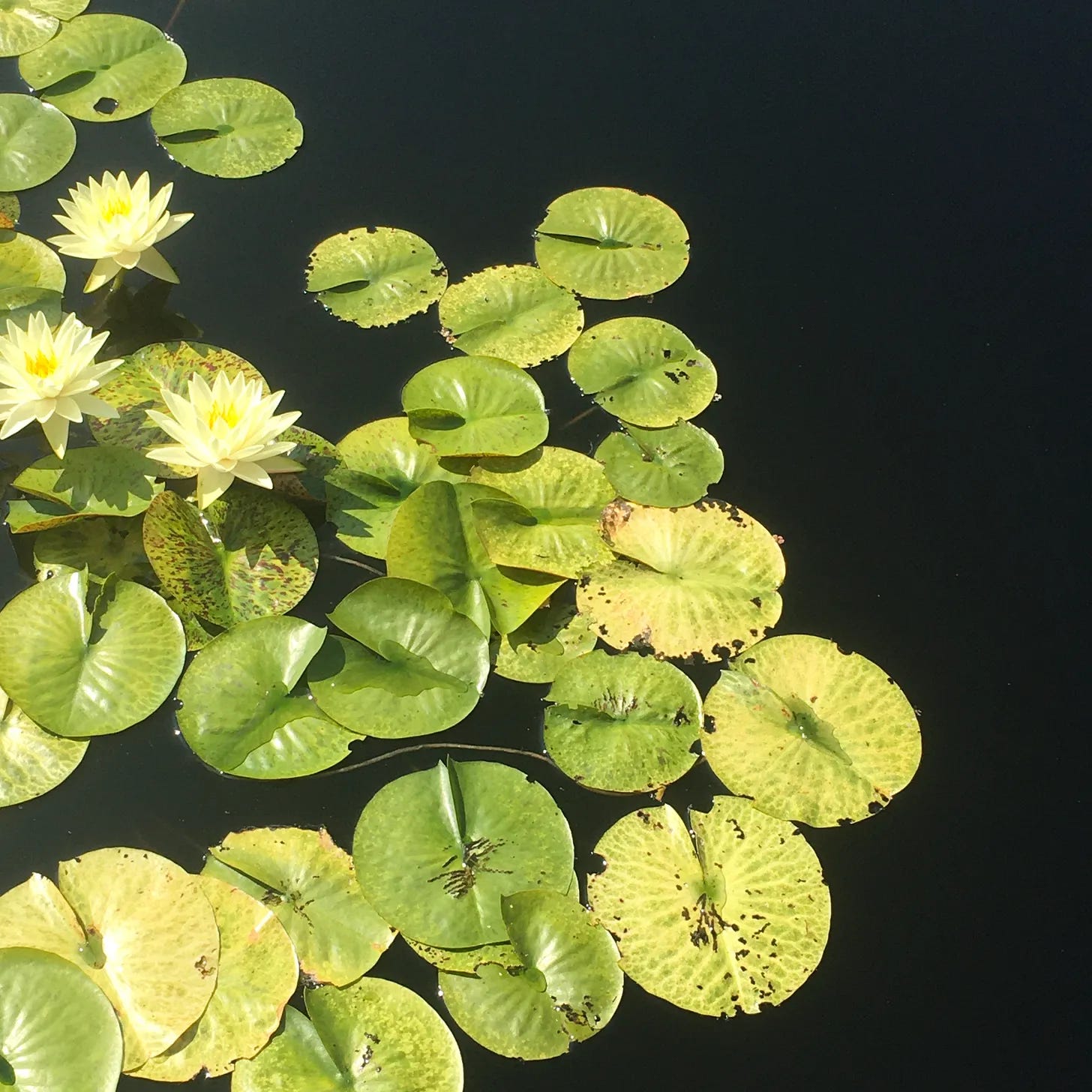
Photo by Don Pierce
In the early Sixties, I lived in East St. Louis, Illinois — a place people called notorious long before I understood why. The city sat on a swampy floodplain of the Mississippi River, and everything about it felt unstable: the ground, the neighborhoods, the people. After my parents divorced, my mother moved us there with my brother, my aunt, my uncle, and two girl cousins. The older cousin made me her target. She taunted me, mocked me, and convinced a group of boys to beat me up after school.
They formed a bike squadron — sixth‑graders who looked like Goliaths to a scrawny first‑grader — and waited for me outside the schoolyard. Every afternoon I had to run the gauntlet, hoping to reach home in time for the opening song of the Three Stooges. Sometimes I escaped. Sometimes I didn’t. And sometimes I had to disappear.
That’s how I found the ragweed patches and the oxbow lake. What everyone called “the lagoon” was really an abandoned meander of the Mississippi — old water, cut off from the main channel, shallow, murky, and alive with things most people preferred to avoid. To me, it became a refuge.
Chief among its inhabitants were the birds and the snakes. A passer‑by once shouted, “You better not go in there — there are moccasins in there.” He meant Cottonmouth Water Moccasins, the venomous kind. He was wrong about the species but right about the fear. True water moccasins don’t live north of the Bootheel of Missouri. What he called “moccasins” were really Banded Water Snakes — harmless imitators who had learned to mimic their notorious cousins.
I didn’t know the taxonomy then, but I knew the truth of them. When they were young, I would gather them up, gentle as I could, and slip one or two into the pockets of my Lee jeans. They were restless and alive — and far less dangerous than the boys waiting for me outside the swamp.
On my less desperate returns, when I wasn’t hiding but simply visiting, I would release my snake companions and linger among the bottomland inhabitants. In time, these critters became my friends. I swam in the deeper sections, searching for red‑eared turtles, cardinals, cicadas, and the pale blossoms of water lilies. I came to love the place most people avoided.
One afternoon I heard a new sound: Unk‑Ah‑Chunk, Unk‑Ah‑Chunk. I assumed someone had set up a pump to drain my refuge — to empty the water that held my companions. Determined to stop it, I pushed through the reeds. Instead of machinery, I found a stubby, beige, heron‑like bird swaying on its nest, its head moving side to side like a singing Stevie Wonder. I rushed home and opened one of my field guides.
American Bittern.
That was it.
Something shifted in me then. My love of the swamp and its creatures became something fiercer — a desire to protect the living world that had sheltered me when the human world would not. That desire carried me into decades of work as a professional environmentalist, most notably with Friends of the Earth.
It was David Brower, the founder of that organization, who once asked me to “write a piece” on how to prevent burnout in activists.” That piece grew, layer by layer, into a book series. And that series, over time, metamorphosed — like one of the butterflies I used to watch rising from the mud — into the Codex we now call the Heartwood Path.
And somewhere along the way, I learned to do my own laundry. My mother refused to reach into my swamp‑soaked jeans, never knowing what might slither out. It was a small thing, but it taught me early that the life I carried with me was mine to tend.
The Heartwood Path Codex is simply the continuation of that early apprenticeship.
Before the Heartwood Path had a name, I thought I was simply writing guidance for activists. But as the work deepened, I realized I wasn’t building a program. I was building a codex.
A codex is not a book.
A book is linear.
A codex is layered — a living architecture of meaning, cross‑referenced like the ecosystems I grew up inside. A codex is something you enter, not something you read. It is a system of relationships, not a sequence of pages.
And the tone of it — the grounded, earthy, subterranean voice that people now call “Heartwood” — came from something older than my adult life. It came from the swamp. It came from the chthonic world.
Chthonic doesn’t mean dark or sinister.
It means of the earth, of the soil, of the roots and the hidden places where life begins. It is the realm beneath the surface — the realm that shaped me long before I had language for it.
The Codex grew from that realm.
It grew from mud, from humidity, from the slow intelligence and smell of bottomland water.
With this story, I’m beginning the release of the Heartwood Path Codex — the layered, living body of work that has grown from these early experiences. Over the coming months, I’ll be sharing its chapters here, one layer at a time.
The swamp was my first teacher.
The Codex is simply the continuation of that early apprenticeship.
If this story, or the work of the Heartwood Path, speaks to you, I invite you to stay connected.
A free subscription helps the Path reach more people.
A paid subscription or a small donation helps me keep building the Codex, one layer at a time.
Either way, I’m grateful you’re here.