At this point in your Heartwood Path pilgrimage you know where you are heading (to a state of being an enlightened prophet, armed with a sonic staff, and prepared to serve the greater whole happily and persistently) but you do not yet know how to get there. You are not yet prepared to speak and respond to Vak sounds and so you are still dependent on words.
Meeting you where you are in your dependence on words, the Heartwood Path now takes you to the four steps in our yoga of sound protocol.
Note in the activity below that we will still be using words. This is done for two reasons: 1) right from the start we want you to become accustomed to creating and trusting your own mantras (even if they are words rather than sounds) as that is what you will be doing often as you proceed down the Heartwood Path and 2) using unfamiliar sounds, at this step, will take the focus away from the four steps in the following activity (1.listening to sounds, 2. building a bridge of awareness and avoiding attachment to thoughts, 3. absorbing thought-fresh impressions, and. 4. Remaking still in the silence) and put your attention too much on the newness of the Vak sounds. Later, mantric sounds will replace the words and you will, possibly, enter into the state of samadhi and become a saint.
To A Greater Likelihood Of Illumination…

HumaNatureConnect Activity
If this is not a day when you prefer to spend time in nature without an agenda, do the following activity:
Working With Vak Vibrations
For this activity, try a four-step process that uses the speech (vibrations) of nature.
Applying the Articulation Level Of Vaikari Vak. Listen to any sounds emanating from your chosen Natural being or the attractive natural landscape that surrounds it. Using your own voice, out loud, imitate the Vak sound you heard from your chosen attractive natural being. Using your strong and confident voice, repeat what you heard three times. By imitating the sound from your chosen being you are making a mantra that comes, not from anguru but from nature. To strengthen the force of this mantra, as before, say the natural sound in the comfortable fundamental tone—one that feels best in your heart chakra (fourth). Then, to move the power from the heart to the head (throat, third eye, and crown chakras) say the natural sound in a note slightly higher in pitch. To move the power to the belly (first, second, and third chakras) say the natural sound in a tone slightly lower than the first fundamental tone. Repeat this approach with at least three natural sounds heard while you were involved in this activity. Remember this approach. You are taking the power that manifests in thunder, lightning, and ocean currents, birds, mammals, insects and ingesting it in mantra capsules. Keep records of them in your journal.
Applying the Thoughts and Images Level Of Madhyama Vak. For the same natural being, shift your perspective away from its audible sound to its more subtle emanations, which can be noticeable by you as thoughts and images. To do so, follow our usual start-up protocol. As you remain close to the natural being, psychologically build a bridge of awareness between yourself and your chosen natural being. As before, refrain from attempting to understand any thoughts or images that come to mind, and do not bother trying to understand where your thoughts or images come from. You are generating these thoughts but not without the influence of the natural being. Do not attempt to understand the origin of Vak thoughts and images. If necessary, remind yourself that all is one so there is no reason to distinguish where the thoughts and images are generated. For our purposes with Vak Sounds here, it’s does not matter if it is the natural being that is generating the thoughts and images. It also is not productive, for this sort of activity, to argue that it is really you alone that is creating the thoughts by your self in your own mind alone. It is very likely that your physical closeness to the natural being is, in a large or small way, affecting your thoughts. Rather than entertain such thoughts during the activity, for this exercise, set aside this explanation and focus on absorbing rather than on understanding. Absorb the Vak images and thoughts by doing no more than witnessing them and storing them in your memory. Any mental or audible running commentary (words running through your mind) gets in the way of the simple, unfettered absorption of thought and images that could provide you with guidance, information, and healing. Do your best to continuously limit the self-generation of any sort of words as you do this step of this activity. Simply absorb the pertinent thoughts and images—those that have something to do with you, the natural being, guidance, information, or healing—and store them, as you did with the audible sounds, in your memory for later inclusion in your journal.
Applying the Perception Level Of Pashyanti Vak this step, move your perception away from audible sounds (which you absorbed in Step 1.) and away from thoughts and images (which you did did in Step 2). Instead, shift your perception to your consciousness without thoughts by building in your mind a bridge of awareness between you and your chosen natural being. Repeatedly practice being aware of your natural being without also generating thoughts about your companion. Once you can be aware without forming a mental commentary (consisting of thoughts and images), absorb your thought-free impressions and secure them away in your memory. Later, you can make notes about your impressions in your journal. I recommend letting your absorbed awareness (your thought and word-free impressions) percolate in your memory for a while before you encapsulate any impressions into words and lock them away in your journal. How much time do you need for this percolation. Long enough to do Step 4. below before making your Step 3. journal entries.
Applying the All Potentiality Level Of Paraa Vak. As you did in the “I want to feel ___” exercise, experience the silence surrounding your chosen natural being. You are at a level where the vibrations are beyond the senses. At this level, people with considerable training encounter spiritual revelations. Novices, with some practice, can find universal principles. Linger long in the silence. Absorb any spiritual insights you uncover.
Absorb the universal principles you find within the silence.
You are peaking into the world of the sage. Include what you experience in your memory. Later, write about the revelations in your journal.

Nocturnal Pilgrimage
EartHearts meet with natural being outside and spend much of their time in a sort of dreamy existence. They also, paradoxically, meet with Dream Characters inside and spend much of this time awakened. Whether dreaming or awakened, EartHearts obtain both inspiration and solace by using Vak Sounds.
Vak sounds, particularly in the context of Vak Shuddhi, refer to the concept of purifying the sounds we utter to positively influence our physical and mental well-being.
The term "Vak" originates from Sanskrit, meaning "speech" or "word." The practice of Vak Shuddhi involves consciously uttering sounds that are harmonious and beneficial, which is believed to impact our system positively.
To review, uses of Vak Sounds include:
Purification and Healing: Vak Shuddhi aims at cleansing the sounds we utter to promote health and balance within the body and mind. By uttering specific mantras or sounds, one can create positive vibrations that contribute to overall well-being
Enhancing Communication: The practice emphasizes the intention behind our words. Speaking with the right intention and sound quality can improve the effectiveness of communication and foster better understanding and relationships.
Spiritual Development: Vak sounds are integral in practices like Nada Yoga, where sound is used as a medium for spiritual growth. This practice involves deep meditation on sounds to achieve higher states of consciousness and inner peace.
Cognitive and Emotional Benefits: Listening to and producing harmonious sounds can improve neurological function, enhance mood, and increase cognitive clarity. Sounds with positive vibrations can help in reducing stress and enhancing emotional stability.
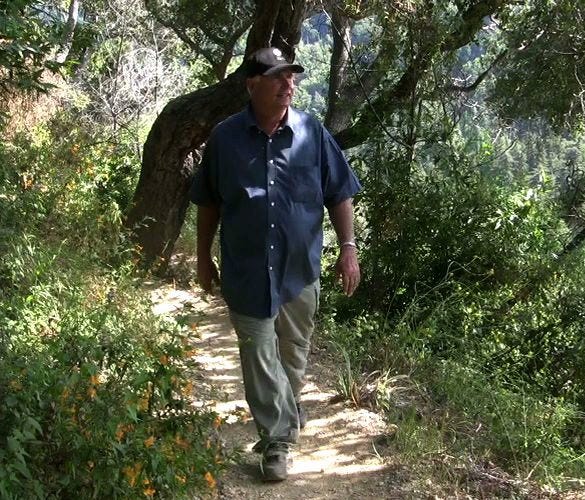
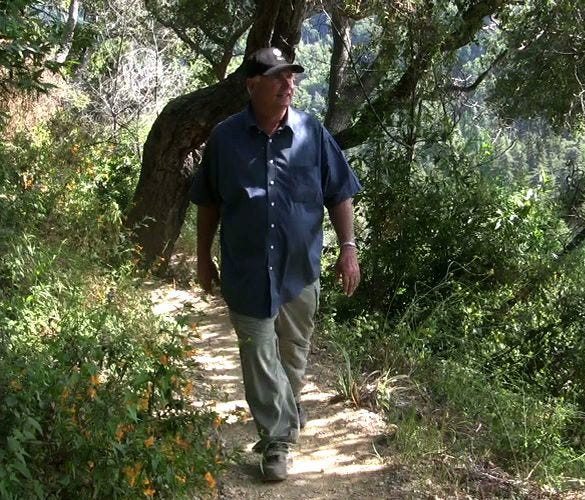
Don Pierce, Santa Barbara, California.