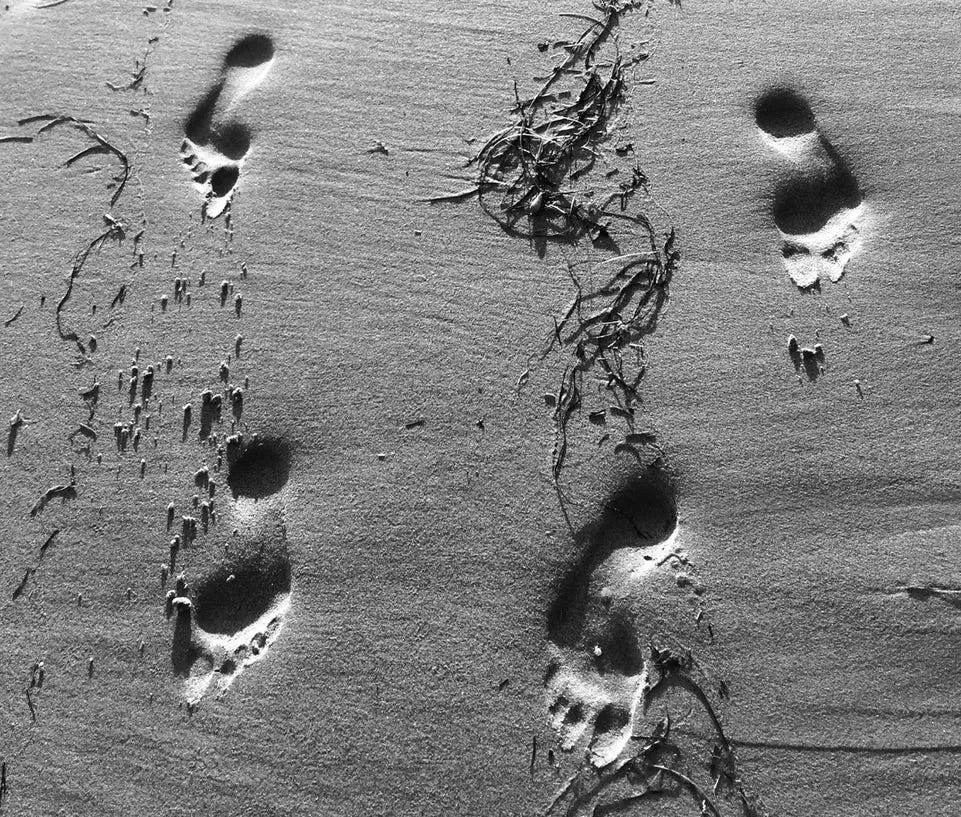
Photo by Don Pierce
Once the ecological self begins to emerge, something subtle but profound shifts:
you no longer relate to nature as a recipient.
You begin to relate as a participant.
Reciprocity is not about giving back in the moral sense.
It is not about obligation, virtue, or environmental duty.
It is not about “repaying” nature for what it has given you.
Reciprocity is the natural movement of a self that recognizes itself as part of a larger field.
It is the shift from:
receiving → participating
being held → contributing
being shaped → shaping
being steadied → steadying
Reciprocity is not transactional.
It is relational.
A tree does not “give back” to the soil.
It participates in the soil’s life.
A river does not “repay” the rain.
It continues the rain’s movement.
A bird does not “return the favor” to the wind.
It rides the wind and disperses seeds.
Reciprocity is the natural exchange that occurs when beings share a field.
When you begin to live from the ecological self, reciprocity emerges without effort.
You find yourself wanting to care for the places that steadied you.
You find yourself wanting to move in ways that do not fracture the field.
You find yourself wanting to act in ways that maintain coherence — not because you “should,” but because it feels like the only movement that makes sense.
Reciprocity is not a task.
It is a rhythm.
It is the recognition that your well‑being is tied to the well‑being of the world that holds you.
It is the understanding that your steadiness is inseparable from the steadiness of the field you inhabit.
Reciprocity is not about sacrifice.
It is about continuity.
When you participate in the world that steadies you, you reinforce the conditions that allow your own coherence to continue.
This is the quiet truth:
Reciprocity is not something you do.
It is something you become.
HumaNatureConnect Activity
Participating in the field that holds you
Go to a natural place where you feel a sense of relationship — a tree you return to, a stretch of shoreline, a familiar hillside, a quiet grove. Sit or stand where you can feel the presence of the place.
Let your breath settle.
Let your attention widen.
Then ask:
What does this place invite me to participate in?
Use these prompts:
What part of me feels called into relationship here.
What movement feels natural in this place — stillness, attention, care, presence.
What becomes clearer when I sense myself as part of this field.
What small act of participation arises without pressure.
What part of me feels like it belongs through contribution, not performance.
Stay for ten minutes.
Afterward, write:
What emerged.
What felt natural.
What felt like participation.
What felt like reciprocity.
This activity teaches reciprocity as a natural expression of belonging.
Nocturnal Pilgrimage
Letting the night reveal your place in the field
Step outside after dark. Night simplifies the world. It removes the visual hierarchy that makes you feel separate or central. In darkness, you sense yourself as one presence among many.
Stand or sit in one place.
Let the night hold you.
Use these prompts:
What part of me feels part of the night’s field.
What becomes clearer when I am not visually dominant.
What movement or stillness feels like participation.
What part of me feels naturally reciprocal in the dark.
When you return indoors, write:
What connected.
What softened.
What felt like relationship.
Night reveals reciprocity by dissolving the illusion of separateness.
Conclusion
Reciprocity is the second movement of the Ecological Self Series — the moment when identity begins to express itself outwardly. It is the shift from being shaped by the land to participating in the land’s coherence.
Reciprocity is not obligation.
It is not moral performance.
It is not environmental guilt.
It is the natural movement of a self that recognizes itself as part of a larger field.
This is the work of reciprocity:
to participate in the world that steadies you.