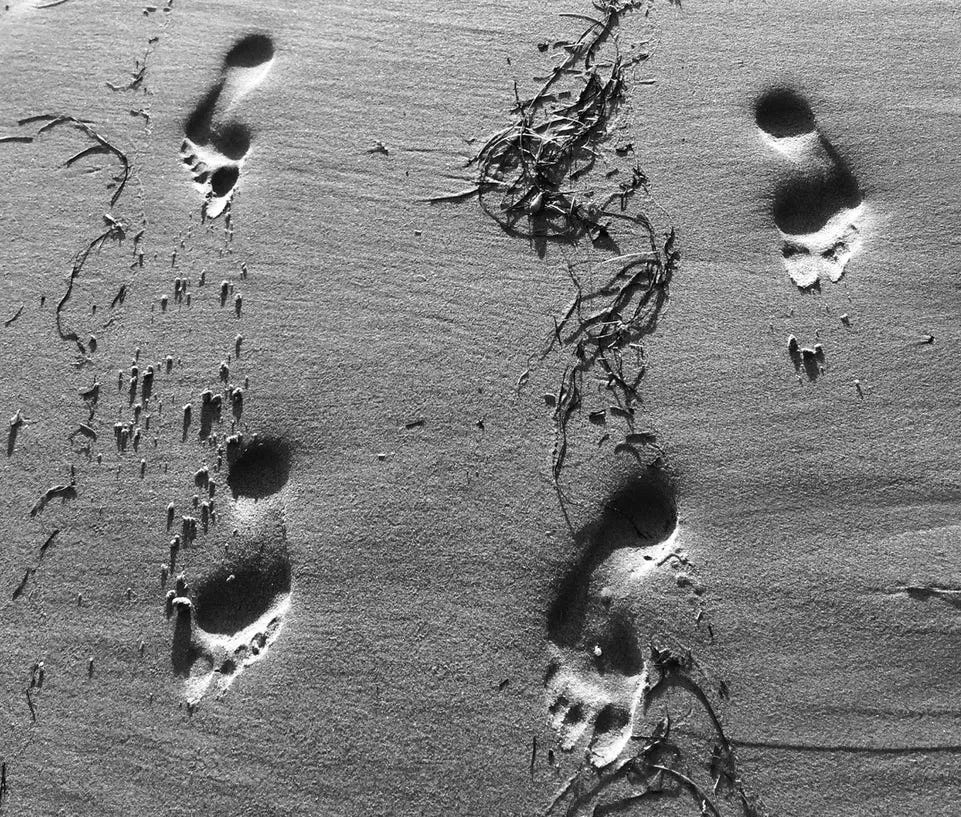
Photo by Don Pierce
As the ecological self strengthens, a new question emerges:
How do I relate to the world without losing myself or overpowering it?
This is the work of right relationship.
Right relationship is not about being agreeable, selfless, or morally correct.
It is not about pleasing others or avoiding conflict.
It is not about shrinking to stay safe or expanding to stay in control.
Right relationship is the ability to inhabit the world with proportionate presence.
It is the shift from:
dominance → participation
collapse → coherence
withdrawal → attunement
performance → presence
urgency → rhythm
Right relationship is not a technique.
It is a way of being that emerges when the self is no longer organized by fear.
Nature teaches right relationship everywhere:
A tree does not overshadow the forest; it takes the space its shape requires.
A river does not apologize for its movement; it follows its course without force.
A hawk does not dominate the sky; it rides the thermals that support it.
A stone does not shrink from its weight; it holds its place in the hillside.
Everything in nature occupies its place without distortion.
Right relationship is the human version of this ecological truth.
It is the ability to:
take up the space that matches your coherence
move at the pace that matches your rhythm
speak from the breath that matches your capacity
act in ways that do not fracture the field
remain yourself without shrinking or swelling
Right relationship is not about balance.
Balance is static.
Right relationship is dynamic — a continuous adjustment to the field you are part of.
When you live from right relationship:
you do not overpower
you do not disappear
you do not contort
you do not collapse
you do not perform
You participate.
You move with proportion.
You respond with clarity.
You sense the field before you act.
You remain coherent even when others are not.
Right relationship is the moment when the ecological self becomes relational.
HumaNatureConnect Activity
Finding your proportion in the field
Go to a natural place where multiple elements coexist — trees spaced at different intervals, stones scattered across a slope, grasses growing in clusters, or a shoreline with varied forms.
Stand or sit where you can sense the proportion of the place.
Let your breath settle.
Let your attention widen.
Then ask:
What is my natural proportion here?
Use these prompts:
What part of me wants to expand.
What part of me wants to contract.
What part of me feels naturally proportionate in this field.
What becomes clearer when I sense my presence as one element among many.
What movement or stillness feels like right relationship.
Stay for ten minutes.
Afterward, write:
What felt proportionate.
What felt distorted.
What felt natural.
What felt like right relationship.
This activity teaches presence without dominance or collapse.
Nocturnal Pilgrimage
Letting darkness reveal your true presence
Step outside after dark. Night removes the visual cues that inflate or diminish your sense of self. Without those cues, your presence becomes more honest.
Stand or sit in one place.
Let the night hold you.
Use these prompts:
What is the shape of my presence in the dark.
What part of me feels too large.
What part of me feels too small.
What part of me feels exactly proportionate.
What becomes clearer when I sense myself without visual reference.
When you return indoors, write:
What remained.
What adjusted.
What felt like right relationship.
Night reveals proportion by removing performance.
Conclusion
Right relationship is the fourth movement of the Ecological Self Series — the moment when identity becomes relational without distortion. It is the shift from dominance, collapse, or withdrawal to proportionate presence.
Nature teaches right relationship through form, rhythm, and coexistence.
When the self becomes ecological, relationship becomes an extension of coherence.
This is the work of right relationship:
to inhabit the world in a way that matches your true proportion.