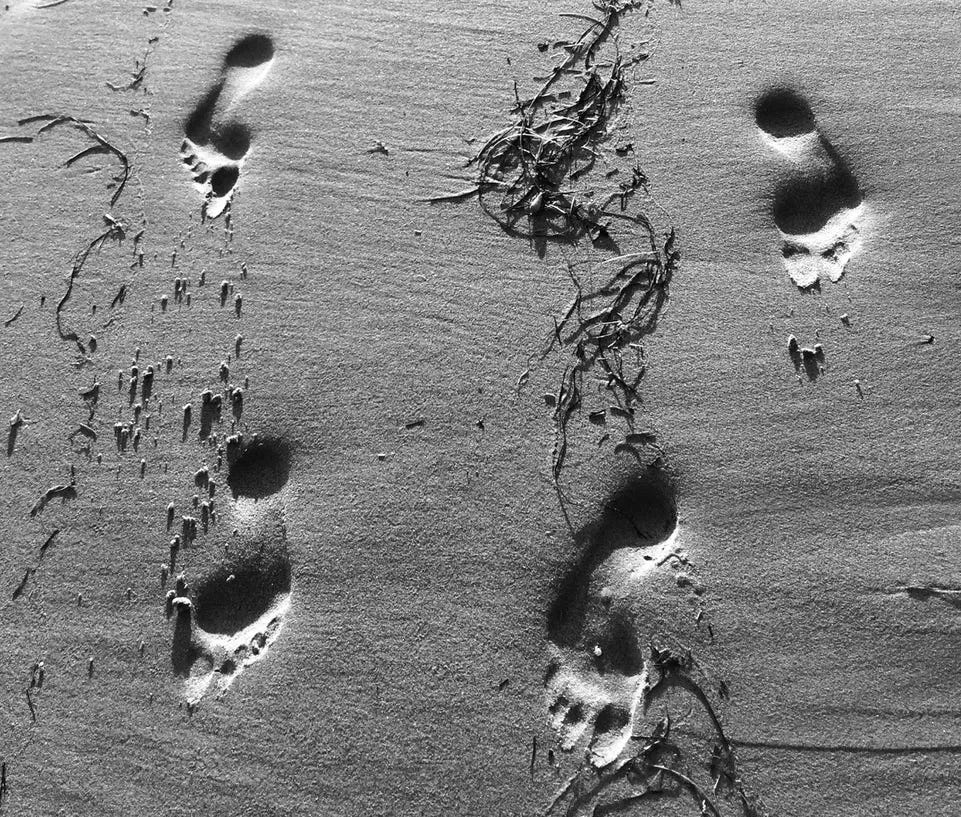
Photo by Don Pierce
Identity in the ecological sense is not a fixed shape.
It is a continuum — a way of being that persists even as conditions change.
This is the final movement of the series:
the moment when the ecological self stops being an insight or a state and becomes a long‑term orientation.
Identity in continuum is not about consistency.
Consistency is rigid.
Continuum is alive.
It is the shift from:
identity as narrative → identity as rhythm
identity as stability → identity as adaptability
identity as self‑definition → identity as ecological participation
identity as memory → identity as ongoing relationship
The ecological self does not remain the same.
It remains coherent.
Coherence is not sameness.
Coherence is the ability to stay yourself while changing with the world.
Nature teaches this everywhere:
A river is never the same water, yet it remains the same river.
A forest changes species composition over decades, yet remains a forest.
A coastline shifts with storms and tides, yet retains its identity.
A tree grows new rings each year, yet remains itself.
Identity in continuum is the human version of this ecological truth.
It is the recognition that:
you can change without losing yourself
you can adapt without collapsing
you can evolve without distortion
you can move through seasons without fragmentation
Identity in continuum is not about holding on.
It is about remaining in relationship.
Relationship with the land.
Relationship with your own rhythm.
Relationship with the field you inhabit.
Relationship with the conditions that shape you.
When identity becomes ecological, continuity is not something you maintain.
It is something you inhabit.
You begin to sense:
the season you are in
the pace that matches your capacity
the relationships that support your coherence
the environments that allow your presence to remain proportionate
the actions that align with your rhythm
Identity in continuum is not about being the same person everywhere.
It is about being the same field everywhere.
A field that adjusts without distortion.
A field that responds without collapsing.
A field that remains coherent even when the world becomes dense.
This is the quiet truth:
Identity in continuum is not a trait.
It is a way of moving through time.
HumaNatureConnect Activity
Sensing your identity across changing conditions
Go to a natural place where conditions shift — light moving across a landscape, wind rising and falling, waves pulsing, birds entering and leaving the field.
Stand or sit where you can feel these changes.
Let your breath settle.
Let your attention widen.
Then ask:
Who am I across these shifts?
Use these prompts:
What part of me remains steady as the environment changes.
What part of me adjusts without losing coherence.
What part of me wants to contract or expand in response to change.
What becomes clearer when I sense myself as a field rather than a fixed point.
What feels like my identity in continuum.
Stay for ten minutes.
Afterward, write:
What held.
What changed.
What remained coherent.
What felt like identity in continuum.
This activity teaches identity as a living rhythm rather than a static form.
Nocturnal Pilgrimage
Letting the night reveal the long arc of the self
Step outside after dark. Night removes the day’s momentum and returns you to a slower, older rhythm — the rhythm of seasons, tides, migrations, and long cycles.
Stand or sit in one place.
Let the night widen your sense of time.
Use these prompts:
What part of me feels older than today.
What part of me feels continuous across years.
What part of me feels shaped by long rhythms rather than short events.
What remains when the day’s identity falls away.
When you return indoors, write:
What felt enduring.
What felt cyclical.
What felt like the long arc of the ecological self.
Night reveals continuity by dissolving the urgency of the present.
Conclusion
Identity in continuum is the sixth and final movement of the Ecological Self Series — the moment when identity becomes durable, rhythmic, and relational across time. It is the shift from identity as a fixed story to identity as an ecological pattern.
Nature teaches continuity through cycles, not constancy.
When the self becomes ecological, identity becomes a living rhythm — adaptable, coherent, and deeply connected to the world that shapes it.
This is the work of identity in continuum:
to remain yourself while changing with the world.