One way to do so is to study how living and nonliving beings arise. This is insightful practice because beings are not as they appear. One needs to determine how beings exist to most effectively offer help or, at least, do no harm.
Other ways to learn from the branches of understanding include how things are impermanent, extending compassion to the planet, becoming more empathetic with the wounded, opening your heart to others, facing the facts, and choosing your friends well.
To The Eleventh Of Many Touchstones Of People-Nature Interfacing…
HumaNatureConnect Activity
If this is not a day when you prefer to spend time in nature without an agenda, do the following activity:
Start-up Protocol
Read The Text — Use your literary sense, your mind sense, and your reason sense to read your way towards happiness and sustainability but do not just be an arm-chair traveler. Use your other natural senses as you also spend healthful, fun, and productive time in nature on your way to Gladandgreen Junction.
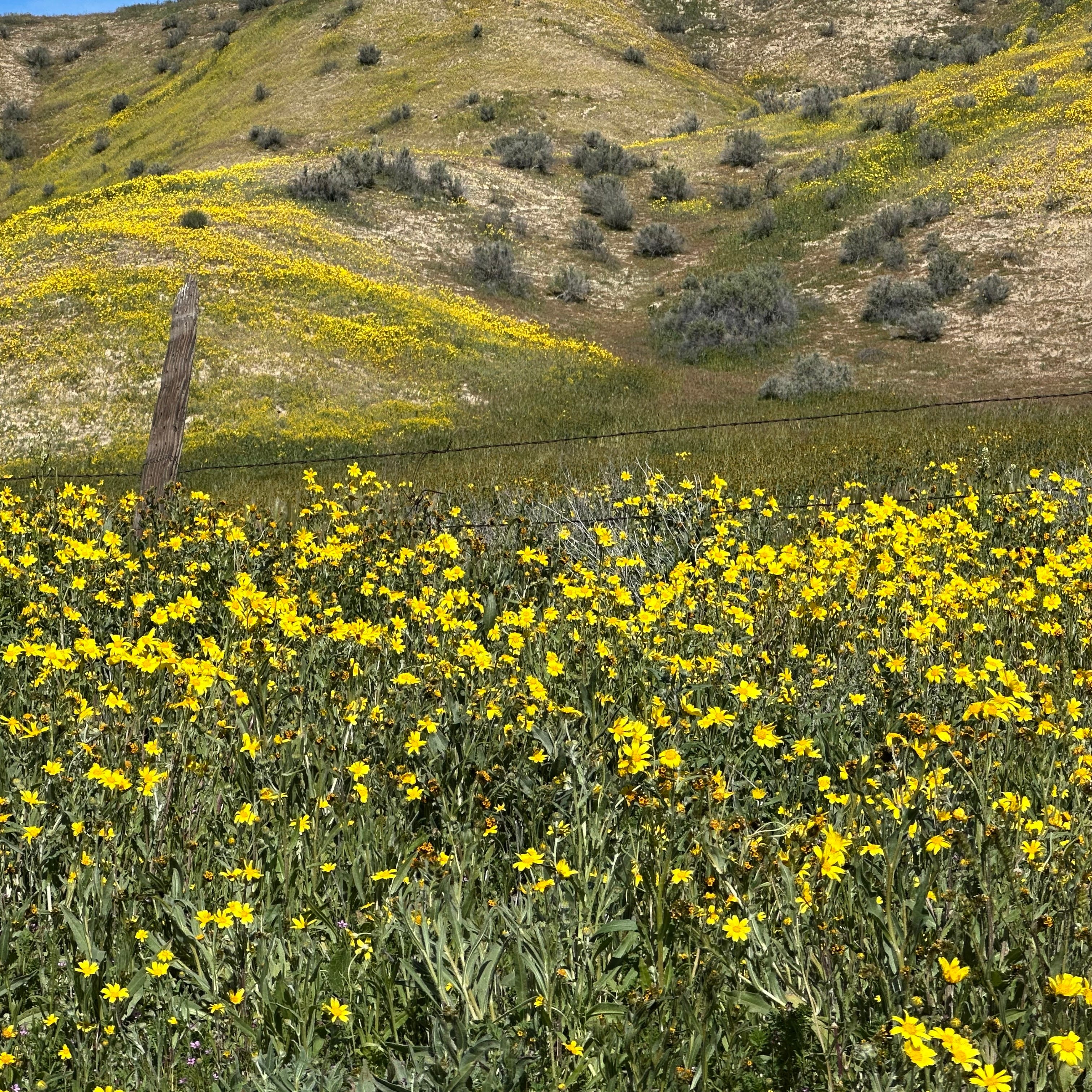
Attractive Natural Being — With pen and journal in hand, go to a natural area and look around to find a natural being that is attractive to you.
Appreciation and Gratefulness — While admiring your chosen being, appreciate it with your inhalations and give it gratitude with your exhalations.
Consent — Once you find an aspect of nature that is attractive to you continuously for at least ten seconds, think of your continued attraction as your consent to have a connection experience that will lead to your optimal functioning.
The Natural Senses — After gaining consent to enter into a connection experience with the natural being, have available the list of Natural Senses. Mix it up by using at least one radiation sense, one feeling sense, one chemical sense, and one mental sense, to widen your perception, and add variety to your experience.
HumaNatureConnect Activity — After reading the text, finding a natural being, appreciating it, gaining its consent, and scanning the list of natural senses, use your heightened awareness and nature-induced optimal functioning to do the following activity and engage in as many follow-up components as you see fit.
Generating Patterns Of Human-Nature Interaction # 11: Harvesting
For this activity, bring in the harvest after you feel connected to your chosen attractive natural being. In doing this interaction pattern, you could be using too many hardwoods from a rainforest (a perverse interaction pattern) or you could be picking vegetables from your home garden (a domestic interaction pattern). By choosing instead to digging up clams with indigenous people (a wild interaction), you would be doing something that will have a positive psychological affect on you.
In your journal, write down what meaning you would derive from this wild interaction pattern; what joy, if any, it would produce; how, if at all, it would build within you a bond between your mind and nature; and how, if at all, the wild version of this interaction pattern would be better for you than the perverse or domestic instantiation of the same interaction pattern; and how not being allowed to participate in this sort of wild interaction pattern ––digging clams with the Eskimos––would make you feel? How does interacting in this way in the presence of your attractive natural being make you feel? How would it feel to have this interaction without the presence of your attractive natural being? In writing down these responses you will be adding to our collective nature language, so important to rekindling the bond between humans and nature. Look over your impressions and think about them as you fall asleep tonight before dreaming.
Follow-up Protocol
Natural Systems Reflection Process
For best results, write down your impressions of this activity in your journal using as many of the following components as you see fit, afterwards, share your interpretations with others.
Journal Components
General Description — writing a general description of how you did the activity and what happened.
Freeform — writing, in freeform, what you found attractive about your natural being.
Three Qualities — writing down three qualities you found most attractive about your natural being.
Three Learnings — writing down three things you learned from this activity.
Self-esteem & Trust — writing down how, if at all, this activity changed your self-esteem or trustfulness of Nature.
Changes To Self — writing down what aspects of your self, if any, were changed by this activity.
Honor Yourself — praising yourself and your commitment to making another stop along the Heartwood Path good for yourself and the world.
I’m A Person Who . . . — writing down three different so-called “G/G Statements” using the following format: “This connection experience tells me that I am a person who__________.”
Feelings If Activity Taken — writing down a sentence about how you would feel if you lost your ability to experience this connection.
Nature Compared To Self — creating a sentence that reads: “I love this (insert words that identify the attractive natural being) because it is (insert words that refer to the qualities you like about the natural being).” Then, creating a parallel sentence that reads: “I love (insert the word “myself”) because I am (insert the same qualities as before).” If only one follow-up component can be done at any one waypoint, do this one. It reveals a lot about the participant quickly. In group settings it is a very good way to get pertinent conversation underway.
Ride The Green Wave — determining whether you understand and agree with all of the Ten Green Wave Validation Statements. In your journal, give yourself a plus sign (+) if you do agree and a minus sign (-) if you do not agree. Do not worry if you do not give yourself a plus sign (+). These notations are merely for your own information. Regardless of your own plus or minus assessments, you are always free to move on; or, if you are attracted to do so, you can always revisit the waypoint, ask for Guidance, and/or redo the activity.
Two-Word Summary — writing down two words that summarize your response to this activity.
The Heartwood Path Exchange:
Swap Your Ideas, Impressions, Photos, And News With Others
Post your impressions and photos in the Comments at the bottom of the page
Engage with others in your Heartwood Path course or salon
Create your own salon that meets regularly online, by phone, or in person
Discuss your impressions with trusted family members and friends
Post your impressions and photos in our EartHeart Networking Forum
Post your impressions on this specific waypoint on our Facebook Page
Join the broader conversations on our Facebook Page
To see what conversations you can inspire, share your photos and impressions about anything pertaining to your journey down the Heartwood Path on your Facebook page, on Instagram, and on other social media accounts. If you like, include “#heartwoodpath” and “#waypoint(insert waypoint number here)” wherever pertinent
Your input is vital. Enjoy sharing!
Heartwood Path Axioms:
Key Assertions From Waypoint 2.67:
2.67.1.
Learn the branches of understanding, as presented in the unabridged text.
2.67.2.
Determine how beings exist to most effectively offer help or, at least, do no harm.
2.67.3.
Develop a Trunk of Determined Contemplation by achieving enduring calmness, focusing the mind, removing distractions, and finding a happy medium between excitement and lethargy.
2.67.4.
Understand how things arise, how things are impermanent, how to extend compassion to the planet, how to stay healthy yourself, how to open your heart to others, how to face the facts, and how to choose your friends well.
2.67.5.
EartHearts are open to the feelings, pain, and suffering of others (empathy) and desire to alleviate such suffering (compassion) strongly enough to do something about it (altruism).
Nocturnal Pilgrimage 2.67:
Tend To Your Dreams Before Heading To The Next Waypoint
Aizenstat presents three steps to healing through dreaming:
naming of any wounded image,
offering relief to the wounded image, and
practicing––doing the healing ritual repeatedly over time.
The application of each of these steps is a subtle and complex art. Each operation requires completion before moving on to the next” (Aizenstat, 2009, p. 192).
Ways To Perform A Reality Check
Number Three: Look For Reminders.
You can choose any kind you want; but, since you are practicing eco-psychology as you go down the Heartwood Path, you might as well look to nature to remind you to ask “Am I dreaming?” Perform this reality check whenever you move from sun to shade, whenever you pass under a big tree, whenever you see a squirrel, when you cross a creek, whenever you hear a bird song, or whenever you experience some preset natural reminder.
When you do the activity at the next waypoint in nature try meditating with the image of your attractive natural being in your mind’s eye or use a soft focus while you are sharing space with your attractive natural being. As your mind wanders, return your attention gently to this being or landscape. Work to withhold judgement. See if your sense of separation does not start to diminish during your meditating and space sharing. Look for signs that your are feeling more connected and comfortable in the presence of your natural attractive being.
Continuing with our nocturnal tradition, tend to your dreams, and then move to the next waypoint, “Scrutinize.” There, you will learn about being a good follower and more.