

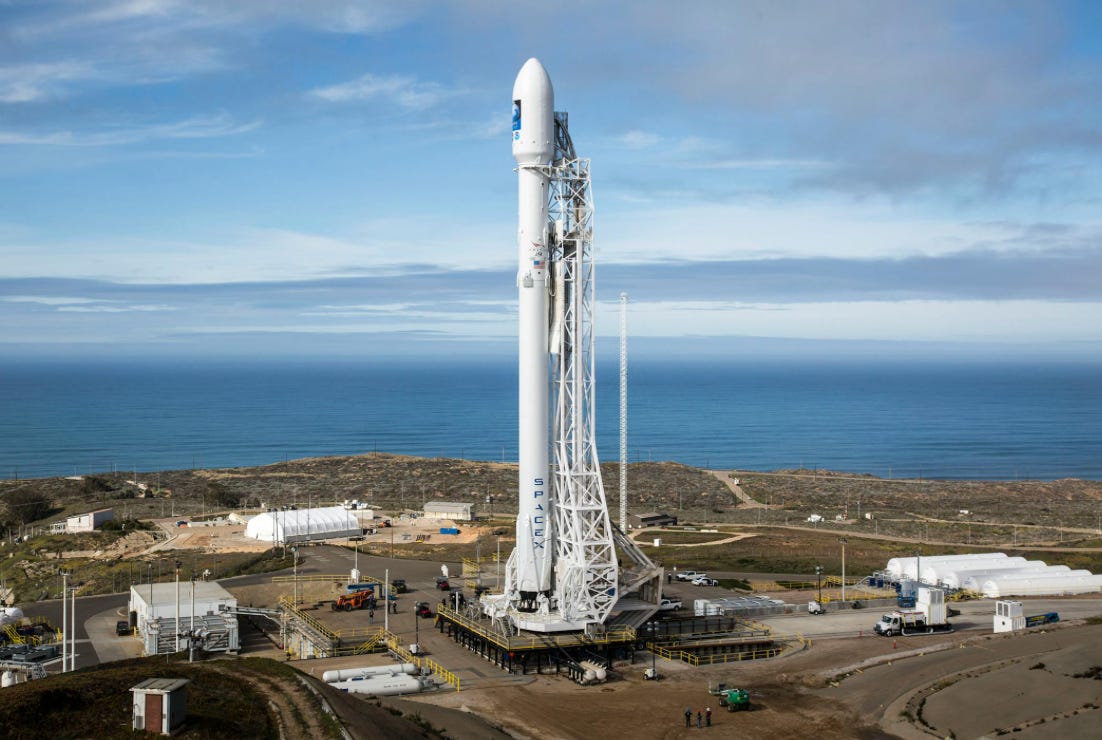
Photo by SpaceX.
There are good reasons for going to Mars, and there are also good ecological cautions. The issue is not simple, but a nuanced ecological-psychological and planetary-ethics question. Here is a thoughtful, balanced analysis that resonates with ecological responsibility and relationship thinking.
What are the good reasons for mankind to go to Mars?
1. Why Mars is Ecologically Important
A. A.
A Mars settlement would be a repository for Earth’s cultural and biological heritage in the event of an asteroid strike, supervolcanic explosion, or runaway climate.
It’s not about “escaping Earth,” it’s about assuring life’s continuation throughout the universe, protecting the trajectory of biodiversity over millions of year.
It’s an ecological insurance policy.
B. Planetary Stewardship Skills Learned on Mars Feed Back Into Earth-Care
Closed-loop eco systems are required to create a sustainable Mars settlement:
Water recycling
atmospheric regeneration
Soil-free Agriculture
circular material economies
Mars colonies will force people to use regenerative systems, and not extractive systems.
Think of Mars as an “experimentation laboratory”:
Ultra-low-waste Living
Energy independence
Closed ecosystem management
What we learn about making Mars life possible also helps us to stop the destruction of life on Earth.
C. Expanding Ecological Consciousness
Many ecologists believe that a major threat facing Earth is the human psychological smallness - treating our planet as a closed space rather than an living cosmos.
Mars exploration could be:
deepen awe
Expand your humility
To increase the sense of belonging in a wider universe
The following principle can be used to support ecological psychology:
by expanding the frame, you will care more for your local biosphere.
Numerous astronauts have already experienced the Overview Effect. This is a profound eco-awakening when they see Earth from space. Mars missions may amplify the global impact of this.
2. Ecological Reasons Against Going to Mars
A. A.
If we approach Mars with the same mentality that destroyed Earth, then
resource extraction
territorialization
Neglect of Planetary Ethics
Mars could become another frontier of sacrifice.
The danger does not lie on Mars, but in bringing an unreformed eco-consciousness into space.
One must ask, from an ecological psychology perspective:
Is humanity mature enough to responsibly engage a second world?
B. Opportunity Cost: We Need Ecological Repair on Earth Now
Some people argue that:
habitat restoration
Biodiversity recovery
Reversing atmospheric damages
Not billion-dollar projects on the planet, but priorities.
Mars becoming:
a distraction
A technological fantasy
Another form of escape from the difficult ecological work on Earth
Mars missions that are not explicitly designed to help Earth regenerate risk creating a divided focus.
C. Planetary Contamination & Ethics Toward Non-Earth Life
If Mars harbours any microbes, even a rare and fragile biosignature, human settlement could be possible.
extinguish native life
contaminate research
destroy a unique evolutionary story
Mars could be entitled to its own flourishing from an eco-ethical point of view.
3. The Middle Path: A Mature Ecological Justification
There is a coherent ethical path for exploration that does not impose dominance under an ecological psychology framework, such as the one used in your eartHearts research:
A. Mars is only worth it if it helps you to care for Earth.
Mars should be called:
A teacher
a mirror
a regenerative experiment
--not an escape pod.
B. B.
To enter a new universe, you need:
You can also find out more about the following:
Minimal impact
Deep Relational Awareness
Even more than any wilderness on Earth.
C. Mars-driven technologies must benefit Earth first.
As an example:
Water recyclers
circular life-support systems
ultra-efficient solar arrays
Soil-free Agriculture
Habitat construction at minimal ecological cost
These should be designed with earth application as a goal.
Conclusion: Are There Good Ecological Reasons?
Mars exploration can be done, but only with the following:
Ecological consciousness
Ethics
regenerative goals
Humility before the other worlds
Mars is not Earth’s replacement**
There is no environmental reason to send humanity to Mars if it goes there as extractors.
The journey is not only justified but also transformative if humanity travels as learners and caregivers.
Essential Readings:
• […]
• […]

Recommended Readings:
• […]
• […]
• […]
• […]

For additional readings, visit Heartwood Path Beat.