

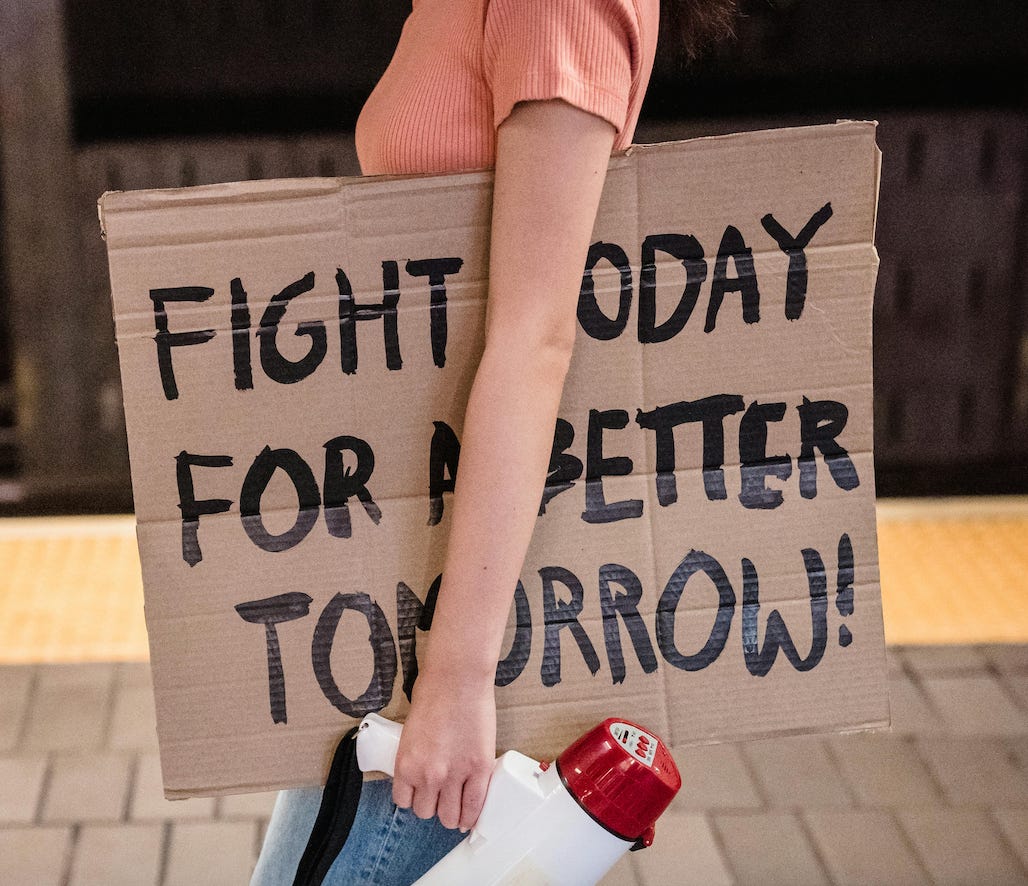
Photo by Lara Jameson, Pexels.com
Partisanship sharpens differences and mobilizes bases but often blocks compromise. In contrast, nonpartisanship smooths divisions and encourages cooperation but may dilute ideological clarity.
When partisanship is high, fewer public laws are enacted. Gridlock occurs when legislators delay or block bills to deny the other party a “win.” Higher productivity occurs with higher nonpartisanship.
Certain issues are left underdressed by recent partisan-controlled Congresses. These include:
access to affordable, quality childcare;
parental leave (paid leave), universal pre-K, etc.;
policies for mental health (prevention, community access, parity of insurance coverage) and addiction (opioids, but also other substances, log-term support) are under-resourced or fragmented;
affordable housing;
support for people experiencing homelessness;
eviction prevention;
housing stability;
economic inequality by race;
school funding disparities;
accessibility and mental health services for those with disabilities;
environmental policies, including environmental justice and climate impacts on vulnerable communities;
job stability, minimum wage policies, and support for working families; and
voting rights.
To begin to address these issues, a new congress may have to be populated with legislators who are:
more empathetic,
resilient,
aware,
committed,
enthusiastic,
adaptable,
less committed to partisan policy agendas,
capable of deep reflection,
tolerant of a highly competitive environment, and
willing to collaborate.
Along with such changes, reform is necessary in the following ways:
reduce partisan gridlock,
increase civic engagement,
test policy innovation safely,
cultivate the inner development of legislators
undue the over reliance on party hierarchy
reduced polarization, and
a reduction in gaps in citizen representation.
HumaNatureConnect Activity
Nature as a Testing Ground for Political Truths
Purpose:
To take the bullet points (like partisanship vs. nonpartisanship, reform, deliberation, local involvement, etc.) and test them in nature through analogy and observation.
Steps & Testable Truths
Partisanship vs. Nonpartisanship
Activity Find out two different species of plants growing next to each other (e.g. oak and pine or wildflowers & grass). Observe whether they are competing (roots shading one another) or cooperating (providing shade/moisture to each other).
Testable Truth: Some systems are more successful in competition than others, which is similar to partisanship and nonpartisanship.
Reform Before Progress
Activity: Search for trees that have been damaged by storms and sprout new branches, or look out for fungi that are breaking down logs.
Testable truth: Before new growth can thrive, it is often necessary to first break down or reform.
Deliberation
Activity Sit near a stream flowing or watch the wind blowing through the grass. Noticing how the direction of the wind changes gradually and not instantly.
Testable Truth: Natural processes are slow, emergent and not rushed, like deliberative democracy.
Integral perspectives (wholeness)
Activity : Select a square yard of grass or soil. List all visible life forms (insects and plants, fungi and roots).
Testable Truth: Wholeness can be seen when all perspectives and roles are considered; one patch of ground contains many actors.
Local Involvement
Activity - Take a close look at any beehive or anthill. If you don't have any nearby plants, look at how they form a mini ecosystem (e.g. a grove supporting shade plants).
Testable Truth: Local grassroots organizations sustain larger systems, just as neighborhood involvement supports democracy.
Barriers To Change
Activity - Notice the growth that is being blocked - a plant struggling in the shade, or a vine stifled by a rock.
Testable Truth: Environmental Conditions (like political Structures) can Block flourishing until barriers are shifted.
Interconnection & Dependency
Activity Trace the food chain, e.g. leaf - caterpillar-bird.
Testable Truth: Everything is interconnected; nothing exists alone, such as in communities of politics.
Cycles for Renewal
Activity: Collect evidence of cycles, such as seed pods, fallen foliage, and new sprouts.
Testable Truth: Cycles in decline and renewal can be observed -- emulating reform cycles within governance.
Voices unheard
Activity: Listen for quiet sounds (crickets, wind shifting). Compare the quieter sounds (birds, rustling leaves) with louder ones.
Testable Truth: Not every voice is equally audible - marginalized parts in nature echo the silenced voices of society
Change In Nature
Activity: Find out about metamorphosis.
Testable Truth: A real change is often a complete transformation and not just superficial shifts. This complete change would be the case for integral politics.
Closed Reflection
Participants should write the following at the end of their activity:
The one political fact they discovered through nature.
The one action that is inspired by their observations.
One way to promote such reforms is the formation of a mock integral party system. That will be the subject of a future post.
Essential Readings:
• […]
• […]

Recommended Readings:
• […]
• […]
• […]
• […]

For additional readings, visit Heartwood Path Beat.