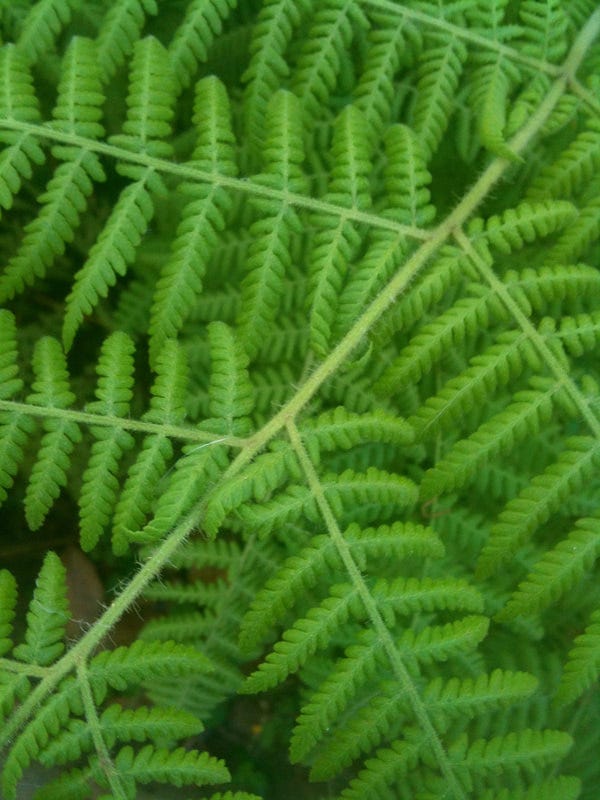
We will recommend repeatedly that you go outside to places that are not artificial. You will be asked to do this to make sure that you are moving away from your everyday life that is, more than likely, conducted mostly indoors.
For the same reason there are retreats, you will be asked to move to unconventional spaces, places where an attractive natural being is located, so that you can conduct spiritual practices with a fresh and open perspective.

Meet regularly with attractive natural beings.
I feel best in certain dynamic places outdoors: on immense rivers, in sparkling streams, in ocean waves, and under waterfalls (both above and below ground), for example.
It turns out that one of the things that may be giving me a boost in such places is the preponderance of negative ions that occurs when moving or falling water breaks up into droplets. When this happens, negative ions (electrically charges atoms)—and, specifically, negatively charged electrons—“are knocked loose from the water molecules then combine with oxygen atoms in the air to create negative ions” (MacGregor, 2010, pp. 147-148). In each sugar cube-size bit of air in most outdoor places there are 1,200 to 4,000 negative ions (MacGregor, 2010, p. 148). This number can peak to 2000 for country air, 50,000 for mountain air, and to over 100,000 negative ions where ocean waves or waterfalls interact with the land. Compare these relatively high numbers to the following relatively low numbers of negative ions indoors: in smoky indoor air, 0-100; in sealed office buildings, 0-250; and in normal indoor air with the windows open, 250-500 (TotalWellnessWorldwide Website).
Indoor air that is surrounded by a grounded steel structure (like a typical modern skyscraper) draws off any negative ions. Central heating and air conditioning strips the air of negative ions. Synthetic carpets, upholstery, and curtains absorb negative ions. These are some of the reasons why germs and viruses flourish in indoor dead air.
It is best to sleep, work, and live in outdoor country air. Mountain air is invigorating. At concentrations of 50,000 negative ions per cubic centimeter, the air is both stimulating and relaxing. Such concentrations also kill germs.
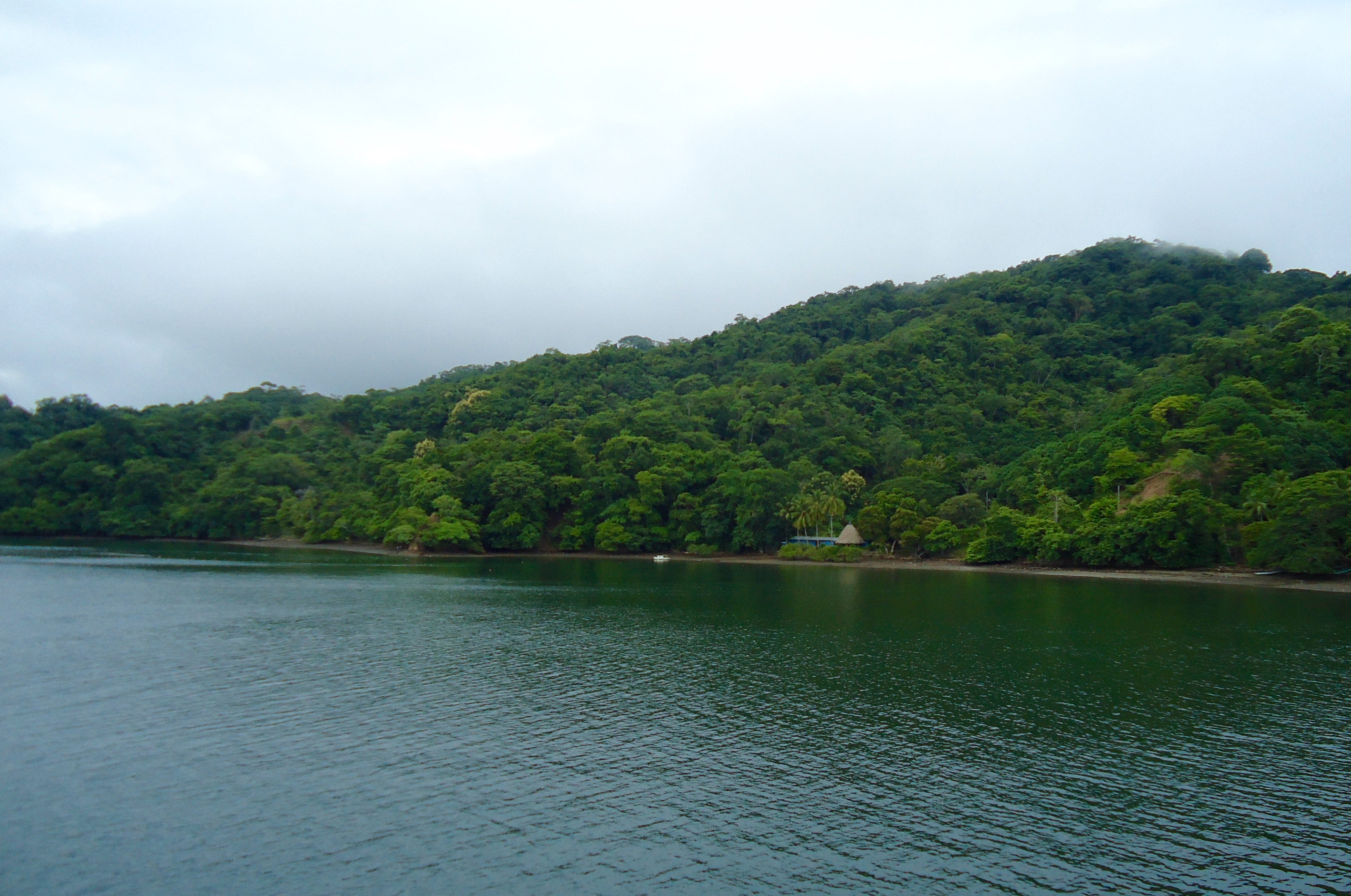
For the same reason there are retreats, you will be asked to move to unconventional spaces, places where an attractive natural being is located, so that you can conduct spiritual practices with a fresh and open perspective.
For these reasons alone, it is a good idea to regularly sit by an outdoor being—as we will be suggesting you to do during this course. Here are some other reasons:
Richard Louv, author of Last Child in the Woods and The Nature Principle identifies why you will be encouraged to commune with a natural being repeatedly in this series of courses. He speaks of “the transformative powers of nature,” how it “can reshape our lives now and in the future,” and lists several reasons for the “re-naturing” of everyday life, including:
To help balance for our high-tech lives.
To increase our intelligence, creative thinking, and productivity.
Make nature as important as human history.
Conserve and create natural habitat (Louv, 2012, p. 5).
Writes Louv:
“Simply living and working in a natural or re-natured environment… can have a profound impact on our mental health…
The great work of the twenty-first century will be to reconnect to the natural world as a source of meaning…” (Louv, 2012, pp. 66-246).
I am an eartHeart—formerly known as “environmentalist”—formerly known as a “conservationist.” That means I care as much about our relationship to place as I do about the place itself. I support a spiritual/political movement that delivers what the heart has always needed: a meaningful relationship to the diversity of life. With such a movement, we can go beyond sustainability. I, for one, would not want only a sustainable environment any more than I would want only a sustainable intimate partnership.
The place, the people, and the relationship need to be durable, but they also need to grow and transcend.
Not fearful of the future, I want to be a good ancestor—one that has banished prejudice, not only between the races, but also between people and the land, and between the generations. There ought to be not only a botanical garden in every city but also a sustainable and creative town in every botanical garden. The Ecozoic Era the eartHearts of the Heartwood Path seek to promote is a time in the not-so-distant future when humans will enhance the earth rather than destroy its species. This Era can only dawn within the hearts of people, within those who are made more expansively loving through nature experiences. It will be a time of not only appropriate technology but also of green people, made verdant by systematic experiences with attractive natural objects, which are really beings who serve as emissaries from nature, beings who are intelligent, beings who can send us smart signals, if only we learn to listen.

To reduce stress, stimulate creativity, develop cognitively, and improve all the senses, expose yourself to a natural setting.
We will need to make new things and approaches expected and normal. Louv (2012) writes about the three aspects of a proposed expanded environmental movement: the First Ring of traditionally funded, direct-service, nonprofit, and conservation organizations; the Second Ring of individual docents and other volunteers; and a Third Ring of networked individuals, families, associations and communities using social networking to connect people to nature and each other. This Third Ring could help find the people the other Rings find too difficult to reach. The Third Ring could also expand political clout. Help add the Third Ring to the environmental movement by spreading the word about the Heartwood Path.
What is needed is an international network of HumaNature teachers and life coaches, people who understand the importance of nature experiences. I propose to call these Third Ring teachers and life coaches, at least the ones that go down the Heartwood Path, “eartHearts.” They will need to gain power, honor, connectivity, and identity. For these purposes, we offer the Heartwood Path and its website.
EartHearts will need to develop their approach, complete with adequate theory, suggested activities, and well-stocked tool kits. They will need to raise funds. They will need to be able to articulate the benefits they will provide, the efficiencies they will put into place, and the specific problems they will address. They ought to talk not only about outer world global climate change, for example, but also about inner heart climate change.

To help create a new arm of the environmental movement, commune with nature and recollect the importance of a specific natural being or a specific part of the natural world to your health, to your ability to learn, to your happiness, and to your spirit, and determine how you can network with like-minded people.
The environmental movement needs to move, and this is the direction I see it needing to go: toward the Third Ring of social networking that encourages people to regularly get up from their computers, leave their mobile devices at home or turned off, immerse themselves in the informed, intelligent vibrations of attractive natural beings, and make sure there are and always will be enough beings and places for this immersion. In this effort, I encourage eartHearts to remember that degraded habitats will produce degraded people and vice versa.
Along with the three "rings," the environmental movement has three messages. Each has its benefits. Despite these blessings (discussed next), participating in all rings and delivering all messages can be dissipative.
EartHearts will not focus much on environmental movement’s First Message: the earth is facing an eco-catastrophe. We all know that by now. The doom-sayers gave us a way to kick-start a much-needed movement, but claiming that the earth is or soon will be beyond re-naturing is depressing. True, untrue, or waiting to be proven, gloom and doom is not capturing the public’s imagination.
EartHearts will also not focus much on the environmental movement’s Second Message: green economic benefits. If we all buy natural shampoos and the like a lot of natural plants and many natural places will be pulverized. The main thing that will be saved is the Aveda Corporation.
The corporate hijacking of the consumer’s ecological sensibilities has left the public too placated.
This corporate hijacking has left consumers too brainwashed into thinking that buying green products is the only needed remedy. And this corporate hijacking has left the public too jaded by the false claims of corporate green-washing. If the Second Message of green economic benefits is all that is needed then there would not be so many graduates of college environmental programs unemployed or looking so long for decent jobs. First Message claims of impending catastrophe and Second Message claims of green economic benefits, while both are true, are also both partial. They are not the whole story.
Another message, the one eartHearts will focus on, is, therefore, very much needed. The Third Message of the environmental movement is about the importance of the natural world to our health, to our learning process, to our happiness, to our spirit. As Louv (2012, p. 285) points out: “exposure to natural settings reduces stress, stimulates creativity and cognitive development, and tunes in all the senses.” This Message has with it a new, ever-emerging call to action. Begin by continuing this course, and by enjoying your time with your chosen natural beings and their attractive natural surroundings. If finding such places nearby is difficult, you have identified another action step.
We need not only equal protection from the bad stuff of society but also equal access to the good stuff. Some of this good stuff is green space and green jobs but some of it is also green rights that include access to nature. Additionally, we need green ethics and green philosophies that inform us of our inseparability from nature. We cannot allow nature to be plundered nor can we allow too much of it to be placed in protective house arrest. We need to pursue more open access to the wild. We also need more happiness—a grand gladness that comes from being made “whole” (known in the Bible as being made “perfect”) through the kinds of conversion experiences outlined in this series of courses.
Spiritual practices in the presence of attractive natural beings in wild places can be deeply enriching and transformative.
Engaging in such practices enables individuals to connect with nature, experience awe and unlock spiritual dimensions. Here are some aspects of spiritual practice in these settings:
Being present in nature means being fully immersed and appreciating its beauty without judgment, creating a deeper bond with our surroundings.
Recognizing and showing gratitude for nature's splendor can create a deepened reverence and connection.
Finding a quiet space to meditate or engage in contemplative practices helps individuals connect to both themselves and nature's energies.
Rituals that recognize nature's gifts such as ceremonies or symbolic offerings can help people engage spiritually with their natural surroundings.
Grounding exercises such as walking barefoot or sitting on the earth can provide individuals with an invaluable connection with nature's energy.
Creative activities inspired by nature's beauty can be a transformative spiritual practice that allows for self-expression and bonding with nature.
Spending time alone in nature allows for reflection and deepened interaction with nature, providing an ideal setting to discover deeper spiritual experiences.
Paying attention to the sounds and movements of animals and plants can be an effective form of communication.
Engaging in gentle, meditative movement practices in natural settings provides for an energising integration of mind and body, tapping into the energy flow of our surroundings.
Utilizing nature as the backdrop for setting spiritual intentions or offering prayers can bring added depth and significance to a practice.
Recognizing one's role in environmental conservation and adopting eco-friendly practices can be seen as an act of spiritual worship to protect nature.
Integrating spiritual practices with the cycles and elements of nature can deepen one's connection and appreciation of Earth's cyclical rhythms.
Spiritual practices conducted in wild places with attractive natural beings can be unique and varied, providing an opportunity to deepen connections to nature, foster feelings of awe and wonder, and explore its spiritual dimensions.