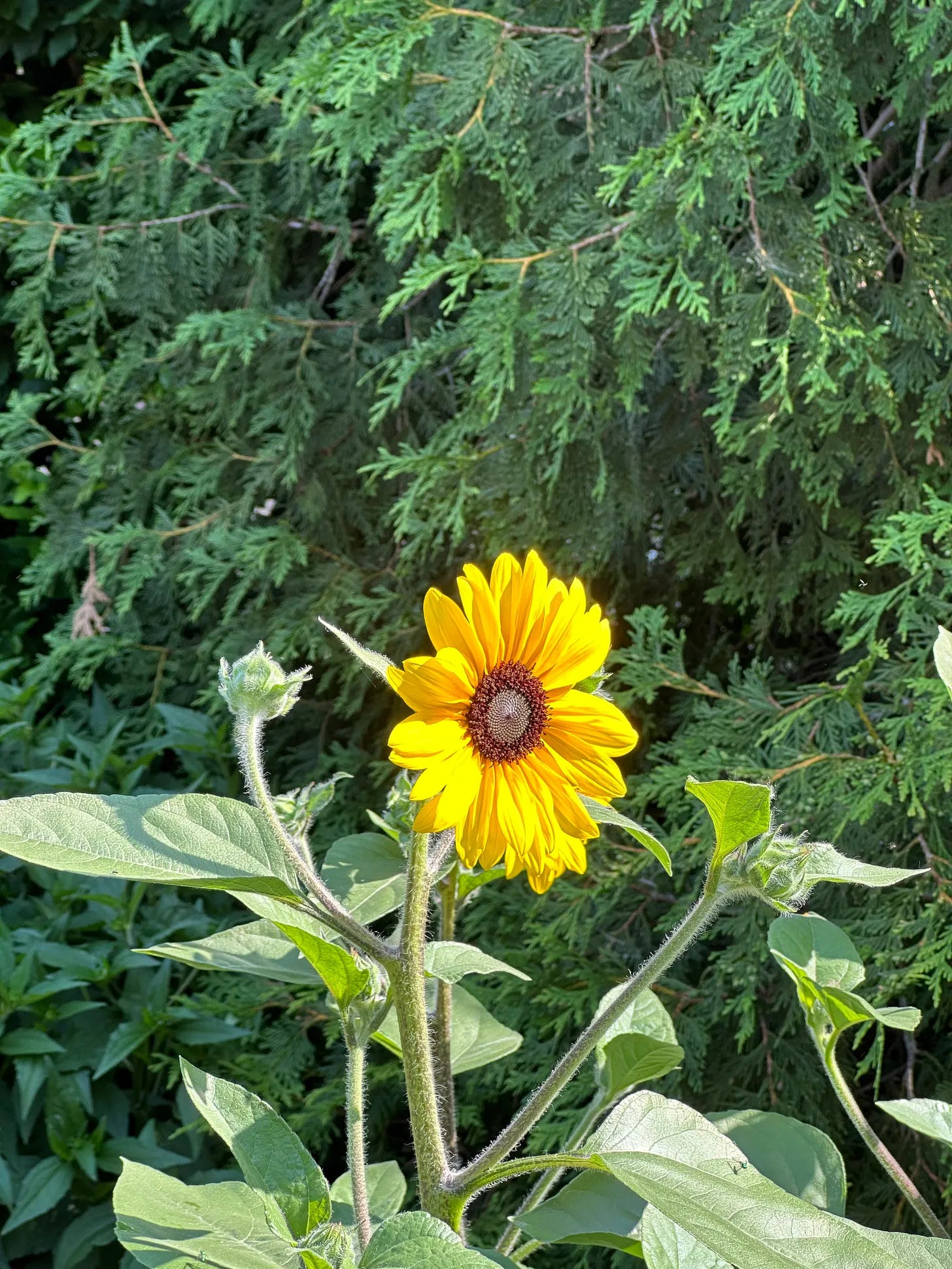
Photo by Don Pierce
There are moments when fear becomes a world unto itself. The mind begins scanning for danger everywhere, interpreting shadows as signals and coincidences as patterns. This experience is often called paranoia, but that word can feel cold and clinical. What’s actually happening is something more human:
the survival system is working too hard.
Paranoia is not a sign of weakness.
It is not a moral failing.
It is not “irrational.”
It is misdirected survival intelligence — the same intelligence that kept our ancestors alive.
Nature helps recalibrate that intelligence because nature is the original environment the survival system evolved to understand.
Why the Mind Overestimates Threat
When someone is overwhelmed, the nervous system shifts into a state of hyper‑vigilance. In this state:
the brain looks for danger everywhere
neutral events feel meaningful
coincidences feel intentional
silence feels loaded
the world feels smaller and sharper
This is not “imagining things.”
This is the survival system trying to protect you — even when the danger is internal rather than external.
But a survival system without accurate feedback becomes confused.
It needs an environment that teaches it what is truly dangerous and what is not.
That environment is nature.
Nature Gives Honest Feedback
In nature, danger is simple and direct:
a cliff edge
a fast river
a rattlesnake
a storm
These are real threats, and the body recognizes them immediately.
But nature also contains vast amounts of non‑threat:
a meadow
a grove of trees
a quiet trail
a still lake
These are safe, and the body recognizes that too.
This contrast — real danger vs. real safety — helps the survival system recalibrate.
It learns again what deserves fear and what does not.
Why Human Environments Confuse the Survival System
Human environments are full of ambiguous signals:
glances
conversations
noises behind walls
strangers
technology
social expectations
The survival system doesn’t know how to categorize these.
It tries to interpret everything, and interpretation becomes misinterpretation.
Nature removes ambiguity.
A tree is just a tree.
A sound is just a sound.
A shadow is just a shadow.
This simplicity is medicine.
A Practice: Reality Testing Through Environment
This practice helps the mind distinguish between internal fear and external reality.
It is gentle, non‑confrontational, and safe for someone in distress.
Step 1 — Step into a natural space
A yard, a park, a trail, a beach, a garden.
Step 2 — Identify one thing that is truly dangerous
A steep drop, a thorn, a slippery rock.
Step 3 — Identify one thing that is truly safe
A patch of grass, a tree trunk, a smooth stone.
Step 4 — Say (silently or aloud):
“This is danger.”
“This is safety.”
This is not about logic.
It is about retraining the survival system using the environment it understands best.
How This Helps Someone Who Feels Threatened
When someone feels watched or unsafe, their mind is trying to protect them.
But protection becomes suffering when it cannot turn off.
Nature helps by:
lowering sensory load
reducing ambiguity
offering honest feedback
providing real safety cues
giving the body something trustworthy to respond to
This does not erase fear.
But it softens it.
It gives the nervous system a chance to breathe.
How Caregivers Can Use This Without Arguing or Agreeing
When someone is frightened, arguing with their fear rarely helps.
Agreeing with the fear can make things worse.
Nature offers a third option.
You can say:
“Let’s step outside for a moment.”
“Let’s look for something that feels safe.”
“Let’s find something steady together.”
“Let’s see what the environment is telling us.”
These are invitations, not corrections.
They redirect attention without invalidating experience.
They preserve trust — the most important thing you have.
Closing Reflection
Paranoia is not madness.
It is the survival system trying to protect a person who feels unsafe inside.
Nature helps because it speaks the language the survival system understands:
real danger
real safety
real signals
real calm
It teaches the body what is true, not through argument, but through presence.
When the mind is overwhelmed, nature becomes a teacher —
not to cure, not to fix, but to guide the survival system back into balance.
This is the ecology of paranoia:
fear softened by environment,
threat recalibrated by reality,
and the nervous system slowly remembering what safety feels like.