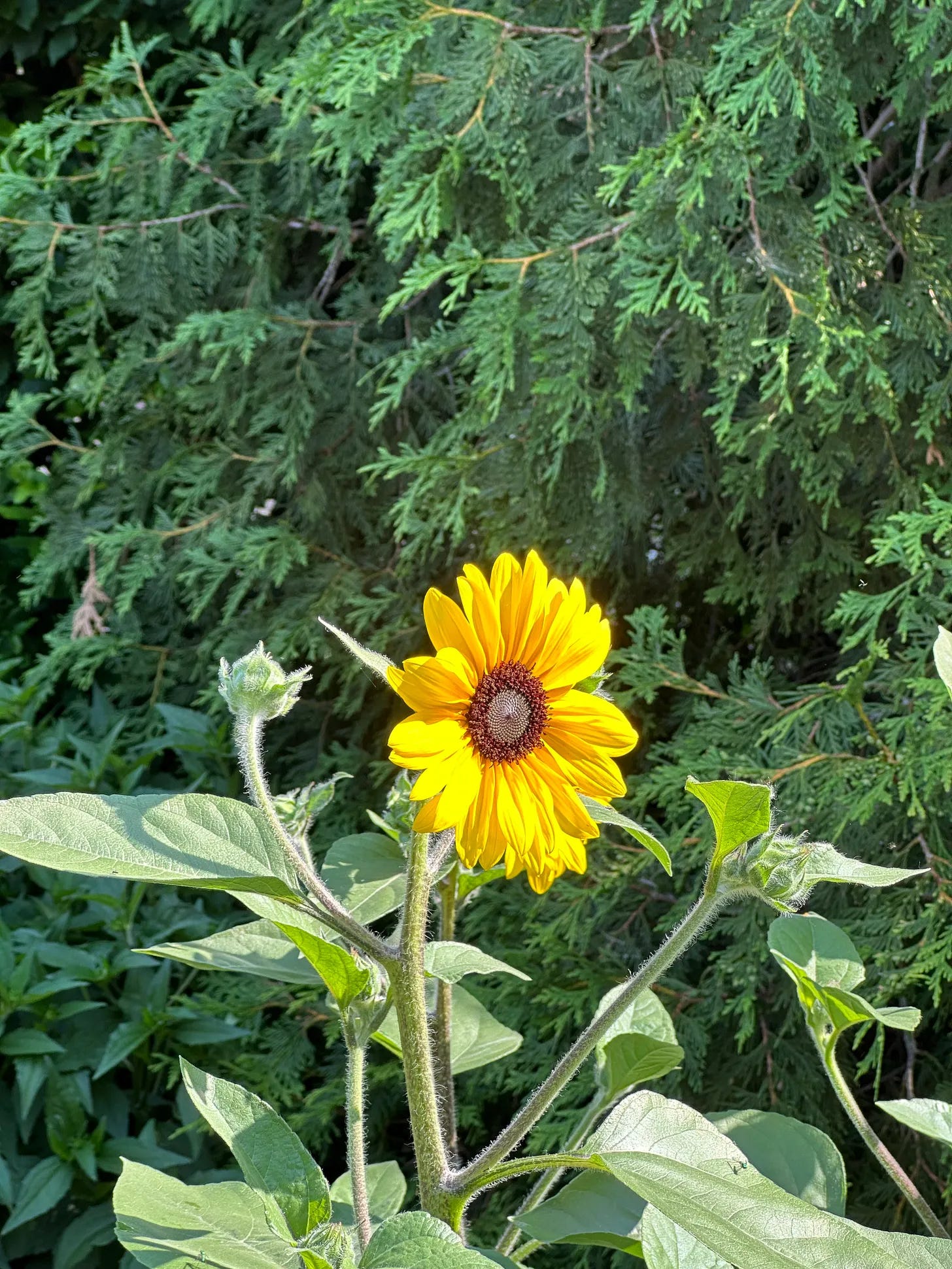
Photo by Don Pierce
Throughout this series, we’ve explored how nature can support people who are overwhelmed by fear, confusion, or painful thoughts — and how it can support the caregivers who walk beside them. We’ve seen how nature steadies the breath, softens the nervous system, widens perspective, and offers a presence that does not judge or demand.
But now, at the end of this journey, it is important to say something clearly:
Nature is a companion, not a cure.
It does not replace human connection.
It does not replace professional support.
It does not erase fear or confusion.
It does not solve the complexities of the mind.
What nature does is something quieter, deeper, and more enduring:
It helps people remember that they are not alone inside their experience.
What Nature Can Do
Nature can:
calm the nervous system
reduce sensory overload
offer non‑judgmental presence
interrupt spirals of fear
widen the world when the mind feels small
help people reconnect with their deeper self
support caregivers who are exhausted or overwhelmed
These are not small things.
They are foundational.
Nature gives the body a place to land when the mind cannot.
It gives the heart a place to rest when emotions are too heavy.
It gives the spirit a place to breathe when life feels too tight.
What Nature Cannot Do
Nature cannot:
untangle complex thoughts
resolve deep emotional wounds
replace supportive relationships
provide crisis intervention
carry the full weight of someone’s suffering
do the work of healing alone
Recognizing these limits is not pessimism.
It is wisdom — the kind of wisdom that keeps caregivers steady and keeps people in distress safe.
Nature is powerful, but it is not meant to carry everything.
A Practice: The Weekly Return
This practice helps integrate nature into a long‑term support system without expecting it to solve everything.
Step 1 — Choose one natural place you can return to weekly.
A tree, a bench, a shoreline, a trail, a garden.
Step 2 — Visit it once a week, even briefly.
Five minutes is enough.
Step 3 — Notice one thing that has changed.
Light. Leaves. Temperature. Sound.
Step 4 — Notice one thing that has stayed the same.
The trunk. The stone. The horizon. The ground.
Step 5 — Say silently or aloud:
“Change and stability can coexist.”
This practice teaches the nervous system that life can shift without collapsing — a lesson that supports both the person in distress and the caregiver.
The Circle of Care Revisited
In Installment 7, we explored the idea of a circle of care — a network of support that includes nature, loved ones, grounding practices, and professional guidance when needed.
This final installment brings that idea home:
Nature is one strand in the circle.
You are another.
Others can be added.
No one strand has to do everything.
A strong circle is woven, not carried.
Why This Matters for People in Distress
When someone is overwhelmed, they often feel:
alone
ashamed
frightened
disconnected
unsure of who they are
unsure of where to turn
Nature offers a counter‑message:
“You are not alone.”
“You are not broken.”
“You are not beyond help.”
“You are still yourself.”
“You are still part of the world.”
This is not cure.
This is companionship — and companionship is often the beginning of healing.
Why This Matters for Caregivers
Caregivers often feel:
responsible for everything
afraid of failing
exhausted
overwhelmed
unsure of what to do next
Nature reminds caregivers:
“You do not have to carry this alone.”
“You are allowed to rest.”
“You are allowed to breathe.”
“You are allowed to be human.”
“You are part of the circle, not the whole of it.”
This perspective protects caregivers from burnout and helps them stay compassionate without collapsing.
Closing Reflection
Nature cannot fix everything.
But it can hold you while you find the next step.
It can steady you when the world feels unsteady.
It can soften fear when the mind is loud.
It can remind you that identity is deeper than struggle.
It can give you a place to breathe when breath is hard to find.
It can offer companionship when the inner world feels lonely.
Nature is not a cure.
It is a companion —
one that walks beside you,
one that asks nothing of you,
one that stays steady even when you cannot.
And sometimes, that companionship is enough to begin again.