

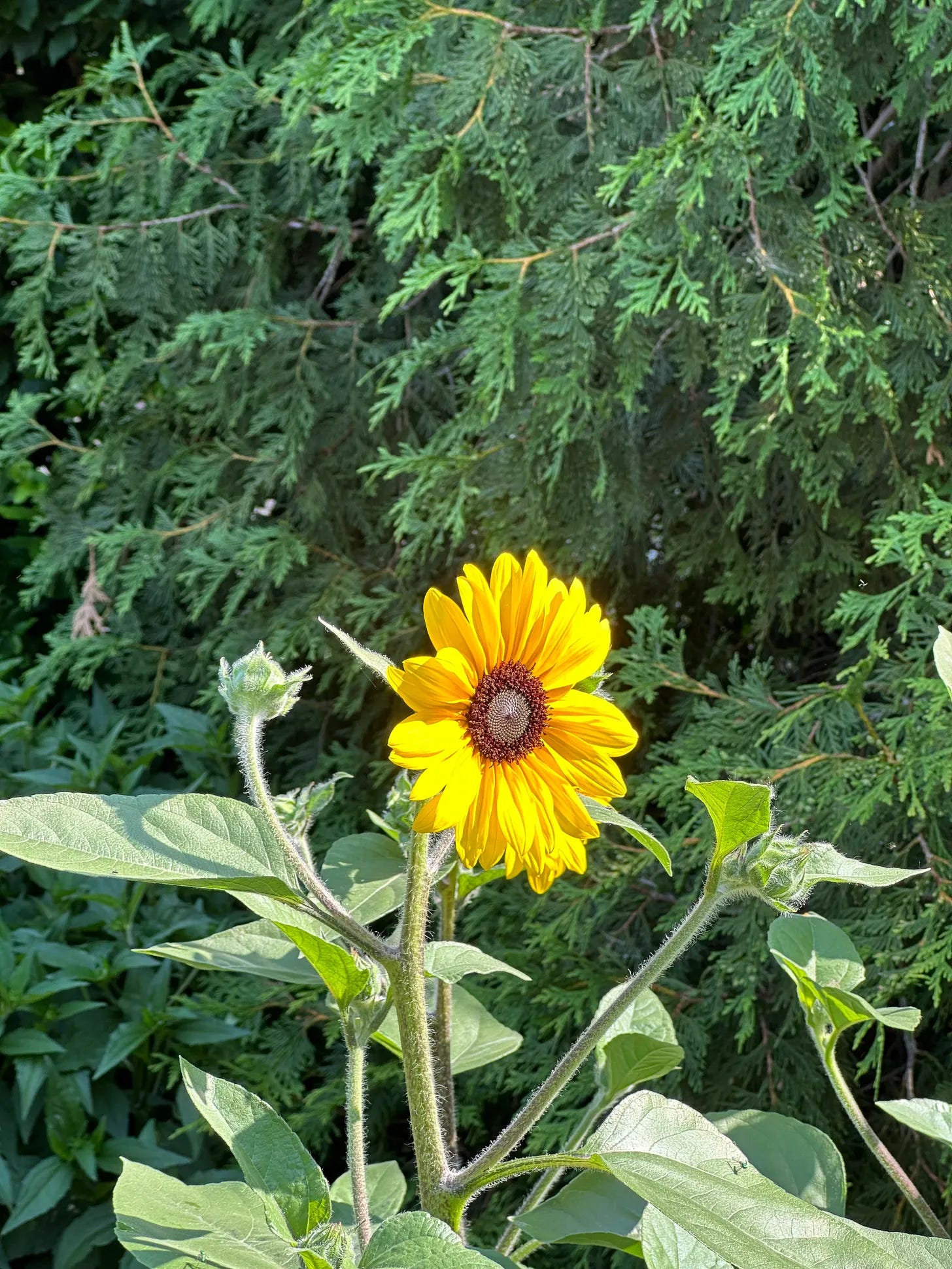
Photo by Don Pierce
When someone is overwhelmed by fear, confusion, or painful thoughts, it can feel as if their entire identity has been swallowed. The person they used to be — their humor, their confidence, their clarity, their ease — seems to disappear behind the intensity of their inner world.
But the deepest self does not vanish.
It does not break.
It does not dissolve.
It becomes covered, not erased.
Hidden, not gone.
Quiet, not destroyed.
Nature helps people reconnect with this deeper self — the part of them that illness, fear, or distress cannot touch.
Why Identity Feels Fragile During Emotional Overwhelm
When someone is struggling, their sense of self can feel unstable. They may say:
“I don’t know who I am anymore.”
“I feel like I’m disappearing.”
“I’m not myself.”
“I don’t recognize my own thoughts.”
This is not a loss of identity.
It is a loss of access to identity.
The self is still there — but the noise of fear is louder than the voice of selfhood.
Nature helps quiet the noise.
Nature Mirrors Wholeness
In nature, nothing is broken.
Nothing is out of place.
Nothing is “wrong.”
A tree with a scar is still a tree.
A river after a storm is still a river.
A hillside in winter is still a hillside.
Nature does not define itself by its wounds or its weather.
It defines itself by its essence.
This is why nature helps people remember who they are.
It reflects back a truth that fear cannot erase:
“You are still yourself, even when you are struggling.”
A Practice: The Greater Self Reflection
This practice helps someone reconnect with the part of themselves that remains whole.
Step 1 — Sit or stand near something natural.
A tree, a rock, a patch of sky, a body of water.
Step 2 — Notice its presence.
Its shape, its stillness, its age, its patience.
Step 3 — Say silently or aloud:
“This tree is still a tree.”
“This stone is still a stone.”
“This sky is still the sky.”
Step 4 — Then say:
“And I am still myself.”
This is not affirmation.
It is recognition.
The deepest self is not defined by the moment of struggle.
It is defined by something older, quieter, and more enduring.
Why This Matters for People in Distress
When someone is overwhelmed, they often feel:
ashamed
lost
disconnected
frightened by their own mind
unsure of who they are
Nature offers a counter‑message:
“You are more than your fear.”
“You are more than your thoughts.”
“You are more than this moment.”
“You are still here.”
This helps restore dignity, agency, and hope.
Why This Matters for Caregivers
Caregivers sometimes forget — understandably — that the person they love is still present beneath the distress. It can feel like the fear has replaced them. But it hasn’t.
Nature helps caregivers remember:
the person is still there
the relationship is still real
the self is not defined by symptoms
the core identity is intact
This perspective helps caregivers stay compassionate without collapsing into despair.
It also helps them speak to the person, not the fear.
How to Support Someone’s Deeper Self Without Confrontation
You can say things like:
“I know you’re still you, even when things feel overwhelming.”
“Your strength is still here, even if you can’t feel it right now.”
“You are more than what you’re going through.”
“I see the whole of you, not just the fear.”
These statements do not argue with their experience.
They affirm their identity.
They help rebuild the bridge between the person and their deeper self.
Closing Reflection
The deepest self is not fragile.
It is not erased by fear.
It is not undone by confusion.
It is not lost to overwhelming thoughts.
It is like the roots of an ancient tree —
hidden beneath the surface,
untouched by storms,
holding the whole being upright even when the branches shake.
Nature helps us remember this.
It shows us that identity is not defined by weather,
but by essence.
And when someone reconnects with their deeper self —
even for a moment —
the path forward becomes clearer,
the fear becomes softer,
and the world becomes a little more possible.