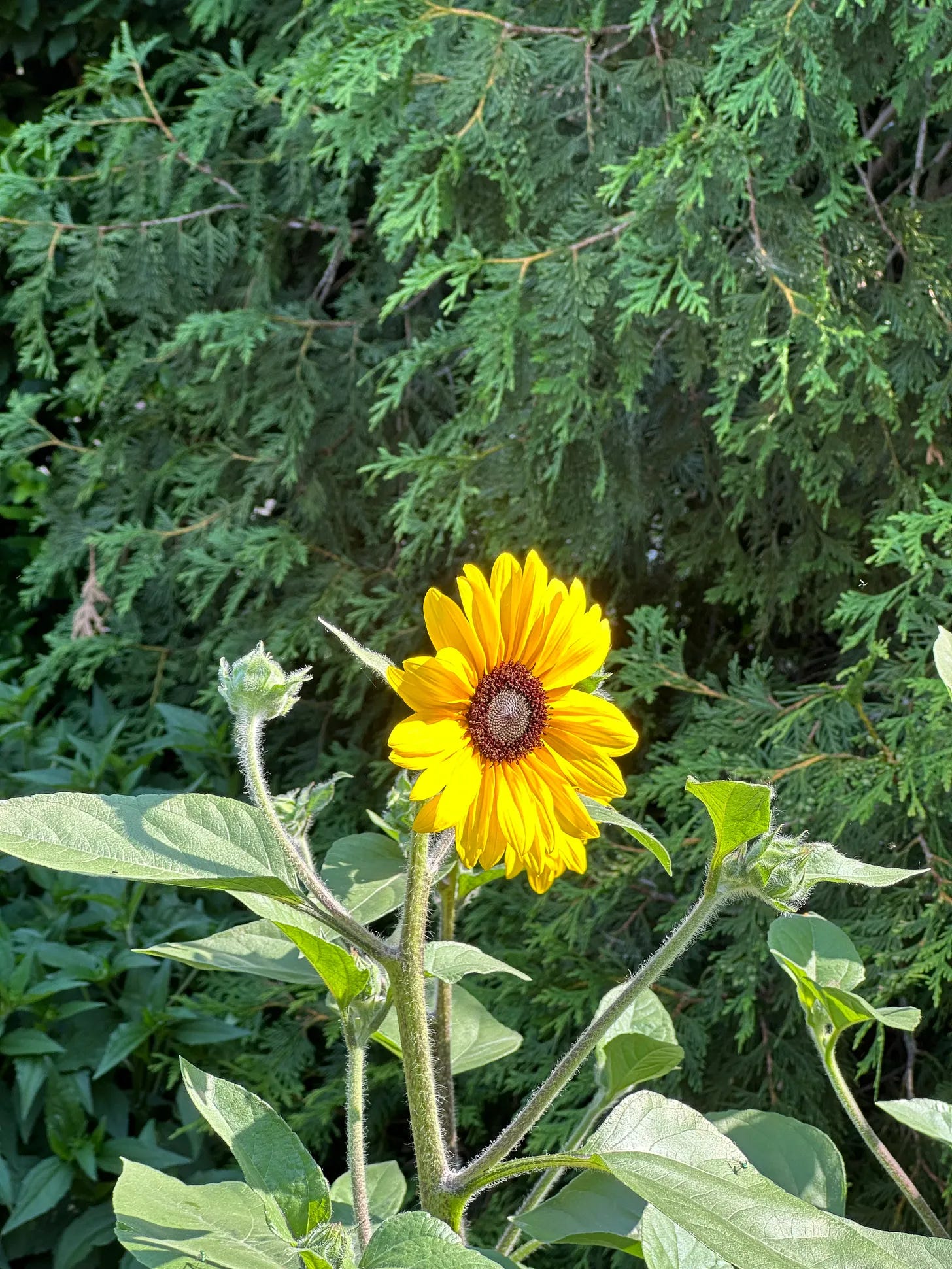
Photo by Don Pierce
When fear rises suddenly, the mind can tighten so quickly that there is no time for long practices, deep reflection, or careful reasoning. In those moments, the world narrows. The body tenses. Thoughts accelerate. Everything feels urgent.
This is when micro‑practices matter.
Micro‑practices are small, simple actions that take only a few seconds. They interrupt the momentum of fear and give the nervous system a chance to reset. They do not require preparation, privacy, or special conditions. They can be done anywhere — indoors, outdoors, alone, or with someone you trust.
Nature amplifies their effect because natural environments offer steady, predictable sensory cues that help the body settle.
These practices are not cures.
They are interruptions — gentle breaks in the cycle of fear.
And sometimes, a break is all that’s needed to prevent escalation.
Why Micro‑Practices Work
When someone is overwhelmed, the nervous system is in a state of threat. In this state:
attention narrows
breathing becomes shallow
the body prepares for danger
thoughts become urgent and convincing
Long practices can feel impossible.
Micro‑practices work because they:
require almost no effort
shift attention quickly
engage the senses
interrupt spirals
create a moment of safety
They give the body a foothold — a place to stand while the storm passes.
Micro‑Practice 1 — The Nearest Stable Thing
This is one of the simplest and most effective grounding tools.
Step 1: Look around.
Step 2: Find the nearest thing that is steady — a tree, a rock, a wall, the ground.
Step 3: Rest your eyes on it for a few seconds.
Say silently or aloud:
“This is steady.”
This shifts attention from internal fear to external stability.
Micro‑Practice 2 — The One‑Breath Reset
You don’t need deep breathing.
You don’t need slow breathing.
You just need one intentional breath.
Inhale gently.
Exhale a little longer than you inhaled.
That’s it.
A single breath can interrupt the threat response long enough for the body to remember it has options.
Micro‑Practice 3 — Touch Something Real
Fear lives in the mind.
Grounding lives in the body.
Touch something with texture:
bark
grass
a leaf
a stone
your own clothing
Feel it for three seconds.
This anchors attention in the present moment — a moment that is almost always safer than the mind believes.
Micro‑Practice 4 — The Farthest Sound
When fear closes in, widen the world again.
Listen for the farthest sound you can hear:
wind
a bird
distant traffic
a dog barking
leaves moving
This expands awareness outward and reduces the intensity of internal noise.
Micro‑Practice 5 — Name One True Thing
Fear often fills the mind with imagined danger.
Naming one true thing interrupts that pattern.
Examples:
“The ground is solid.”
“The air is cool.”
“The tree is still.”
“My feet are touching the earth.”
This is not positive thinking.
It is accurate thinking — a return to what is real.
How Caregivers Can Introduce Micro‑Practices Without Confrontation
When someone is frightened, arguing with their fear rarely helps.
Agreeing with the fear can make things worse.
Micro‑practices offer a third path.
You can say:
“Let’s look at something steady for a moment.”
“Let’s take one breath together.”
“Can you feel this stone with me?”
“Let’s listen for the farthest sound.”
“Let’s find one true thing in this moment.”
These are invitations, not corrections.
They redirect attention without invalidating experience.
They preserve trust — the foundation of all support.
Why Micro‑Practices Matter
Fear is not always a wave.
Sometimes it is a spark — small, sudden, and intense.
Micro‑practices extinguish sparks before they become fires.
They:
interrupt spirals
soften panic
widen awareness
steady the body
create a moment of choice
And choice is the beginning of freedom.
Closing Reflection
When fear rises quickly, the mind can feel like a runaway train.
Micro‑practices are the small levers that slow it down.
They do not require strength.
They do not require clarity.
They do not require calm.
They require only a moment —
a moment to touch something real,
a moment to breathe,
a moment to look at something steady.
Nature supports these moments by offering a world that is calm, predictable, and honest.
In moments of fear, the smallest action can be the beginning of safety.