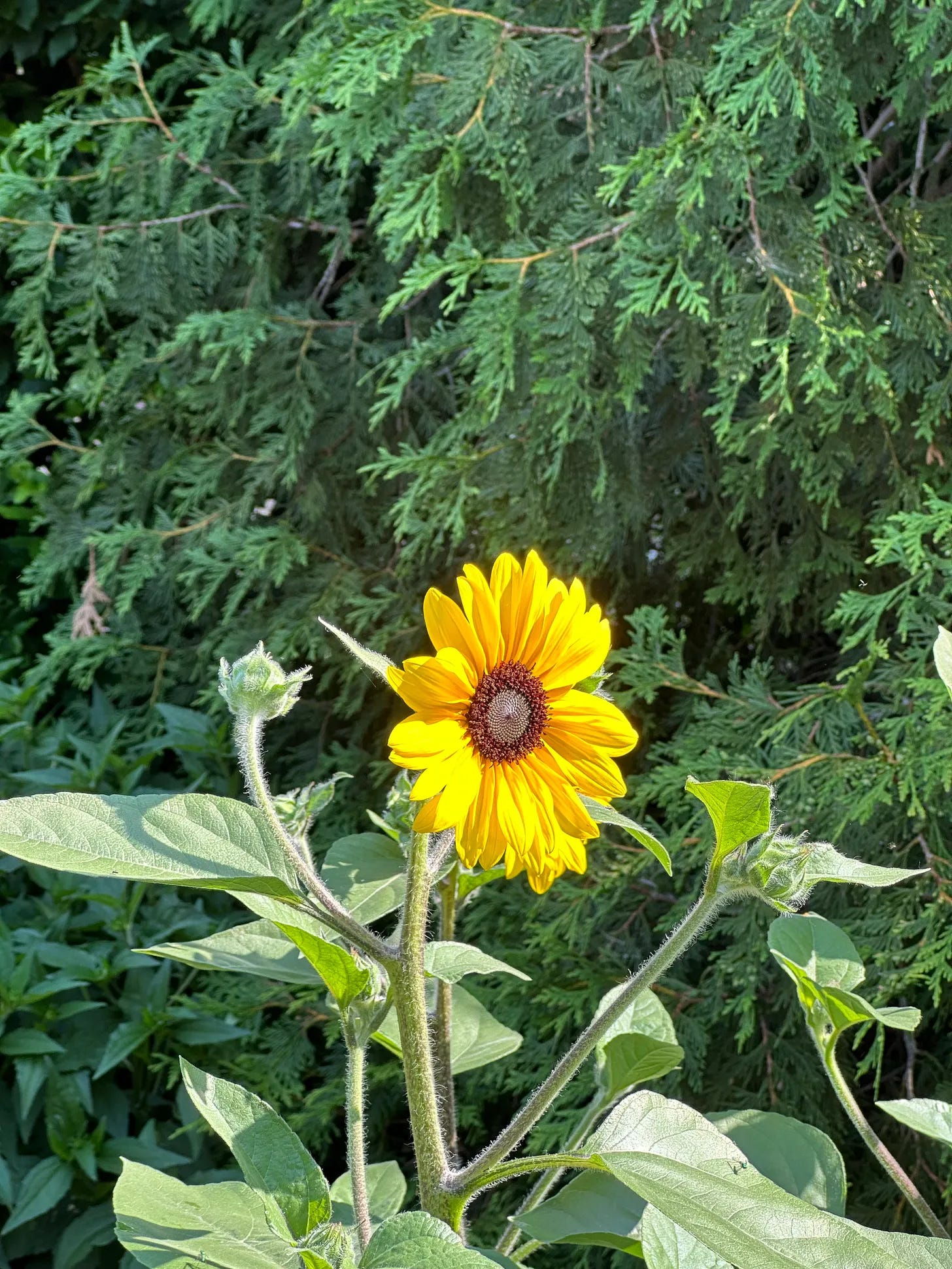
Photo by Don Pierce
Supporting someone who is frightened, overwhelmed, or caught in painful thoughts is one of the hardest things a person can do. It requires patience, presence, and a kind of emotional steadiness that can feel impossible to maintain day after day.
Caregivers often carry two burdens at once:
the weight of their loved one’s fear
the weight of their own exhaustion
This installment is for you — the person who stays, who listens, who tries, who loves.
It is about how nature can help you remain steady, grounded, and whole.
Because you cannot offer calm if you have none left.
You cannot offer presence if you are depleted.
You cannot offer safety if you feel unsafe inside.
Nature is not only a companion for the person in distress.
It is a companion for the one who walks beside them.
Why Caregiving Is So Draining
Caregiving is not just physical work.
It is emotional labor — constant, invisible, and often unacknowledged.
Caregivers must:
stay calm when someone else is panicking
stay patient when someone else is confused
stay grounded when someone else is overwhelmed
stay compassionate when someone else is afraid
This is not easy.
It is not natural.
It is not sustainable without support.
Nature offers that support.
Why Nature Helps Caregivers Stay Steady
Nature gives caregivers something they rarely receive:
a place with no demands
a place with no expectations
a place with no emotional weight
a place where nothing needs to be fixed
In nature, you do not have to be strong.
You do not have to be patient.
You do not have to be wise.
You do not have to be “on.”
You can simply exist.
This is what replenishes the caregiver’s nervous system — the chance to stop holding everything together for a moment.
A Practice: The Long Exhale Walk
This practice is simple and restorative.
It can be done in a yard, a park, a trail, or any natural space.
Step 1 — Walk slowly.
Not for exercise. For release.
Step 2 — With each step, exhale a little longer than you inhale.
This signals safety to the nervous system.
Step 3 — Let your eyes rest on things that do not move quickly.
Trees. Stones. Hills. Clouds.
Step 4 — Let the world be bigger than your responsibilities.
Let the landscape hold what you’ve been holding.
This walk is not about clearing your mind.
It is about giving your mind something steady to lean against.
Why Caregivers Need Grounding as Much as the Person in Distress
When someone you love is overwhelmed, your nervous system often mirrors theirs.
You may feel:
tense
hyper‑alert
exhausted
emotionally thin
afraid of saying the wrong thing
responsible for their safety
This is normal.
It is human.
It is not a sign of failure.
But it means you need grounding too.
Nature helps you:
widen your perspective
slow your breathing
soften your vigilance
reconnect with your own body
remember that you exist outside the crisis
This is not selfish.
It is necessary.
How Nature Helps You Stay Compassionate Without Collapsing
Compassion is not infinite.
It must be replenished.
Nature replenishes compassion by:
reducing sensory overload
lowering emotional pressure
giving you space to feel your own feelings
reminding you that life is larger than the moment of crisis
offering beauty without asking anything in return
When you return from nature, you return with more capacity — more patience, more steadiness, more clarity.
This is how you avoid burnout.
This is how you stay human.
This is how you stay present without losing yourself.
A Practice: The Caregiver’s Pause
This practice takes less than a minute.
Step 1 — Step outside or look out a window.
Even a small view of sky or tree is enough.
Step 2 — Name one thing that is beautiful or steady.
A branch. A cloud. A patch of light.
Step 3 — Let yourself feel one moment of relief.
Not joy. Not peace. Just relief.
Step 4 — Return when you are ready.
Not before.
This pause is not abandonment.
It is maintenance.
Closing Reflection
Caregiving is an act of love, but love alone is not enough.
You need steadiness.
You need rest.
You need grounding.
You need moments where the world does not depend on you.
Nature offers those moments.
It holds you the way you hold others — quietly, steadily, without judgment or demand.
When someone you love is not steady, nature helps you stay steady.
When someone you love is afraid, nature helps you breathe.
When someone you love is overwhelmed, nature helps you return to yourself.
You deserve that support.
You need that support.
And you are allowed to receive it.