

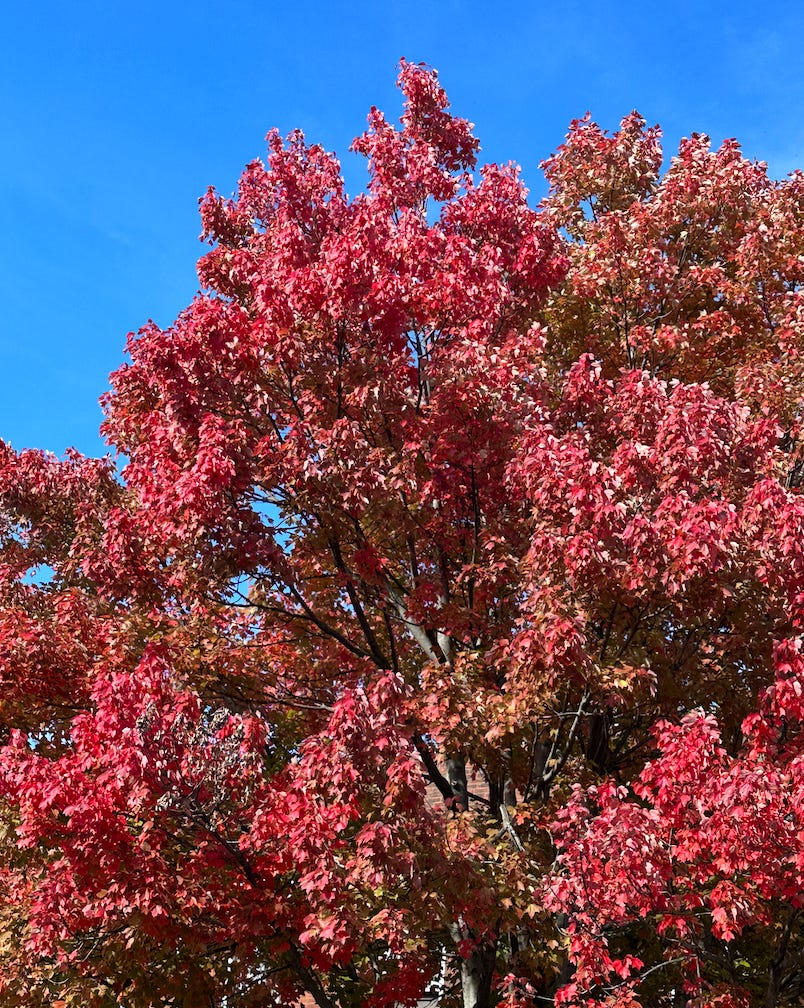
Photos by Don Pierce.
Nature models two complementary principles for thriving: attachment (connection that strengthens life) and separation(boundaries that preserve identity). Both are essential for balance, growth, and wellbeing.
Appropriate Attachment In Nature And Life
1. Vines and Trees – Supportive Connection
Nature lesson: Vines climb by attaching to stronger structures.
Human metaphor: Leaning on others can elevate us, provided the connection is respectful and non-exploitative.
Reflection prompt: Where in my life do I seek support that uplifts me without diminishing the one who offers it?
2. Mother and Infant Mammals – Foundational Bonds
Nature lesson: Infants attach for nourishment, warmth, and safety.
Human metaphor: Early bonds of care and trust shape our ability to attach later.
Reflection prompt: Which attachments in my life give me a sense of safety and trust, and how do they shape my capacity to connect with others?
3. Mycorrhizal Fungi and Roots – Mutual Nourishment
Nature lesson: Fungi and roots exchange nutrients, creating stronger forests.
Human metaphor: Mutually supportive relationships strengthen all involved.
Reflection prompt: Who in my life do I nourish, and who nourishes me in return? How do I keep that balance reciprocal?
4. Geese in Formation – Shared Effort
Nature lesson: Each bird flies in the uplift of another, conserving energy.
Human metaphor: Cooperation through attachment allows groups to go farther together.
Reflection prompt: Where am I being carried by the effort of others, and how do I take my turn leading?
5. Lichen (Algae + Fungi) – Interwoven Lives
Nature lesson: Two organisms merge to form one resilient being.
Human metaphor: Intimate partnerships thrive when each contributes unique gifts.
Reflection prompt: What unique qualities do I bring to my closest attachments, and how do they complement the gifts of others?
6. Coral Polyps in Reefs – Building Together
Nature lesson: Tiny polyps attach to create vast ecosystems.
Human metaphor: Collective attachment to shared purpose builds structures greater than individuals.
Reflection prompt: What larger vision or community am I helping to build through my attachments?
7. Barnacles on Whales – Tolerable Asymmetry
Nature lesson: Barnacles gain transport, whales bear them with little harm.
Human metaphor: Some attachments are uneven but still workable when they don’t drain vitality.
Reflection prompt: Which relationships in my life are asymmetrical, and are they still healthy or do they need recalibration?
8. Pollinators and Flowers – Brief but Vital Bonds
Nature lesson: Bees attach to flowers for moments, enabling reproduction and nourishment.
Human metaphor: Short encounters can spark growth and creativity.
Reflection prompt: What brief connections have left me changed or inspired, even without permanence?
9. River and Wetlands – Seasonal Renewal
Nature lesson: Periodic floods enrich wetlands and soil.
Human metaphor: Periodic closeness can renew relationships without needing constant contact.
Reflection prompt: Which relationships in my life thrive through seasonal closeness, rather than daily contact?
10. Human–Tree Breath Exchange – Invisible Interdependence
Nature lesson: Humans and trees are bound through unseen cycles of breath.
Human metaphor: Some attachments are invisible but foundational, reminding us of deep interdependence.
Reflection prompt: What unseen or often-forgotten connections sustain me, even when I don’t notice them?
Core Practice: After choosing one or two examples to reflect on, spend time outdoors noticing similar attachments in your surroundings. Ask: What kind of attachment am I witnessing? What kind of attachment do I need?

HumaNatureConnect Activity
Daily Practice:
Observe: Spend time in nature noticing both clusters (attachment) and individuals standing apart (separation).
Reflect: Use the reflection prompts from the tables. Write, meditate, or sit quietly.
Balance: Ask yourself: Where do I need attachment to thrive? Where do I need separation to preserve myself?
Apply: Notice how these patterns appear in relationships, work, creativity, and personal wellbeing.
Ecological Psychology Insight:
Attachment and separation are dynamic: neither is superior, and both are necessary for flourishing.
Relationships—whether with humans or natural beings—are fields of possibilities shaped by both closeness and distance.


Nocturnal Pilgrimage
Silhouettes of Connection and Distance
Theme: Seeing how attachment and separation are revealed through light and darkness.
Go outside at night where there’s both starlight or moonlight and some shadow.
Look at a cluster of trees or plants against the sky. Notice how their branches overlap, creating a collective silhouette. This is attachment. Ask: Where in my life does closeness help create shared meaning and strength?
Then look at a single tree or shape standing alone against the night sky. Its form is clear because of its separation. Ask: Where in my life does standing apart help me remain true to myself?
Alternate your gaze between the group silhouette and the lone figure. Sense how your body feels in each case — comfort, awe, vulnerability, or clarity.
Close with a breath meditation: Inhale imagining attachment (in-breath as closeness, belonging), exhale imagining separation (out-breath as boundary, release).
