


Photo by Brett Styles, Pixels.com.
Interactions with nature help one develop awareness and calmness. Awareness and calmness are the two pillars of compassion. Failing to develop an Actual Self causes one to be acquisitive and harmful to nature.
To examine the authenticity of your sense of self, commune with nature and look in your mind for memories that demonstrate the presence of your Actual Self, such as synchronicities and connections to a larger pattern.
Constructing your sense of Self from your interactions with others will help you understand your deepest attitudes about the environment. According to Object Relations Theory, we “construct our sense of self from our interactions with others, particularly the person who was our primary caregiver” (Winter and Koger, 2004, p. 43). If the caretaker fails to meet the basic needs of the child the child will “learn to build a false self in which the requirements of others are taken as his or her central being” (Winter and Koger, 2004, p. 44). This “false self” system explains much of the irrationality of our environmentally unsustainable actions. Without the development of an Actual Self one is likely to use external objects as a means of self-revealing expression. Writes Winter and Koger: “Adult character is built on an infantile pattern of neediness, and the accouterments of adult society function as symbolic expressions of those needs” (2004, p. 51). One buys cars and clothes, for example, to enhance status or becomes employed in jobs that offer status but little or no deep satisfaction. We do not function in a healthy way if we do not have faith that our needs will be met in the future. If one has damaged trust because one’s early primary caregiver gave inadequate attention or withdrew attention too early the result can be any of four neurotic reactions that are likely to impact environmental behavior:
A prolonged state of unmet needs can cause narcissism—the difficulty recognizing or respecting objects, beings, and people that do not offer to alleviate its needs (nature is, therefore, often unappreciated for its own complexity and beauty and appreciated only as a storehouse of resources). Having spent my early years in a loving home environment, for example, I was given the psychological luxury of wallowing in the beauty of nature near my home.
Narcissism or an early loss of a nurturing environment can lead to compulsion (wherein people buy excessive amounts of consumer goods as a temporary substitute for the loss of early nurturance). I do not feel the need to shop for recreation, an example of what happens when there is no early loss of a nurturing environment.
The sudden withdrawal of nurturance can lead to a sense of despair that is so strong it leads to the chronic sense of loss, helplessness, and grief that are some of the hallmarks of depression. Despite some attentiveness challenges exhibited by my direct parents (neither were involved in my life during the weekends), my paternal grandparents stepped in and, to the best of their considerable ability, prevented me from feeling any sudden withdrawal of nurturance. Their reliable care on weekends allowed me to avoid the helplessness, sense of loss, grief, and depression prevalent in many of the children of divorced parents.
Lack of trust can become paranoia, especially if one persistently feels threatened by nature (Winter and Koger, 2004, pp. 41-47). Having literally immersed myself in the swamps and forests along the Mississippi River as a child, partly as a way to avoid some dangers on the streets of my race-troubled neighborhood, I slowly, over many years, developed not only an appreciation of nature but also a sense that it provides security and safety. The result was a nature-given sense of peace and trust that stunted any emergence of paranoia.
From this list the message is clear: Caregivers: give enough attention to your dependents to help them see nature as something of value beyond being a storehouse of goodies, give your attention long enough to keep your dependents from become compulsive consumers, hell-bent on gobbling up the environment; avoid sudden withdrawals of nurturance to stem the growing tide of depression; and enable your dependents to trust you so that they may not feel so threatened by others, including nature. Without a start in life with the help of effectively compassionate caregivers, people will not have the wherewithal to do the jobs they need to do, including working to make people happy and the environment sustainable.
Almost all the activities in this book ask the sojourner to use her awareness to seek out an attractive natural being and to use this being for guidance, healing, or information. This call to be in the midst of an attractive natural being is done for a very good reason. We have a deep need to be in the midst of “powerful, safe, solid and loving beings, especially those “who hold us physically in their arms and who also hold us emotionally in their hearts” (Cope, 1999, p.142). Since it is not always possible to spend time with caring therapists, loving parents or grandparents, and understanding lovers, we will in the activities of this book usually use a non-human attractive natural being or scene in their stead. Heinz Kohut describes the “need for merger with idealized self-objects.” Being held and soothed has its transformative benefits, but, as we shall see, such acts of equanimity do not have to come from a human. Attractive natural objects (beings) and scenes can present to us much of the same thing that any good therapist, parent, or lover can bring forth in terms of spanning the therapeutic poles of both awareness and equanimity. Nature will be used to help us both see clearly (awareness) and to provide calm abiding (equanimity). We will present activities that provide self-object experiences aimed at helping us grow, not in purely mental, cold, and clinical ways but instead in ways that are emotional, warm, and earthy. We will be doing much self-soothing, even Greater Self-soothing.
The warm and helpful Teacher-Mother is everywhere in Nature. She is available to us most readily and profoundly where we find our attractions in Nature. In its infinite wisdom, Nature knows we need both poles: the awareness side of personal growth assistance and the equanimity side.
Part of Nature’s intelligence is that it presents to us the benefits of both the Seer (which provides awareness) and the Mother (which provides equanimity). Anytime you see an animal being aware and anytime you see an animal being nurturing, you have an opportunity to learn very important lessons, for these (awareness and nurturing) are the two ways (polar sides) to be effective in your compassion to others. I say “polar sides” because Nature seems to know that it takes too much energy to stay on any one polar side, for eventually the pull in the other direction is too much to resist. There are examples in nature of animals being aware but not nurturing or nurturing but not aware, but these are hard to find because nature has brutal ways to eliminate those who linger too long on any one pole. The lesson is clear: be both a good seer and nurturing.
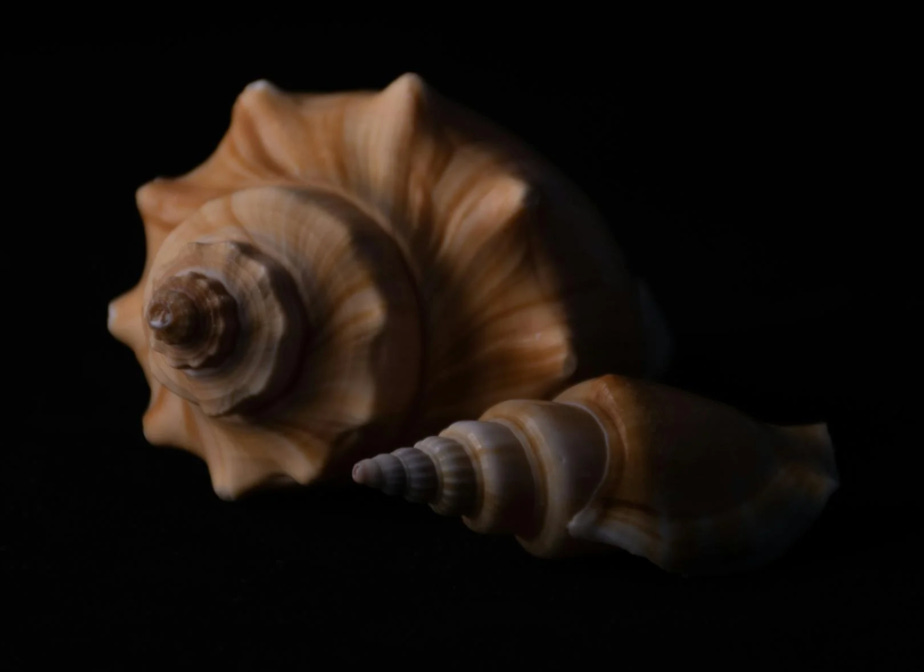
Photo by Brett Styles, Pixels.com.
HumaNatureConnect Activity
Dreaming While Awake
For this activity, review what you have experienced while awake for the last two weeks. Identify an odd experience that occurred during this period. When you take yourself back to this event you are experiencing a waking dream. Consider how you were inside a set of circumstances beyond your own doing. Determine what aspects of this experience are taking on a luminous quality. Notice how such recalling is similar to dreaming. Consider how the world itself is participating in your waking dream, how the world seems to be slowing or standing still, how your perception is more spatial and less linear. In your mind, look around you rather than straight ahead. Notice the dreamscape in your waking dream. Look for synchronicities, connections to a larger pattern, and what seems to intersect with each other in this larger pattern. Note what seems to happen at the same time. Look also for complementarities––what seems to like being with what. Look for how one entity complements another. Look for organizing principles. Write down in your journal how you feel about these synchronicities and complementarities. Write down what these synchronicities and complementaries tell you about your own being. Write down how you feel, if anything, about how dreamlike intelligence informs or complements some aspect of your own life.
To The Dreams Of Natural Beings And The Landscape…
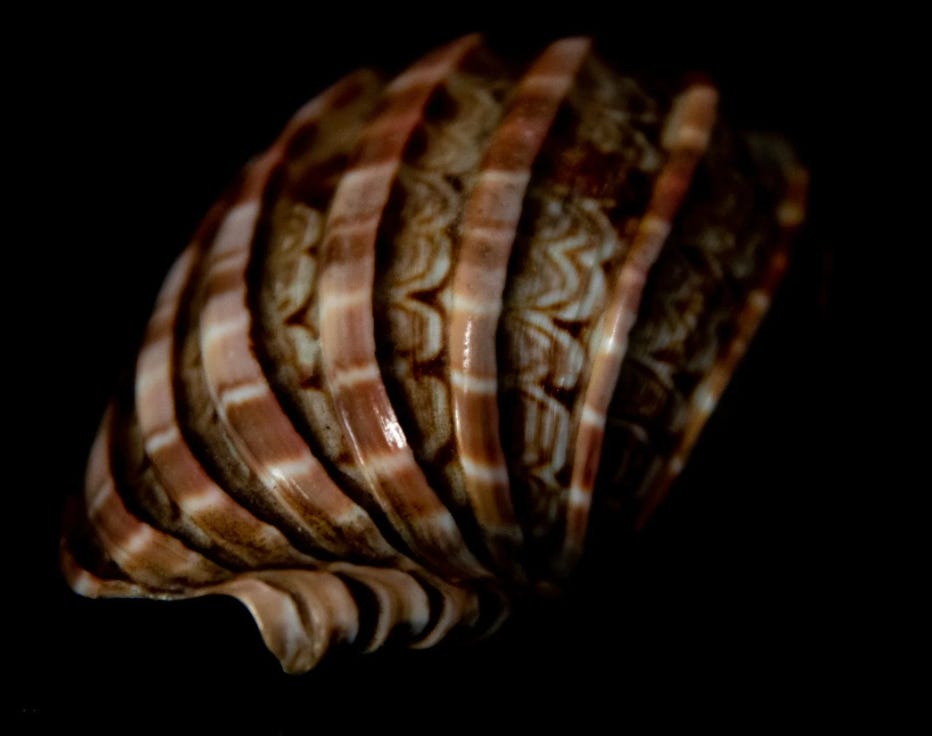
Photo by Magda Ehlers, Pixels.com
Nocturnal Pilgrimage
The longer your nightmares stay hidden in your subconscious or unconscious, the more damage they’ll do. You can deal with nightmares during the day by talking about them with your friends and family or by writing them down in your journal. Acknowledging them in your daily life is the first step to treating them. Let the sun fill in the darker shadows. You can also vanquish them at night while lucid. Our dreams might not be the first place our demons show up, but luckily they can be the last.
With this in mind, sleep. Dream. If necessary, vanquish your villainous Dream Images.
