

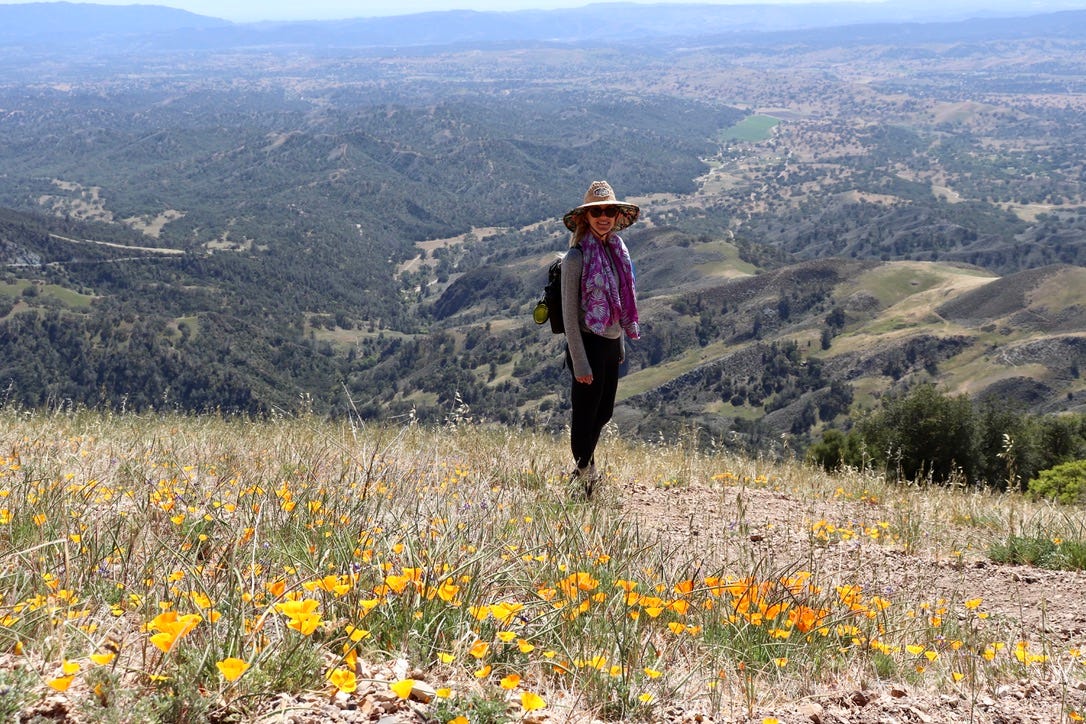
Photo by Don Pierce.
Ecological psychology views humans as organisms embedded within environments, continuously perceiving, responding to, and co-creating meaning with the world. Thanksgiving—at its best and beneath its commercial layers—contains several experiences that map directly onto key ecological psychology principles.
These connections help reveal how a cultural ritual can become a practice of relational attunement, ecological awareness, and reciprocal gratitude toward the more-than-human world. Below are six central aspects of Thanksgiving and how each aligns with ecological psychology.
1. Gathering & Belonging → The Principle of Relationships (Weness)
Thanksgiving is structured around coming together. Family, friends, neighbors, communities—all gather around shared food.
In ecological psychology, relationships are not merely social interactions; they are ecological bonds, marked by mutual influence, co-regulation, and nested systems of connection.
How Thanksgiving reflects this:
A group meal becomes a social ecosystem, where emotions, conversations, and energies reciprocally influence one another.
Coordinating time, movement, roles (cooking, hosting), and attunement to others reflects environmental coupling.
Gathering strengthens the sense of weness—the relational frame in your work—where individuals experience themselves as part of a greater whole.
Ecological lesson:
Belonging is not merely a human emotional need; it mirrors the interdependence found in forests, coral reefs, and mycelial networks.
2. Food & Harvest → The Principles of Energy, Diversity, and Interdependence
Thanksgiving food is not just symbolic—it is ecological.
A traditional meal contains:
Multiple species (plants, fruits, vegetables, grains, birds)
Contributions from soil, water, sunlight, and human labor
A chain of ecological and human interactions that make nourishment possible
From an ecological psychology perspective, food is a direct interface between body and world, a lived demonstration of:
Energy flow (from sun → plants → humans)
Diversity (a meal composed of many species signals a healthy ecosystem)
Unseen interdependencies (pollinators, soil microbes, watersheds, farmers)
Ecological lesson:
Every bite is a relationship with the land. Thanksgiving makes this visible.
3. Gratitude → The Principle of Alignment (Attunement to Source)
Thanksgiving centers on gratitude. In ecological psychology, gratitude is not sentimentality—it is a form of cognitive-emotional alignment with the ecological processes that support life.
Ecological alignment occurs when:
Perception matches reality (“I see the real sources of my nourishment and well-being.”)
One acknowledges dependency on broader systems
One feels moved to reciprocate (e.g., stewardship, care, restoration)
In your eartHearts model, this corresponds to Alignment—recognizing the “source-provided place in life” and one’s role within the wider ecological field.
Ecological lesson:
Gratitude recalibrates the self to be in right relationship with the world.
4. Storytelling & Ancestral Memory → The Principle of Renewal and Change
Thanksgiving gatherings often include stories:
Where we come from. Who we’ve lost. What we’ve overcome. How the world has changed.
Storytelling is deeply ecological—it:
Reconnects individuals to lineages
Reinforces continuity across generations
Helps communities adapt through shared memory
Acknowledges the role of change and renewal in life cycles
In ecosystems, memory is encoded through:
soil composition
seed banks
migratory routes
learned behaviors
In humans, memory is transmitted through stories that maintain ecological and cultural coherence.
Ecological lesson:
Narrative is a form of ecological continuity—like forest succession in human form.
5. Tradition & Ritual → The Principle of Behavioral Cues and Action Opportunities
A ritual like Thanksgiving provides repeated, structured affordances—predictable opportunities for action that stabilize an ecosystem of family life.
For example:
Setting a table
Preparing certain dishes
Returning to familiar places
Visiting relatives
Walking after the meal
In ecological psychology, these predictable patterns create affordance landscapes that guide behavior, meaning, and learning.
Traditions make certain actions:
obvious
inviting
situationally available
And thus shape long-term patterns of relating.
Ecological lesson:
Ritual is a stable affordance that binds individuals to environments and communities.
6. A Moment of Pause → The Principle of Awareness and Ecological Perception
Thanksgiving—despite its bustle—often includes deliberate pause:
A prayer
A moment of silence
Looking across the table
Stepping outside for air
A sense of seasonality
Pausing enhances direct ecological perception, aligning with higher frames of ecological awareness in your developmental model (egoic → relational → participatory → nondual).
A pause supports:
Field awareness (awareness of the relational web)
Situational awareness (awareness of the immediate environment)
Temporal awareness (recognizing cycles and seasons)
Ecological empathy (feeling-with the more-than-human world)
Ecological lesson:
Ecological perception arises in the stillness between actions.
HumaNatureConnect Activity
Outdoor Activity: “The Circle of Giving Back”
A Thanksgiving Practice of Ecological Awareness and Reciprocal Gratitude
Purpose
To help participants experience Thanksgiving as an ecological event—not merely a cultural one—by recognizing the relational web, the sources of nourishment, and the cycle of giving and receiving in the natural world.
Ecological Psychology Principles Engaged
Relationships (Weness) – Recognizing interdependence in the local environment
Energy & Interdependence – Seeing how energy flows through ecosystems
Diversity – Noticing the varied contributors to one meal
Alignment – Attuning the self to the source-provided place in life
Renewal & Change – Observing seasonal transitions
Affordances – Encountering new opportunities for grounded gratitude
Activity Steps
1. Begin With a Slow, Silent Walk (5–7 minutes)
Participants walk quietly through a park, forest edge, backyard, or open land.
Ask them to notice:
the season’s shift
the colors and textures
the pace of the land
signs of organisms preparing for winter
Purpose: Opens ecological perception and attunes participants to the “field.”
2. Find a Place to Stand in a Circle
The group forms a circle outdoors—large or small—symbolizing an ecosystem.
Each participant faces outward first, not inward.
Prompt:
“Before we give thanks to each other, let us first acknowledge the world that supports us.”
This is the ecological inversion of typical Thanksgiving rituals.
3. The Outward Gaze: Recognizing Ecological Contributors (3–5 minutes)
Participants face outward and silently name the ecological contributors to their Thanksgiving meal.
Prompts you can read aloud:
“Name one plant species in your meal.”
“Name one animal species that played a role.”
“Name one element—sun, wind, rain, soil—that made your nourishment possible.”
“Name one invisible community—pollinators, microbes, mycelium—that supported the harvest.”
Participants simply notice without speaking.
Ecological psychology effect:
This activates awareness of the full relational web and the energy flows behind the meal.
4. Turning Inward: Acknowledging Relational Support (2–3 minutes)
The group slowly turns to face each other.
Prompt:
“Now acknowledge the human relationships—the networks of care, labor, tradition, and support—that helped bring you to this moment.”
Participants make eye contact with those they choose.
Ecological psychology effect:
Shifts from environment → community; restoring the Weness frame.
5. The Gesture of Reciprocity (5 minutes)
Each participant picks up a small natural object (leaf, twig, stone).
They speak a single sentence of ecological gratitude aloud to the group.
Examples:
“To the oak trees, thank you for the shade and the soil you shelter.”
“To the creek, thank you for giving water to the fields that fed me this year.”
“To the wind, thank you for carrying seeds.”
Then they place their object back onto the ground in the center.
This symbolizes giving back to the land—restoring reciprocity.
Ecological psychology effect:
Participants enact alignment with ecological processes, ritualizing the relationship between perception, emotion, and action.
