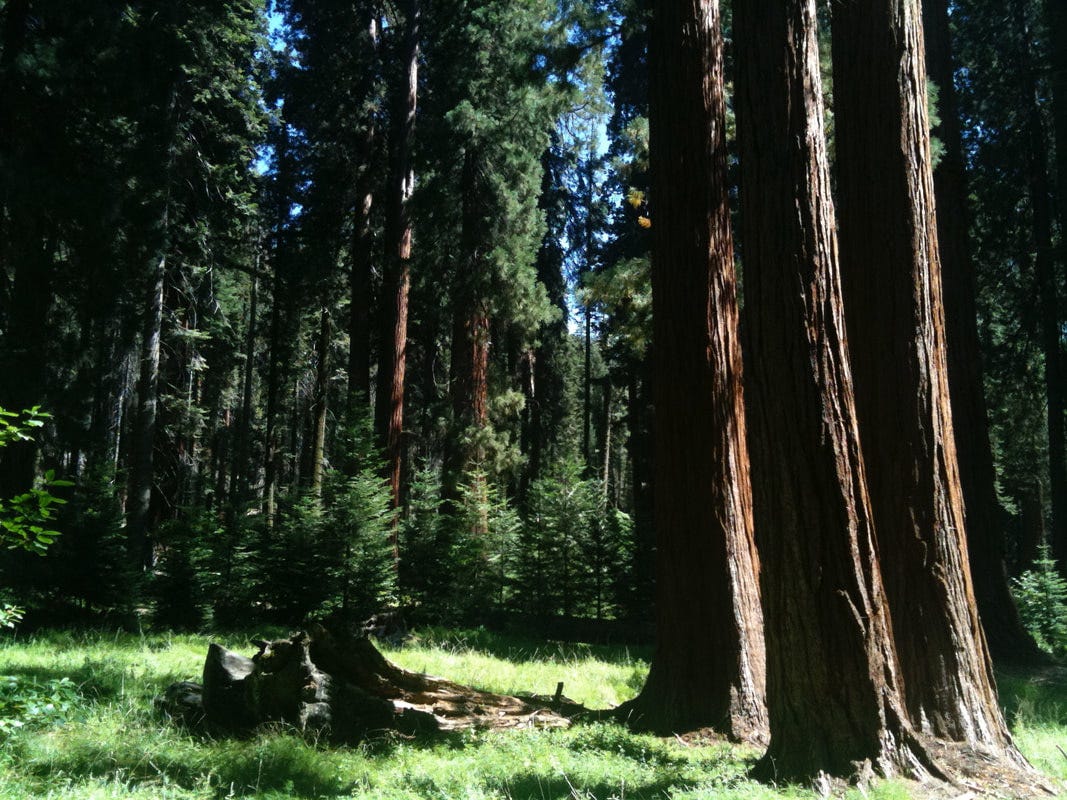
Each of the HumaNatureConnect Activities found along the Heartwood Path puts the participant through the same sequence:
First. Find an attraction in nature (backyard or backcountry). If you are attracted to a being because of its beauty, do not just use your eyes but also perceive its beauty in terms of its resonance, its ability to move you, to make you see and do things differently, to make you bow, cry, or give thanks, to make you want more and to become softer to get it, and to make you respond to its call for engagement.
Second. Make a sensory contact with this attraction, using any of one’s fifty-four natural attraction senses (which include the radiation senses such as the sense of temperature, the feeling senses such as sensitivity to gravity, the chemical senses such as the sense of appetite, and the mental senses such as the sense of humility and appreciation).
Third. Obtain consent from the attraction to use it for your educational, counseling, or healing purposes (your continued attraction to the object (being) is your consent to continue and your un-attraction—perhaps as the noticing of ugliness or a feeling of lack of safety—marks a lack of consent and is a call to move elsewhere).
Fourth. Be thankful when you note how your natural attraction feels good.
Fifth. Trust your thoughts and your feelings arising from the contact.
Sixth. Psychologically assume the perspective of the attraction and wait for it to provide information, guidance, or healing. Doing so is a psychological technique that allows one the freedom to momentarily step out of one’s limited identity and to forge new ways of perceiving the world. From the new vantage point of an attractive natural being, one has a better chance of seeing with fresh eyes and one can state what needs to be said but could not be said until one is beside one’s Self.
Seventh. Look for ways that your contacted being improves relationships.
Eight. Validate your experiences by writing down your experiences; and, after reading your journal notes aloud to yourself, share your written words with others.
Use the Heartwood Path to hasten and heighten your own maturity.
It is worth repeating: asking a natural being or place to give its consent may seem dubious to those who do not realize that the consent does not come through words spoken by animal spirits, trees, or places in the style of Dr. Dolittle (who, in a beloved fairy tale, could talk with the animals). Instead, the consent comes from a person’s continued reactions to his or her attraction to the natural being or place. This attainment of consent is a critically important step in Cohen’s methodologies, as it creates within the participant a psychological state-of-mind that is non-domineering and suitable for the functioning of the fifty-four natural attraction senses and the resulting attainment of guidance, information, or healing.
According to Cohen, those who are attracted to a more nature-centered life and who recognize the negative impacts of our way of life, can unbury nature’s way of living that has been covered over by living according the modern industrial society’s stories and labels that betray an undeclared war on nature. This half-asleep way of living precludes us from using the natural attraction senses that enable us to participate in the beautiful way nature works. It is, therefore, one of the chief causes of “burnout.”
Living according to nature-disconnected stories, which range from the children’s tale of Little Red Riding Hood to the meta-story of the “American Dream,” is one of the main underlying causes for most personal and planetary dilemmas. Nature-disconnected stories, prevalent through modern industrial cultures, tend to make people want, and to attempt to satisfy yearnings for connection with nature or a Higher Power with substitutes such as material objects, work, drugs, alcohol, or promiscuous sex.
All of these substitutes inevitably fail to compensate for a lack of connection with the Whole and leave people with palpable holes in their souls. When heard or read repeatedly in one’s culture, a person begins to believe in nature-disconnected stories even when they lead to unsustainable actions and dire consequences.
Cohen’s methods redress these root causes of most maladies and help to give people and the planet a healthful future by enabling participants to find oneness with the real thing, not with the words that represent the real thing. Using words only to receive guidance from nature is, using Cohen’s humorous terminology, “like experiencing the gobble without the turkey” (Cohen, Thesis Quote Website).
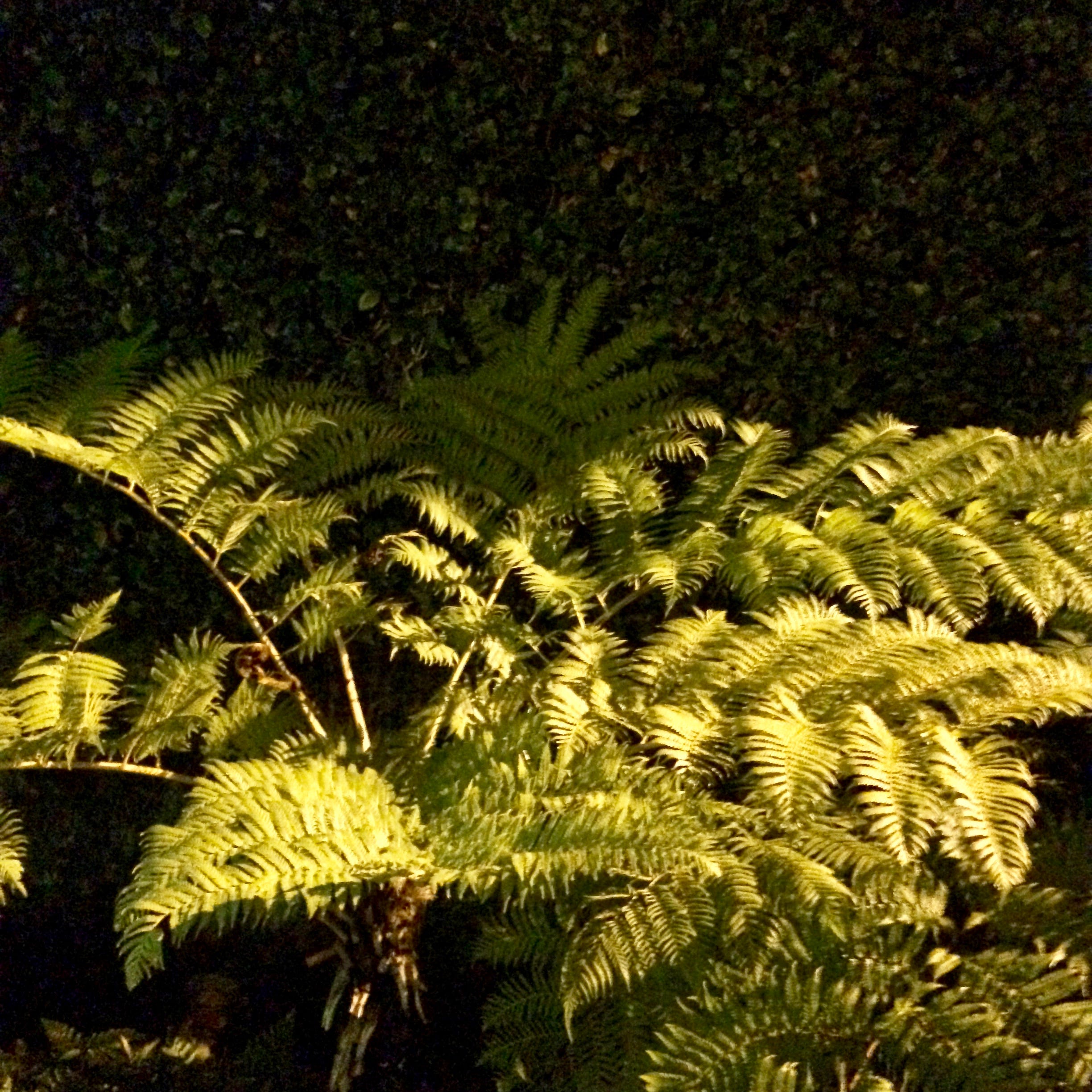
The world works in balance by using fifty-four natural senses that we humans inherit but, due to our nature-separated lifestyle, do not typically use.
Living “half-vast,” which is Dr. Cohen’s way of saying living according to nature-disconnected stories, is both ecologically disastrous and personally a burden that fosters burnout and other personal and planetary dilemmas. The remedy, according Dr. Cohen, is what he calls the “Natural Systems Thinking Process.” This tool can be used to heal any person from an array of lifestyle stresses that lead to burnout, depression, anxiety, and addictions. It can be used to reverse challenging global and personal problems caused by nature separation that, in turn, causes abnormal wants that propel us into irresponsible relationships.
The Natural Systems Thinking Process promotes education, counseling, and healing with nature. This process is based on the principles of Natural Attraction Ecology, which identifies the strands in the web of life and indicates that they function according attractions.
Living according to nature-disconnected stories, including the meta-story of the “American Dream,” is one of the main underlying causes for most personal and planetary dilemmas.
According to Natural Attraction Ecology, all relationships are held together in the web of life because they are attracted to do so. These attractions do not appear in our consciousness with any regularity because regrettably we live much of our lives indoors. As a result, there is within us an organic void that feels like an uncomfortable psychological emptiness in our thoughts and lives.

Attempting to fill the void created by being separated from nature causes us to want; and, as we want, there is never enough so greed, stress, and recklessness become pervasive.
According to Louv (2012), Selhub and Logan (2012) and others, the psychological malaise of separation from nature, often referred to as "nature deficit disorder" or "ecopsychological disconnect," is a concept that suggests a disconnection from the natural world can have negative impacts on mental well-being. While not recognized as an official mental health diagnosis, there are signs that individuals may be experiencing a sense of separation from nature. Some of these signs may include:
Feelings of Isolation: A persistent sense of isolation or loneliness, even when surrounded by people, may indicate a disconnection from nature.
Stress and Anxiety: Increased stress and anxiety levels may be linked to a lack of exposure to nature.
Depression or Mood Swings: A sense of melancholy, sadness, or mood swings that don't seem directly related to specific life events may be indicative of a lack of connection to nature.
Lack of Interest in Outdoor Activities: A disinterest or aversion to outdoor activities, such as hiking, camping, or simply spending time in green spaces, may suggest a disconnection from nature.
Impaired Attention and Focus: Studies suggest that spending time in nature can improve attention and focus.
Physical Health Issues: Chronic health problems that may be exacerbated by a lack of outdoor activity, such as poor immune function, sleep disturbances, or cardiovascular issues, could be linked to a disconnection from nature.
Reduced Empathy for the Environment: A diminished sense of environmental concern or a lack of empathy for ecological issues may indicate a disconnection from nature.
Loss of Awe and Wonder: A diminished capacity to experience awe and wonder in response to natural beauty may suggest a disconnect.
Disconnection from Seasonal Cycles: A lack of awareness or interest in seasonal changes and natural rhythms may be a sign of disconnection.
Eco-Anxiety: Feelings of anxiety or distress related to environmental concerns, such as climate change or biodiversity loss, may be exacerbated by a perceived separation from nature.

To keep a record of your “bettermorphosis,” commune with nature and write down three good things that happened to you today, write down what allowed each event to occur, and write down what each event means to you.
It's important to note that these signs are not definitive proof of a psychological malaise related to separation from nature, and individual experiences can vary. If you or someone you know is experiencing persistent emotional or mental health challenges, it's advisable to seek professional help from mental health professionals who can provide personalized guidance and support.
Psychotherapist and author Chellis Glendinning (2007) maintains “that the traumatized state is not merely the domain of the Vietnam veteran or the survivor of childhood abuse, it is the underlying condition of the domesticated people” because “of the built-in displacement of our lives from the Earth” (p. xiii.).
Attempting to fill this void, we want, emotionally and materially; and, as we want, there is never enough. Greed, stress, and recklessness become pervasive, at great peril to oneself, to other people, and to the Earth. “The destruction of the environment is driven by an insatiable craving for more” (Maathai, 2010, P.43).
The nature-reconnecting activities of the Natural Systems Thinking Process brings natural sensory attraction relationships, called “webstrings,” back into our lives. Their presence fights both the craving for more and the activists’ burnout by reinstating forgotten but nevertheless reinvigorating personal and environmental relationships.
Maathai writes that the idea of “…enough is enough is a matter of monumental discipline. This will not occur unless it’s linked to the raising of consciousness that is essential to healing the earth” (p. 40). The task of healing the wounds of the earth “is to find a balance between the perspectives...between knowledge based on measurement and data and knowledge that draws on older forms of wisdom and experience” (Maathai, 2010, p. 76).
After doing nearly one hundred of Dr. Cohen’s activities and after discussing the results of these activities with dozens of fellow participants, I can attest to the fact that Cohen’s methodologies help people overcome their nature-disconnected patterns of thinking and doing—a valuable metamorphosis (conversion) that relieves stress, reduces wanting, and increases participants’ general satisfaction with life. For the specific purpose of helping activists better themselves and to persevere in their environmental participation, a “bettermorphosis” would occur if one would apply Dr. Cohen’s excellent methodologies along a pointed course of study such as the Heartwood Path developed by myself as a way to answer Brower’s 1986 call to write.
As a way to help you determine how, if at all, the Heartwood Path (when combined with Dr. Cohen’s methodologies) does provide for a “bettermorphosis”—one that does cause greater gladness and environmental sustainability—I ask you to begin the habitual pattern described in the following activity.