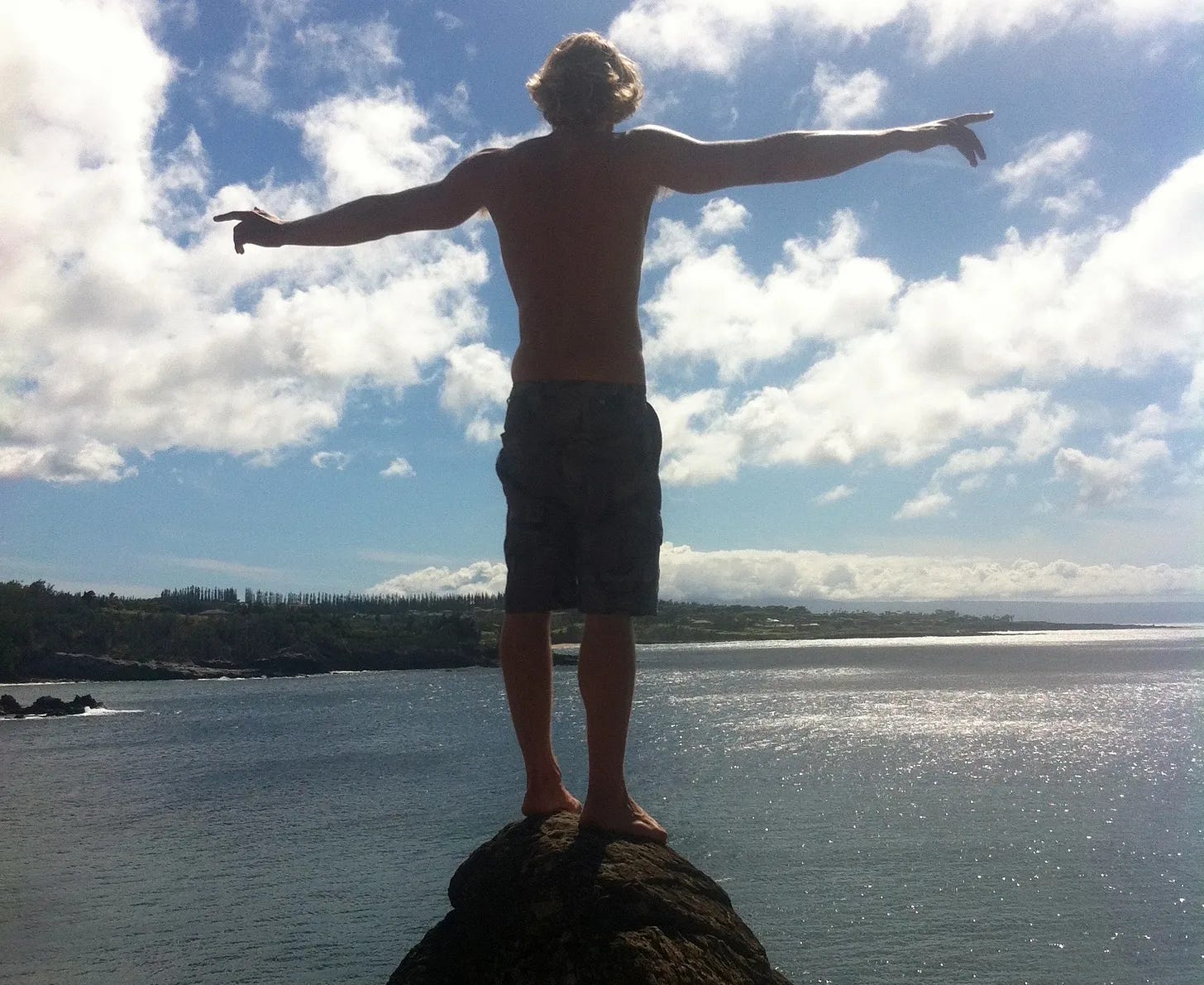
Photo by Courtney Logue
People who spend long stretches of time in wild places begin to notice something subtle: the land seems to register their presence. Not in a mystical way, and not in a way that replaces ordinary perception, but in a way that feels like a quiet, steady form of awareness.
Walk long enough through forests, prairies, or coastal paths, and you begin to sense patterns. The air shifts before weather arrives. Birds fall silent before a change. The ground feels different underfoot when your attention sharpens. These are not supernatural events. They are the natural consequences of being immersed in a living system that has its own rhythms.
Some people call this the Field — the subtle atmosphere that surrounds a person who is moving attentively through a natural environment. The Field is shaped by wind, light, memory, and the long history of human passage. When you enter a place that has held generations of footsteps, you enter a continuity larger than yourself.
The Field doesn’t warn or advise.
It simply aligns with what is true.
When you’re calm, the place feels calm.
When you’re unsettled, the place feels watchful.
When you’re ready to see something clearly, the place seems to open.
To move through nature with awareness is to learn how to read the Field. You begin to trust the moments when the world feels like it’s leaning in. You respect the moments when it feels like it’s pulling back. You learn to walk with a kind of listening.
The land does not speak.
But it sees.
And if you pay attention, it teaches you how to see as well.