

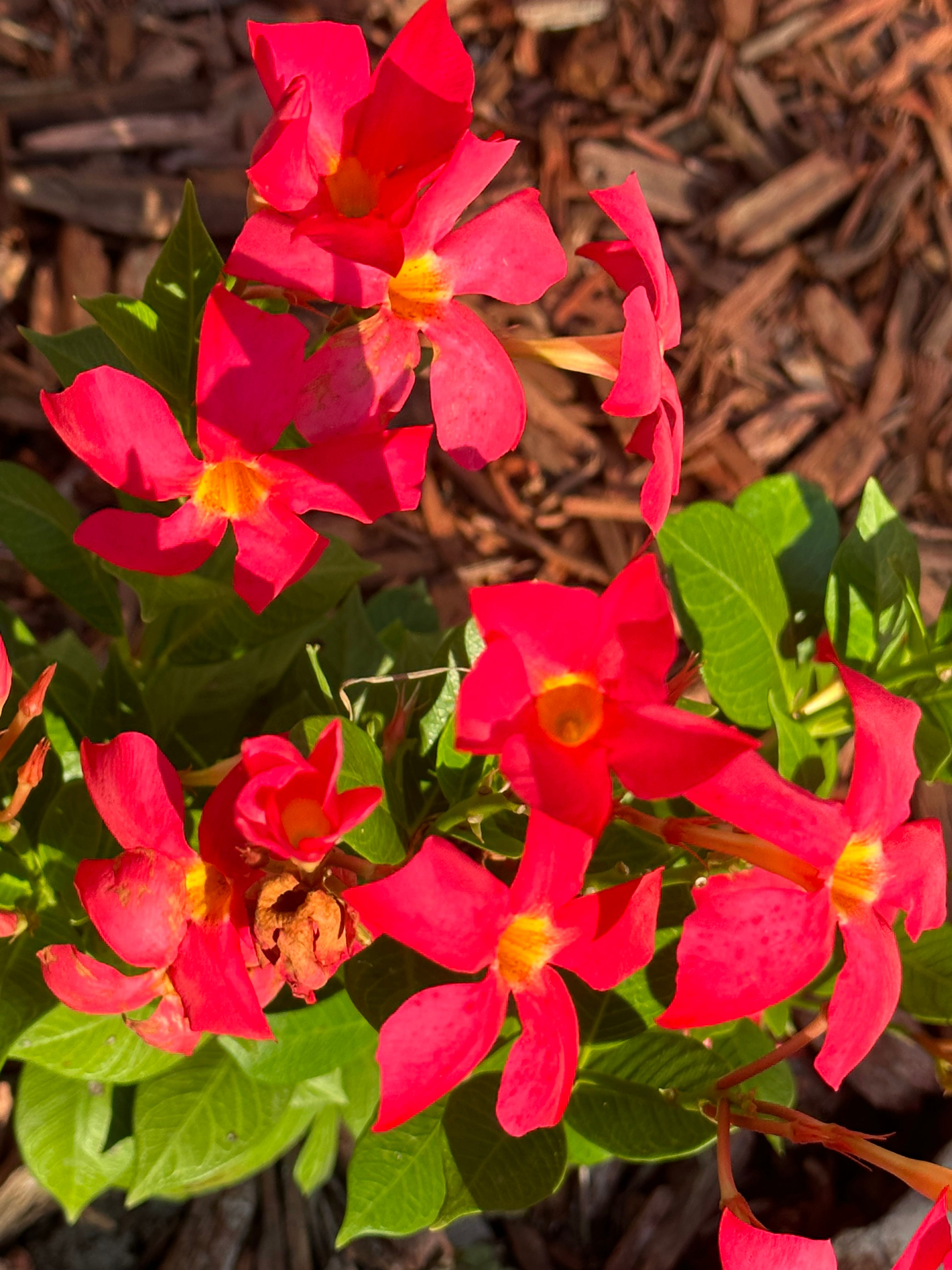
Before we continue deeper into Arc Two, I want to offer a clear map of the Heartwood Path — the Regions, the Arcs, and how this living ecology of practice is organized. This orientation piece is meant to help you understand the terrain before we move further into the Column Region.
Every traveler needs a map — not to control the journey, but to understand the terrain.
The Heartwood Path is not a linear curriculum or a set of teachings.
It is a living ecology of practice, and like any ecology, it has both Regions and Arcs.
Once you see the distinction, the whole path becomes clear.
REGIONS: The Territories of Human Experience
Each Region corresponds to a part of the orchid flower — a plant family known for deep relationality, ecological sensitivity, and intricate interdependence.
Regions are not sequential.
They are landscapes you return to again and again.
1. The Labellum Region — Inner Ecology
The labellum is the orchid’s landing platform — the place of orientation, invitation, and initial contact.
This Region holds sensing, grounding, orientation, and integration.
It is where the traveler learns to meet themselves.
2. The Column Region — Relational Ecology
The column is the fusion point where pollen is exchanged — the site of reciprocity, mutual influence, and connection.
This Region holds contact, resonance, boundaries, belonging.
It is where the traveler learns to meet others.
3. The Sepal Region — Collective Ecology
Sepals form the protective outer structure of the flower.
They hold, shelter, and shape the whole.
This Region holds group dynamics, community coherence, shared movement.
It is where the traveler learns to move with many.
4. The Petal Region — Seasonal & Ecological Time
Petals express timing, season, and ecological signaling.
They open and close with cycles, light, and place.
This Region holds rhythm, seasonality, and the almanac of the year.
It is where the traveler learns to move with time.
5. The Ovary/Pedicel Region — Civic & Stewardship Ecology
This is where the flower connects to the plant and where seeds form.
It is the site of continuity, responsibility, and future‑making.
This Region holds stewardship, participation, contribution, and care.
It is where the traveler learns to move with purpose.
Regions are the ecosystems of the Heartwood Path.
They answer the question:
“Where am I in the human ecology right now?”
ARCS: The Movements of Development
Arcs are the journeys you take through a Region.
They unfold over time, like growth rings in a tree.
Arc One: Inner Ecology (Labellum Region)
Edges → Reach → Attunement → Stillness → Foundation → Direction → Integration
Arc Two: Relational Ecology (Column Region)
Contact → Reciprocity → Boundaries → Resonance → Exchange → Interdependence → Belonging → Stewardship
Arcs answer the question:
“What is the next movement in my development?”
How Regions and Arcs Work Together
Think of it like this:
A Region is the territory.
An Arc is the journey through that territory.
A Region is the ecology.
An Arc is the development.
You revisit Regions throughout your life.
You move through Arcs as you grow.
This is why the Heartwood Path feels alive — it mirrors how humans actually develop:
cyclically, relationally, seasonally, and in layers.
For the Traveler
When you see a title like:
Heartwood Path Arc Two, Part 1: Contact (Column Region)
…it tells you:
which Region you’re in (Relational Ecology)
which orchid structure holds that Region (the Column)
which Arc you’re walking (Arc Two)
which movement you’re practicing (Contact)
where you are in the sequence (Part 1)
It gives orientation without rigidity.
Structure without confinement.
A path without prescribing a destination.
This is the Heartwood Path:
a living map for travelers who want to move through the world with coherence, relationship, and depth.
HumaNatureConnect Activity: Step Into the Map
This is a short, embodied way to feel the difference between a Region and an Arc — not as concepts, but as lived experience.
1. Choose a Region
Pick one of the orchid Regions that feels alive for you today:
Labellum (Inner)
Column (Relational)
Sepal (Collective)
Petal (Seasonal Time)
Ovary/Pedicel (Stewardship)
Don’t overthink it.
Choose the one that has a little charge, a little pull.
2. Stand Still for a Moment
Let your body settle.
Feel your weight.
Feel the ground.
Say quietly to yourself:
“This is the Region I’m in.”
Notice what shifts — even slightly — when you name the territory.
3. Now Choose a Movement (an Arc step)
Within that Region, choose one movement you’re currently in:
Contact
Reciprocity
Boundaries
Resonance
Exchange
Interdependence
Belonging
Stewardship
(Or choose from Arc One if you’re in the Labellum Region.)
Again, don’t analyze.
Choose the one that feels true.
4. Take One Small Action
Do something tiny — a gesture, a breath, a shift — that expresses that movement.
Examples:
If you chose Contact, place your hand on something near you and feel it.
If you chose Boundaries, take one step back or one step forward.
If you chose Belonging, soften your shoulders and let yourself be held by the space.
If you chose Direction, turn your body slightly toward something that matters.
Let the action be small.
Let it be enough.
5. Close the Practice
Say:
“I know where I am. I know how I’m moving.”
That’s the whole Heartwood Path in one moment.