

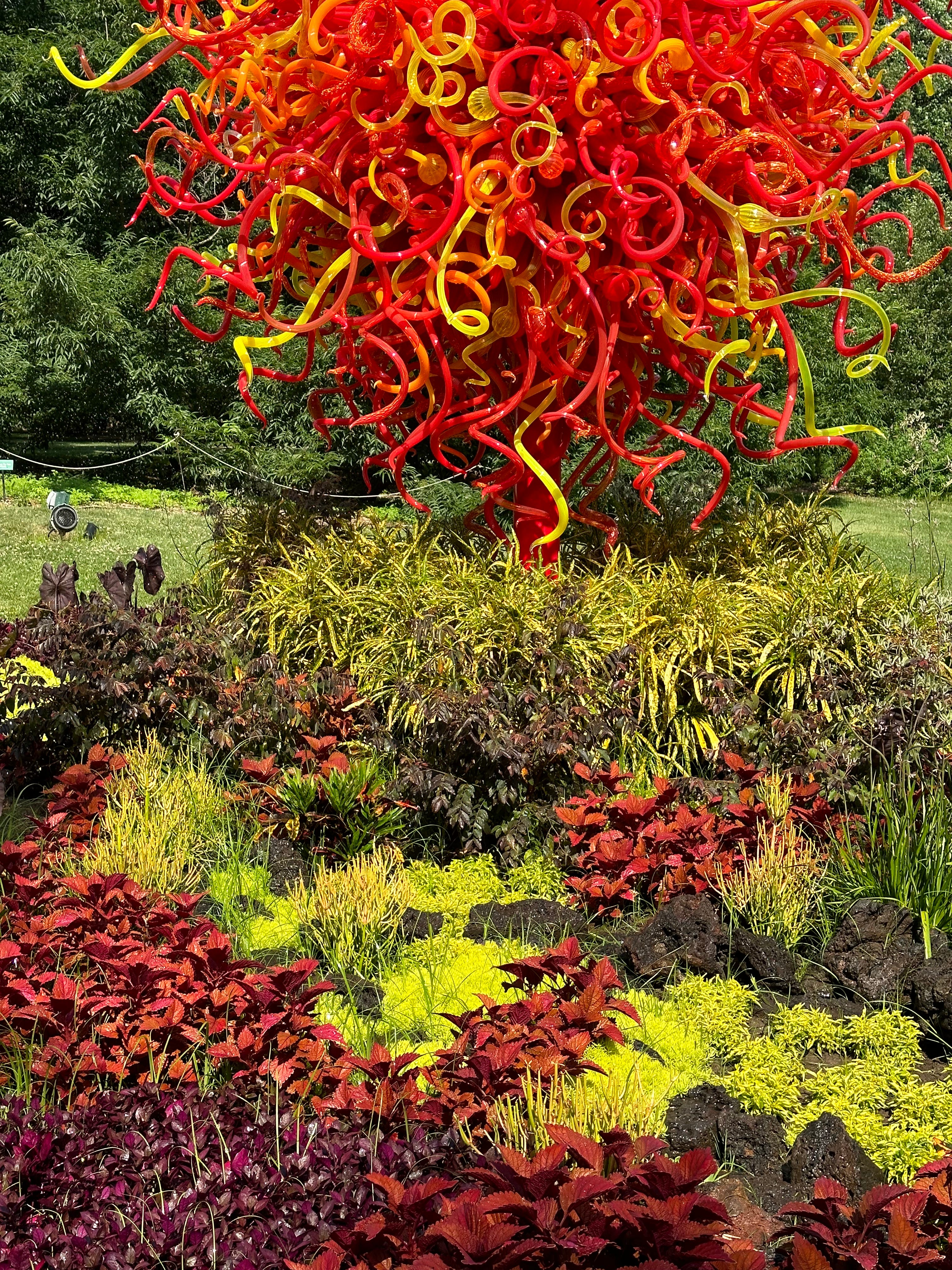
Photo by Don Pierce.
“Seeing” without eyes can be interpreted as perceiving action possibilities through non-visual sensory systems or environmental interactions. Here are 25 creative and research-informed ways this concept can be explored:
Cognitive & Sensory Substitutes
Tactile perception – Feeling textures or shapes to understand spatial layout.
Auditory cues – Using sound reflections (echolocation) to perceive distance or object presence.
Proprioception – Sensing body position to navigate space.
Vestibular input – Detecting balance and orientation without visual reference.
Thermal sensing – Feeling heat gradients to locate sunlit or shaded areas.
Olfactory mapping – Smelling environmental cues to identify locations or organisms.
Vibrational sensing – Detecting movement or presence through ground vibrations.
Kinesthetic feedback – Learning spatial relationships through movement and resistance.
Magnetoreception – Sensing Earth’s magnetic field for orientation (seen in animals).
Skin photoreception – Detecting light intensity through skin (found in some species).
Ecological Interactions
Affordance detection via touch – Feeling whether a surface affords walking, climbing, or grasping.
Environmental resonance – Using sound feedback from surroundings to gauge openness or enclosure.
Tool-mediated perception – Using a cane or stick to extend tactile sensing.
Temperature gradients – Navigating based on warm/cool zones in natural environments.
Airflow sensing – Feeling wind direction to infer open space or obstacles.
Humidity detection – Sensing moisture levels to locate water sources or vegetation.
Pressure changes – Detecting elevation or depth through barometric shifts.
Chemical sensing – Interpreting airborne molecules to identify ecological conditions.
Echoic memory – Recalling spatial layout from previous auditory experiences.
Rhythmic movement – Using rhythmic walking or tapping to build spatial awareness.
Biological & Evolutionary Insights
Extraocular photoreception – Light detection through skin or internal organs.
Circadian entrainment – Sensing light indirectly to regulate biological rhythms.
Bioluminescent feedback – Interacting with organisms that emit light to gauge proximity.
Color change response – Organisms adapting skin color based on ambient light (e.g., squid).
Non-visual navigation – Migratory animals using geomagnetic and olfactory cues.
In ecological psychology, the idea of “seeing without eyes” opens up a fascinating rethinking of how humans perceive the world—not just visually, but through a rich tapestry of embodied and environmental interactions. Here are some key implications:
Expanded Understanding of Perception
Multisensory integration: Human perception isn't siloed into vision alone—touch, sound, proprioception, and even smell contribute to how we experience space and affordances.
Embodied cognition: Perception is shaped by the body’s movement and interaction with the environment, not just passive reception of stimuli.
Affordance-based perception: We perceive the world in terms of what it offers us for action (e.g., a surface affords walking), regardless of whether we “see” it visually.
Accessibility & Design
Assistive technologies: Understanding non-visual perception can inform tools for blind or visually impaired individuals—like echolocation training or tactile interfaces.
Inclusive environments: Spaces can be designed to support perception through sound, texture, and airflow, making them navigable without relying on sight.
Neuroplasticity & Adaptation
Sensory substitution: The brain can repurpose other senses to “see” the world—like using touch or sound to build spatial maps.
Neurodiversity: Recognizing alternative perceptual modes validates diverse cognitive experiences and challenges narrow definitions of “normal” perception.
Consciousness & Mind Theories
Extended mind hypothesis: Perception may not be confined to the brain or eyes—it could involve the whole body and environment as part of a cognitive system.
Extra-ocular vision (EOV): Some researchers propose that humans may possess latent abilities to perceive without eyes, especially in blind individuals. While controversial, it pushes the boundaries of what we consider possible.
HumaNatureConnect Activity
Seeing Without Eyes
Purpose
To directly experience “seeing” without eyes by perceiving action possibilities (affordances) through touch, sound, balance, temperature, resistance, and relational feedback from the environment—rather than through visual interpretation.
This activity makes ecological perception felt, not conceptual.
Setting
A safe, quiet natural area with varied textures: trees, uneven ground, water sounds, wind, rocks, grasses, slopes.
Time: 45–75 minutes
Solo or paired (preferred for safety)
The Practice
1. Visual Withdrawal (5 minutes)
Close your eyes or wear a loose blindfold.
Stand still.
Let the urge to “figure out” the environment dissolve.
Notice how quickly other senses begin to organize perception.
This interrupts eye-dominant cognition and invites whole-body sensing.
2. Guided Movement (15–25 minutes)
If paired, one person lightly places a hand on the other’s shoulder or upper back and walks slowly.
If solo, move at half-normal speed, stopping often.
Attend to:
Ground firmness → Can I step here?
Slope and pull → Do I need to lean?
Air movement → Is space opening or closing?
Sound direction → Is something passable, alive, near?
You are not imagining actions—you are discovering them.
3. Hand-First Exploration (10 minutes)
With eyes still closed:
Explore bark, stone, leaves, soil, or water
Notice how your hands “know” how to move without instruction
Ask silently:
What does this invite me to do—or not do?
This reveals affordances as relational truths, not visual judgments.
4. Pause & Sit (10 minutes)
Sit with eyes closed.
Sense:
Uprightness
Support
Boundaries
Movement around you
Notice how the environment continues to “speak” through pressure, sound, and temperature.
5. Reopening Vision (5 minutes)
Slowly open your eyes.
Observe:
What you now see differently
How vision becomes one sense among many, not the ruler of meaning
Why This Activity Is Pertinent
This practice:
Demonstrates that perception is action-oriented, not image-based
Reveals that “seeing” is distributed across the body and environment
Trains trust in ecological feedback rather than mental abstraction
Cultivates humility, safety, and attunement—key to regenerative action
Increases happiness through embodied confidence and reduced cognitive strain
You learn that the world does not need to be interpreted to be known—it needs to be met.
Essential Readings:
• […]
• […]

Recommended Readings:
• […]
• […]
• […]
• […]

For additional readings, visit Heartwood Path Beat.