

There are moments when the mind feels too tight, too enclosed, too domesticated by screens and schedules. And then there are moments when a walk outside — even a short one — opens something. The air shifts. The senses widen. Ideas begin to move again.
This is not an accident.
Nature is not just scenery.
It is a teacher of form.
And if you pay attention, the natural world will show you how your own inner architecture grows, aligns, and expands.
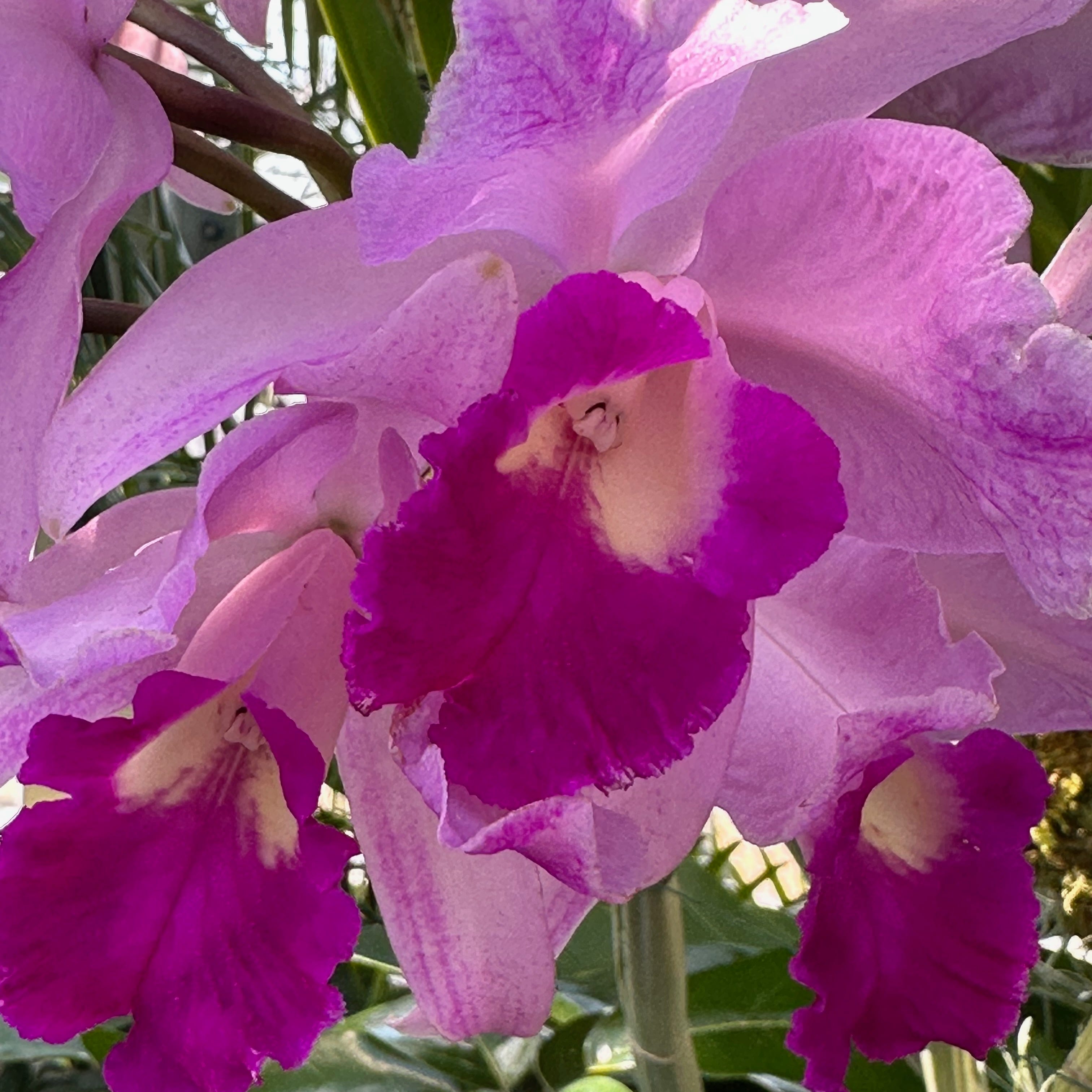
Lately, I’ve been learning from orchids — not just their beauty, but their structure. Each part of the orchid flower has become a way of understanding the five regions of psychological development, widening perspective, and expanding orientation.
Nature becomes a map.
The orchid becomes a guide.
And creativity becomes a form of listening.
Let me show you what I mean.
The Column — A Lesson in Alignment
The orchid’s column is one of the strangest and most elegant structures in the plant world. It fuses what other flowers keep separate. It brings opposites into coherence. It stands as a single vertical axis where multiple functions meet.
When I look at the column, I see Alignment.
Not the rigid kind — not “straighten up and behave” alignment — but the deeper kind:
the alignment of intention
the alignment of inner and outer
the alignment of what you feel with what you do
the alignment of your many parts into one coherent axis
The orchid column reminds us that alignment is not about perfection.
It’s about integration of function.
It’s about becoming one thing instead of many scattered impulses.
Nature shows us what the psyche tries to do:
bring itself into a single, living axis.
The Lip — A Lesson in Formation
The orchid’s lip (or labellum) is the invitation of the flower. It’s the threshold, the landing pad, the place where something new begins. It’s often the most dramatic part — the flourish, the gesture, the opening.
This is Formation.
Formation is the moment when something internal becomes external:
an idea becomes a shape
a feeling becomes a gesture
a possibility becomes a path
a self becomes visible
The lip teaches us that formation is not quiet.
It’s expressive.
It’s bold.
It’s the part of you that says: Here. This way. Come closer.
Creativity lives here — in the lip’s willingness to open.
The Petals — A Lesson in Orientation
Petals are the flower’s way of turning outward. They are the gesture of attention, the way the flower faces the world. They create direction, framing, and perspective.
This is Orientation.
Orientation is how we:
face experience
interpret what we see
choose a direction
widen our perspective
The petals remind us that orientation is not passive.
It’s an act of positioning.
A way of saying: This is where I stand. This is what I see.
When we go into nature, our orientation shifts.
We stop facing the same walls, the same screens, the same loops.
We turn toward something larger.
The Ovary and Base — A Lesson in Steadiness
At the back of the orchid, behind the showy parts, sits the ovary — the swelling that holds potential, the grounded base that supports the entire flower.
This is Steadiness.
Steadiness is not stillness.
It’s the quiet strength that allows growth to happen.
The ovary teaches us:
to hold potential without rushing
to support what is emerging
to stay rooted while the rest of us reaches outward
to trust the slow processes
In creativity, steadiness is the part that keeps you returning to the work.
In psychological development, it’s the part that holds you through change.
Nature shows us that nothing blooms without a base.
The Sepals — A Lesson in Integration
Sepals are the protective leaves that cradle the bud before it opens. They are the first structure, the early coherence, the quiet architecture that holds everything together before the flower reveals itself.
This is Integration.
Integration is:
the gathering of parts
the coherence of the whole
the sense-making layer
the early structure that allows everything else to unfold
The sepals remind us that integration is not flashy.
It’s foundational.
It’s the part of the psyche that says: All of this belongs. All of this fits.
When we go into nature, integration happens almost automatically.
The mind stops fragmenting.
The senses come into coherence.
The whole system begins to breathe again.
Why Nature Sparks Creativity
Because nature is not abstract.
It is structured.
It is patterned.
It is alive.
When you walk among trees or sit with a flower, you’re not just relaxing — you’re encountering forms that mirror your own inner architecture.
Nature teaches you how to:
align
form
orient
steady
integrate
And from that, creativity emerges naturally.
Not forced.
Not strained.
But grown.
The Orchid as a Map of Becoming
Each part of the orchid becomes a metaphor for a region of psychological expansion:
Column → Alignment
Lip → Formation
Petals → Orientation
Ovary/Base → Steadiness
Sepals → Integration
This is why going into nature matters.
It’s not escapism.
It’s apprenticeship.
Nature shows us how to become ourselves.
And the orchid — strange, intricate, ancient — becomes a teacher of the psyche, a guide for creativity, and a living diagram of how perspective widens.
Essential Readings:
• […]
• […]

Recommended Readings:
• […]
• […]
• […]
• […]

For additional readings, visit Heartwood Path Beat.