

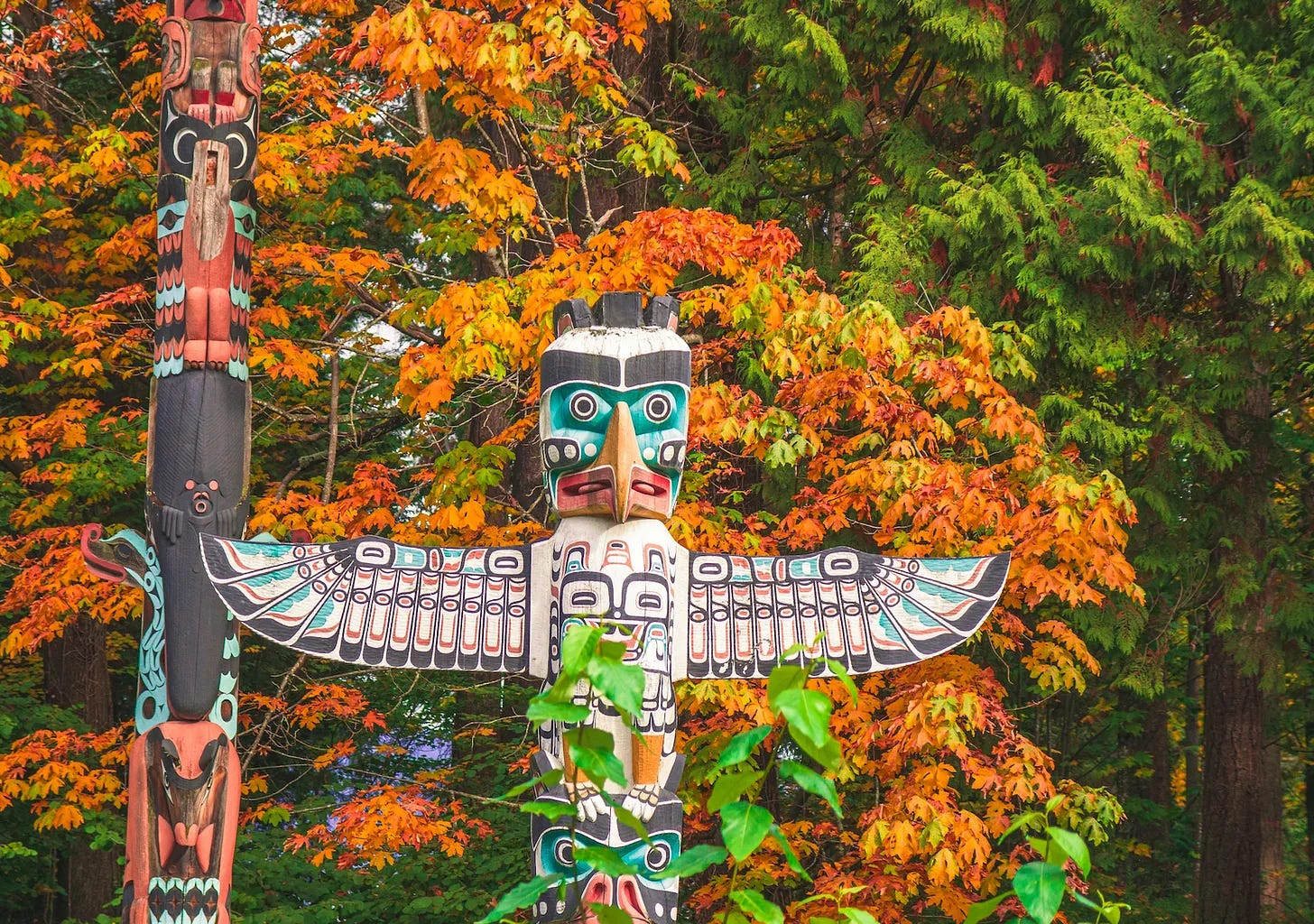
Photo by Kostas Dimopulous, Pexels.com.
We need to get back in touch with the Other, our Totemic Self, and this will be made easier by a cultural shift from an Ego-centric, mechanized view to a Theo-centric ecological view.The Heartwood Path fosters the reinvigoration of our Totemic Self, our Ecological Self, a self that allows one to achieve uncommon happiness.
While the Soul is one’s potential, this capability does not mean that one will automatically and effortlessly succeed in finding one’s destiny. This search, an unconscious act in most youth, begins before adulthood and, because the looking is risky and, particularly in early attempts, prone to failure, success is more likely when the Soul search is aided by one or more eco-centric elders.
Note that I say “eco-centric elders” rather than “adults.” The latter can offer good advice because, being adults, they have already achieved some knowledge of their own Soul. For those seeking to become eco-centric elders themselves or more ecologically-centered adults, working with an eco-centric life coach is more productive. That is because rather than just achieving some knowledge of their own Soul, eco-centric life coaches take it an important step farther: they achieve knowledge of the world’s Soul. By following a course such as the Heartwood Path, people become eco-centric elders by helping others embody their Soul and by “supporting the human-Earth system in the evolution of its Soul” (Plotkin, 2008, p. 56).
The world’s Soul is evident to us humans because our “species always had a kinship with the Other––with a greater-than-human world. This form of kinship––which is what is meant by our Totemic Self––allowed us to become and to flourish as humans. We need to get back in touch with the Other, our Totemic Self, and this will require a culture shift from an egocentric, mechanized view to an theo-centric ecological view. The current dominant world view is, among other things, stultifying. Says Albert Einstein: “Our task (has to) be to free ourselves from this prison by widening the circles of compassion to embrace all living creatures and the whole of nature in it beauty” (Kahn & Hasbach, 2012, p. 23). Similarly, author Joanna Macy says: “I consider that this shift [to an emphasis on our capacity to identify with the larger collective of all beings] is essential to our survival at this point in history . . . We are gradually discovering that we are our world” (Kahn & Hasbach, 2012, pp. 2-5). Wilderness “experiences foster ‘the sense that we are each unique and individual and, at the same time, part of the larger whole’ and ‘trigger the sense that the world is enchanted” (Kahn & Hasbach, 2012, pp. 2-5). That is just the beginning, for Kahn and Hasbach see the kind of work to be done in this course, namely expanding self to include the natural environment, to be a solution to the big problems we face. “We suggest that the solution for world problems––and a viable and entirely possible cultural evolution on our planet––involves a reintegration of parts of our earlier totemic selves, our Neolithic selves, and our modern sensibilities” (Kahn & Hasbach, 2012, p. 12). How do we free ourselves from this Egocentric prison, identify with the larger collective of all beings, and reintegrate parts of our selves?
Certainly a part of the answer is to promote more place-based learning, learning that has as its foundation a local place. Placeless, abstract learning alone will be “insufficient to foster deep bonds with place or even an affective sense of place” (Kahn & Hasbach, 2012, p.40). The places for this learning can be anywhere from “hearth to the entire universe, but the word is typically used to convey an intermediate geographic understanding of the earthly region we inhabit . . .” (Kahn & Hasbach, 2012, p. 41). The Heartwood Path fosters the reinvigoration of our Totemic Self, our More-Than-Individual-Self, our Ecological Self, a self that allows one to achieve uncommon happiness.
Kahn, Ruckert and Hasbach propose “a new agenda for the field of ecopsychology. It is to generate a nature language––a way of speaking about patterns of interactions between humans and nature, their wide range of instantiations (which provide tangible examples of abstract concepts) and the deeply meaningful and often joyous feelings that they engender” (Kahn & Hasbach, 2012, p. 57). This course encourages you to get out into nature and to help create the “nature language” through your the processing of about thirty specially numbered activities that are scattered throughout the balance of this course. In your responses for these numbered interactions, we are looking to find “the deepest meanings of relationships, relationships between “mind” and Nature” (Kahn & Hasbach, 2012, p. 56). There could be an infinite number of instantiations––moments for participants to react to, but we here shall present the thirty or so identified by Kohn, Ruckert and Hasbach. Their instantiations are aimed at helping participants get back into the habit that made humans the incredible species it is. “Paul Shepard (1996) argued that the “human species emerged enacting, dreaming, and thinking about wild animals and that through such interactions they help to make us who we are” (Kahn & Hasbach, 2012, p.p. 60). These instantiations––which will be patterns of behavior such as building shelter, harnessing natural forces, and having encounters with animals––can be perverse (which will produce psychological ill health and a normative judgement against it), domestic (which will do no harm but will not inspire either, or wild (which will produce the most intricately sensorial and inspirational meanings).
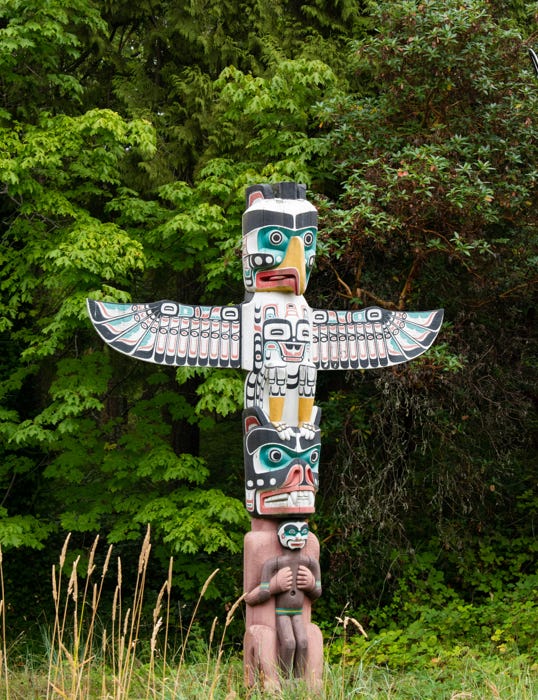
Photo by Esteban Arango, Pexels.com.
HumaNatureConnect Activity
Awakening Your Capacity For Relationship
For this activity, stand in nature and imagine yourself as kelp, a seaweed plant. Imagine your feet rooted in the seabed and the rest of your body floating upwards toward the surface of the ocean. The bulk of your body is buoyed by the sea around you. Allow your body to yield and sway to the merest current. One direction and a time, image the current coming from the back of your, in front of you, from your right side, and then from your left side. Pay attention to where in your body you feel tightness as you sway. Once felt, see if you can move in a way that releases this tightness to the fluidity of the sea currents.

Photo by Stein Egil Liland, Pixels.com.
Nocturnal Pilgrimage
“Using Dream Images as medicines,” writes Aizenstat, “works because the body is always dreaming” (2009, p. 189).
