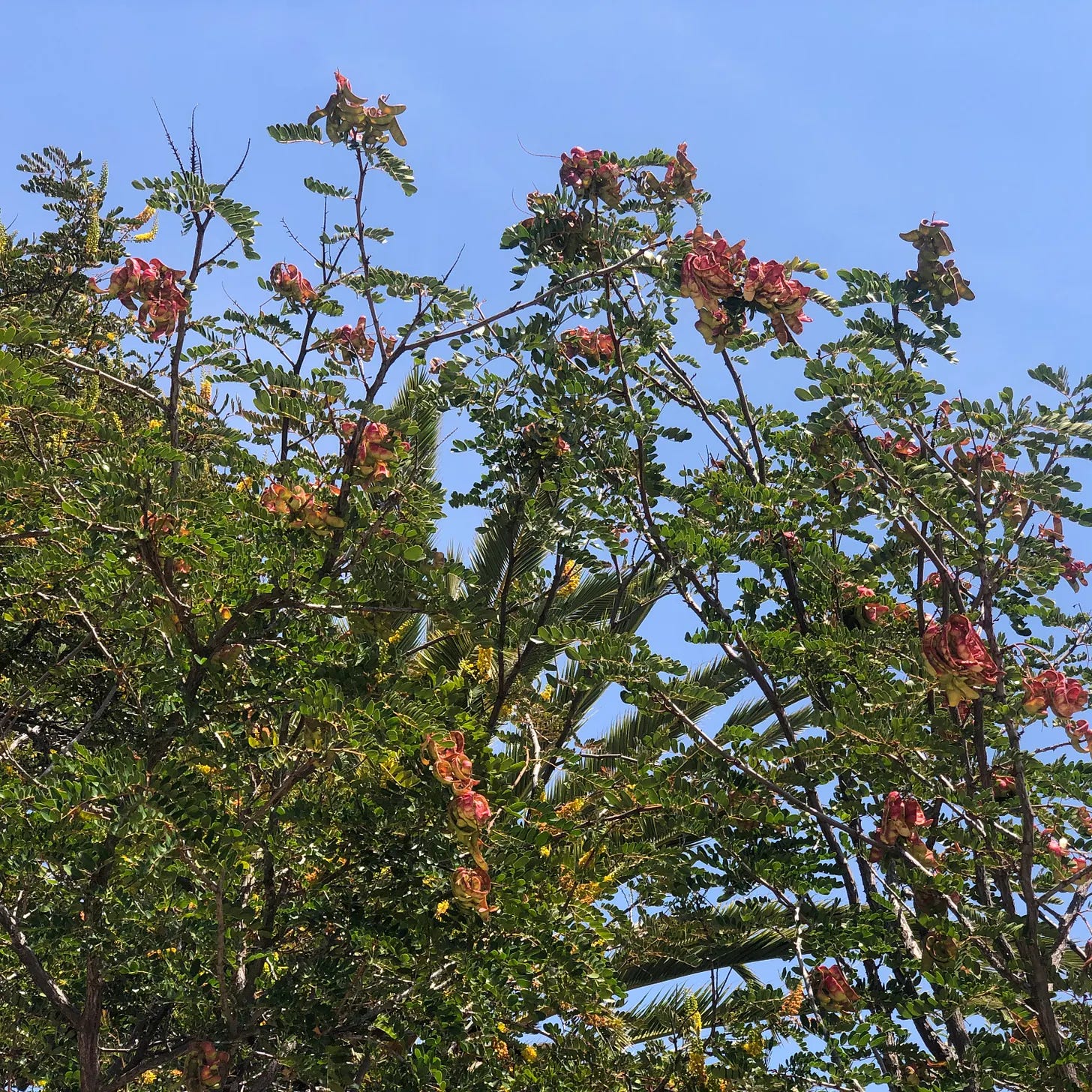
Photo by Don Pierce
Layer 7 is the canopy layer — the point where the reader’s ecological actions begin forming system‑level patterns. In earlier layers, geometry operated moment‑to‑moment: stabilizing verticality, widening perception, sensing pressure, recognizing boundaries, and correcting misalignment. By Layer 7, these motions have accumulated into predictable structures that shape how environments behave over time.
Layer 7 teaches the reader to see geometry from above:
how repeated alignment forms corridors
how widening creates stable perceptual ranges
how pressure patterns reveal system gradients
how boundaries define functional territories
how correction motions generate coherence across interactions
This layer is not about adding new motions.
It is about recognizing how the existing motions behave when viewed at the systemic scale.
Layer 7 shifts the reader from:
individual actions → patterns
local cues → networks
momentary alignment → structural coherence
environmental response → environmental intelligence
The canopy is where geometry becomes predictive.
Not in the sense of forecasting events, but in the sense that the reader can now see how systems will behave based on their underlying structure.
Layer 7 reveals that environments are not collections of moments.
They are ecological systems with gradients, flows, boundaries, and memory — and the twenty motions interact with these systems in consistent ways.
This is the systemic orientation:
The reader no longer interprets environments as isolated conditions.
They see them as interconnected structures shaped by geometry.
Layer 7 prepares the reader for Layer 8, where geometry becomes continuous — a stable ecological stance carried forward without instruction.