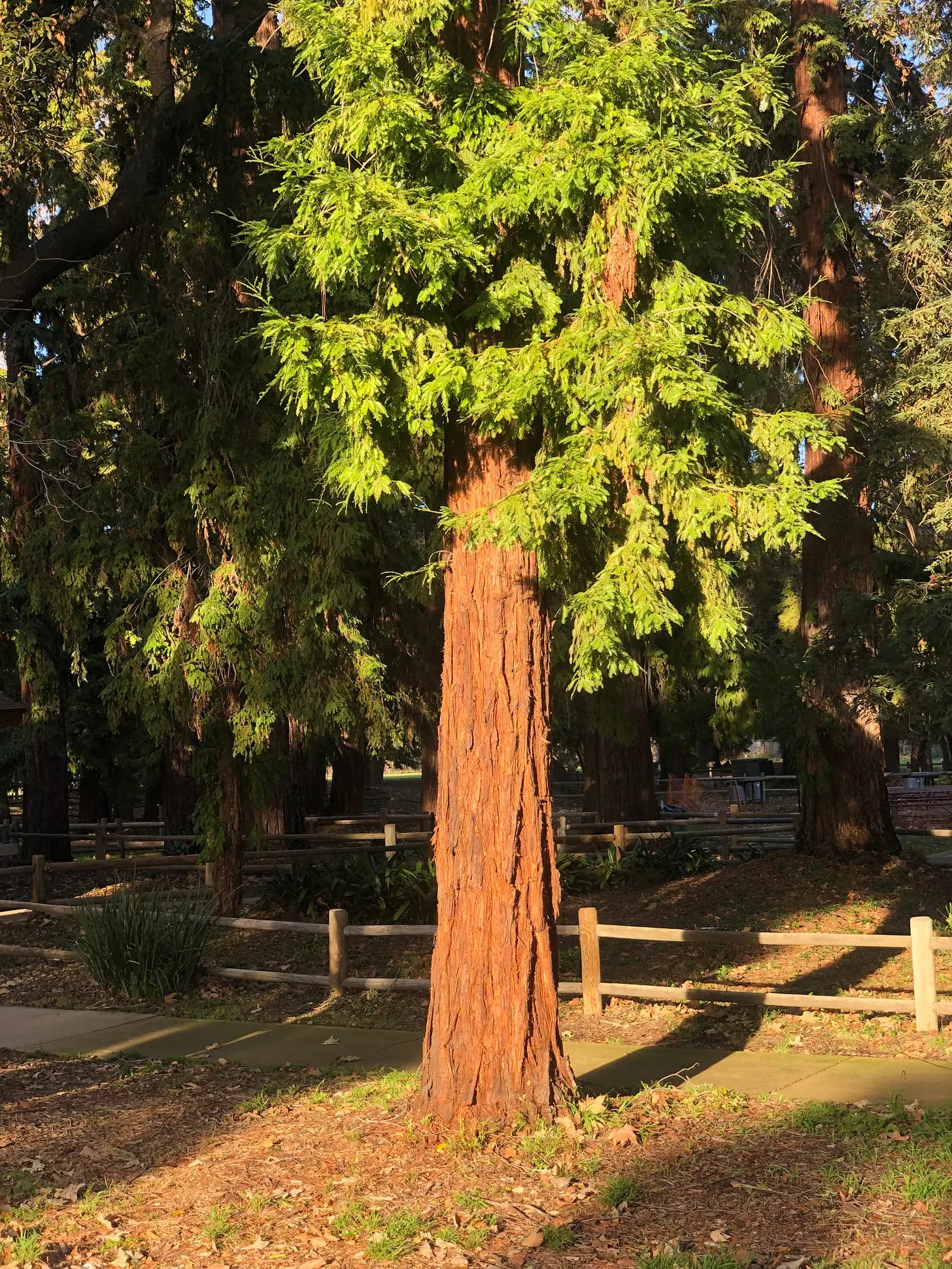
Photo by Don Pierce
Continuity is the fifth practice domain of WP4.
If presence is how the tree stands, atmosphere is the field it generates, influence is how it shapes the forest, and relational ecology is how it interacts with other trees, then continuity is how the tree remains itself across changing conditions.
Continuity is not consistency.
Continuity is not predictability.
Continuity is not sameness.
Continuity is ecological identity — the stable signature of the interior world expressed across environments, relationships, and shifting weather.
Layer 7 identified continuity as one of the five world‑interface operations.
WP4 turns that operation into lived practice — a repeatable outward behavior that stabilizes identity without rigidity.
Continuity Practice teaches the tree how to remain itself while participating in the forest’s constant motion.
Continuity as Ecological Identity
Continuity emerges when the interior ecology is:
coherent
circulating
stable
relationally open
continuously renewing
Continuity is not something you enforce.
Continuity is something you inhabit — the natural expression of a stable interior world moving through shifting environments.
Continuity Practice is the discipline of tending that identity so it remains ecological, not performative.
The Three Components of Continuity Practice
Continuity Practice stabilizes three ecological behaviors:
Signature — recognizable identity
Resonance — stable relational presence
Reliability — predictable transformation
These components are not techniques.
They are ecological expressions of the interior tree across contexts.
Signature — Recognizable Identity
Signature is the first outward motion of continuity.
It is the recognizable pattern of the interior world — the silhouette that remains visible even as conditions change.
Signature emerges when:
presence is steady
atmosphere is coherent
influence is stable
relational ecology is open
renewal is continuous
Signature is not branding.
Signature is the recognizable identity of the interior tree.
Resonance — Stable Relational Presence
Resonance is the second outward motion of continuity.
It is the way the interior ecology maintains relational coherence across interactions.
Resonance emerges when:
relational openness is present
circulation is active
transformation is reliable
ecological identity is stable
Resonance is not emotional steadiness.
Resonance is the stable relational presence of the interior tree.
Reliability — Predictable Transformation
Reliability is the third outward motion of continuity.
It is the way the interior ecology evolves in a stable, recognizable pattern.
Reliability emerges when:
change is integrated
renewal is available
continuity is coherent
relational field is open
Reliability is not rigidity.
Reliability is the predictable transformation of the interior tree.
Continuity Practice as Daily Ecology
Continuity Practice is not about maintaining sameness.
It is not about controlling identity.
It is not about resisting change.
Continuity Practice is the discipline of tending the ecological identity of the interior world.
It expresses itself through:
recognizable presence
stable relational patterns
coherent behavior
reliable transformation
unbroken connection
Continuity Practice is the fifth lived behavior of WP4 — the moment the interior tree becomes a stable participant in the forest’s ongoing motion.
HumaNatureConnect Activity — The Day‑Side Continuity
The outward ecological action that stabilizes identity across conditions
Activity is the day‑side practice of Continuity.
It is the outward behavior that stabilizes ecological identity in real time.
Activity: The Steady Signature
During the day, Continuity Practice expresses itself through the Steady Signature — a consistent outward pattern that remains recognizable across shifting environments.
The Steady Signature is created by:
moving through space with coherence
allowing presence to remain stable
letting atmosphere maintain tone
keeping influence ecological
sustaining relational openness
The Steady Signature is not a performance.
It is the natural outward motion of a coherent interior ecology across contexts.
This activity stabilizes signature, resonance, and reliability throughout the day.
Nocturnal Pilgrimage— The Night‑Side Continuity
The inward nocturnal movement that restores identity
Nocturnal Pilgrims is the night‑side practice of Continuity.
It is the inward movement that restores ecological identity after a day of outward motion.
Continuity is expressed during the day.
Continuity is clarified at night.
The Night Rejoining
The nocturnal pilgrimage for Continuity Practice is the Night Rejoining — a quiet interior movement that gathers the day’s dispersed identity threads and returns them to the trunk.
The Night Rejoining involves:
letting the day’s identity expressions settle
releasing contextual residue
allowing renewal to rise from the interior
restoring coherence to the continuity signature
returning the ecology to its natural identity
The Night Rejoining is not reflection.
It is not self‑analysis.
It is ecological rejoining — the gathering of the tree’s identity so it can express continuity the next day.
Nocturnal Pilgrims completes the cycle of Continuity Practice.
Closing — The Tree Remains Itself
Continuity Practice is the fifth lived behavior of WP4.
Presence is how the tree stands.
Atmosphere is how the tree shapes space.
Influence is how the tree shapes the forest.
Relational Ecology is how the tree interacts with other trees.
Continuity is how the tree remains itself across all of it.
The Steady Signature stabilizes continuity during the day.
The Night Rejoining restores continuity at night.
Together, they form the lived ecology of Continuity Practice — the fifth motion of the forest.